
The fragrance of green rice flakes welcomes the festival
Early on the morning of the Mid-Autumn full moon, blanketed in vast mist rolling over the mountain ranges encircling the Mường Nhà valley, the aroma of hearth smoke blended with the scent of newly harvested rice drifts through the villages of Na Há, Na Khoang, Mường Lói, Na Cọ, and Xẻ. The frontier awakens to the vibrant atmosphere of the Khẩu Hó Festival - a paramount community celebration marking the harmony between heaven and earth, when local hearts turn toward their ancestral origins.
According to ancient customs of the Lào people in Mường Nhà commune, the Khẩu Hó Festival takes place in the middle of the eighth lunar month, when ripening paddy turns lemon yellow. The Lào people embrace an animist worldview, believing that mountains, forests, swidden fields, paddies, and streams are watched over and protected by deities. They celebrate the festival to reverently present the fruits of their labor to higher beings and ancestors.
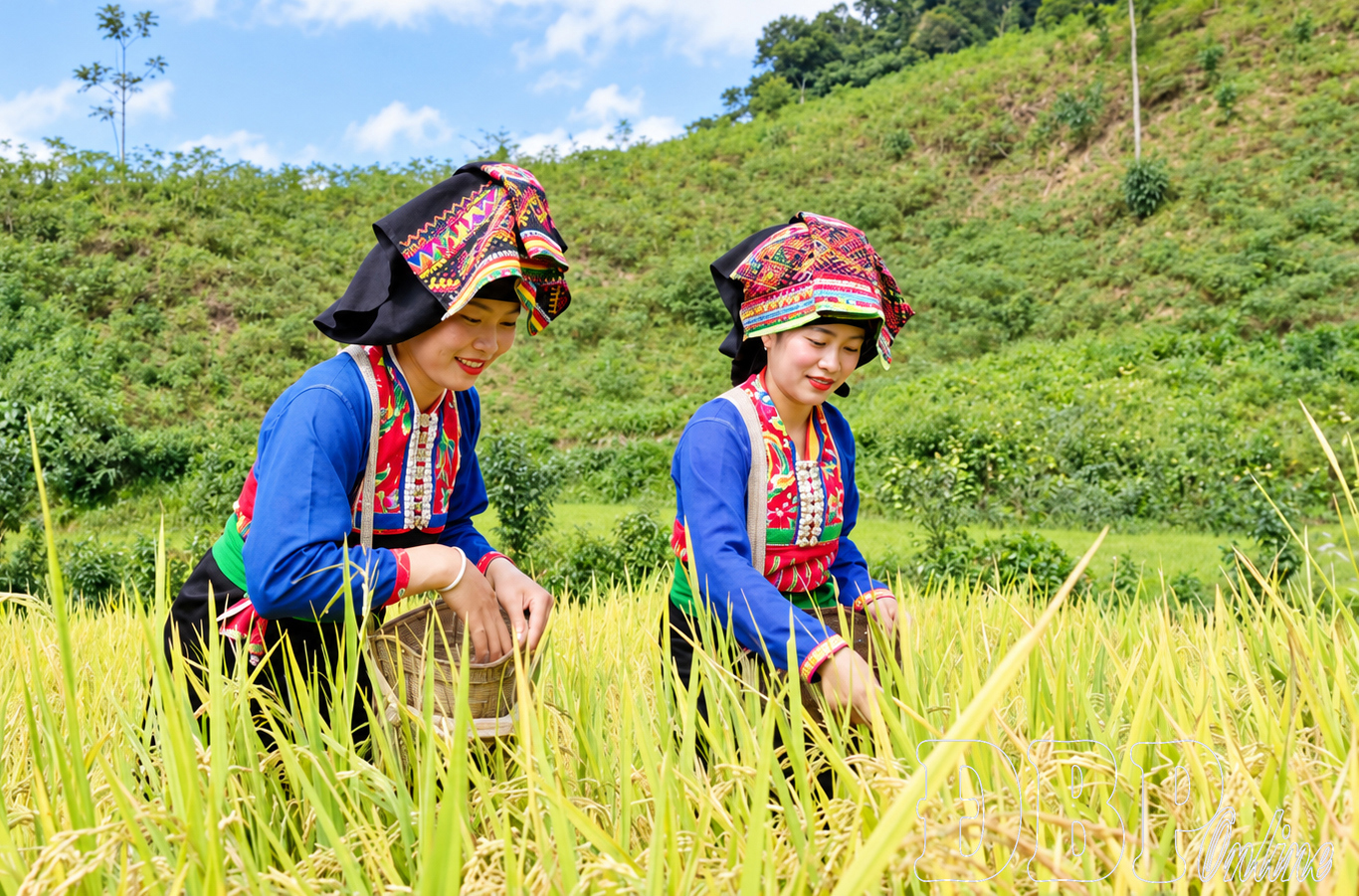
In Na Há village, the rhythmic pounding of pestles husking roasted young rice resounds from dawn. Swiftly winnowing away the newly loosened husks, Lường Thị Hoan wipes away beads of perspiration on her forehead with a radiant smile. Born and raised in Mường Nhà, her childhood is intertwined with the fragrance of upland sticky rice through every Khẩu Hó season. When young, Hoan only understood the festival through the joy of eating savory, fragrant young sticky rice. Today, standing beside the mortar herself, she fully comprehends why this simple dish occupies the most solemn position on the ritual offering tray presented to ancestors.
“To prepare delicious young sticky rice for the altar, grain selection must be exceptionally meticulous. The paddy is harvested just as it turns lemon yellow, lightly boiled to loosen the hulls, dried under a single sunning, and then pounded, winnowed clean, and steamed into sticky rice. Following each step correctly ensures the rice is chewy and retains the wholesome natural sweetness of heaven and earth,” Hoan shared.
The most vital festive offering is khẩu hang - packets of green sticky rice carefully wrapped in tender forest dong leaves. Inside each packet, alongside fragrant sticky rice, villagers enclose chicken, dried firewood-smoked meat, grilled river fish, or bamboo grubs, bamboo shoot worms, and bee pupae - exquisite provisions gathered from swidden fields and deep forests.
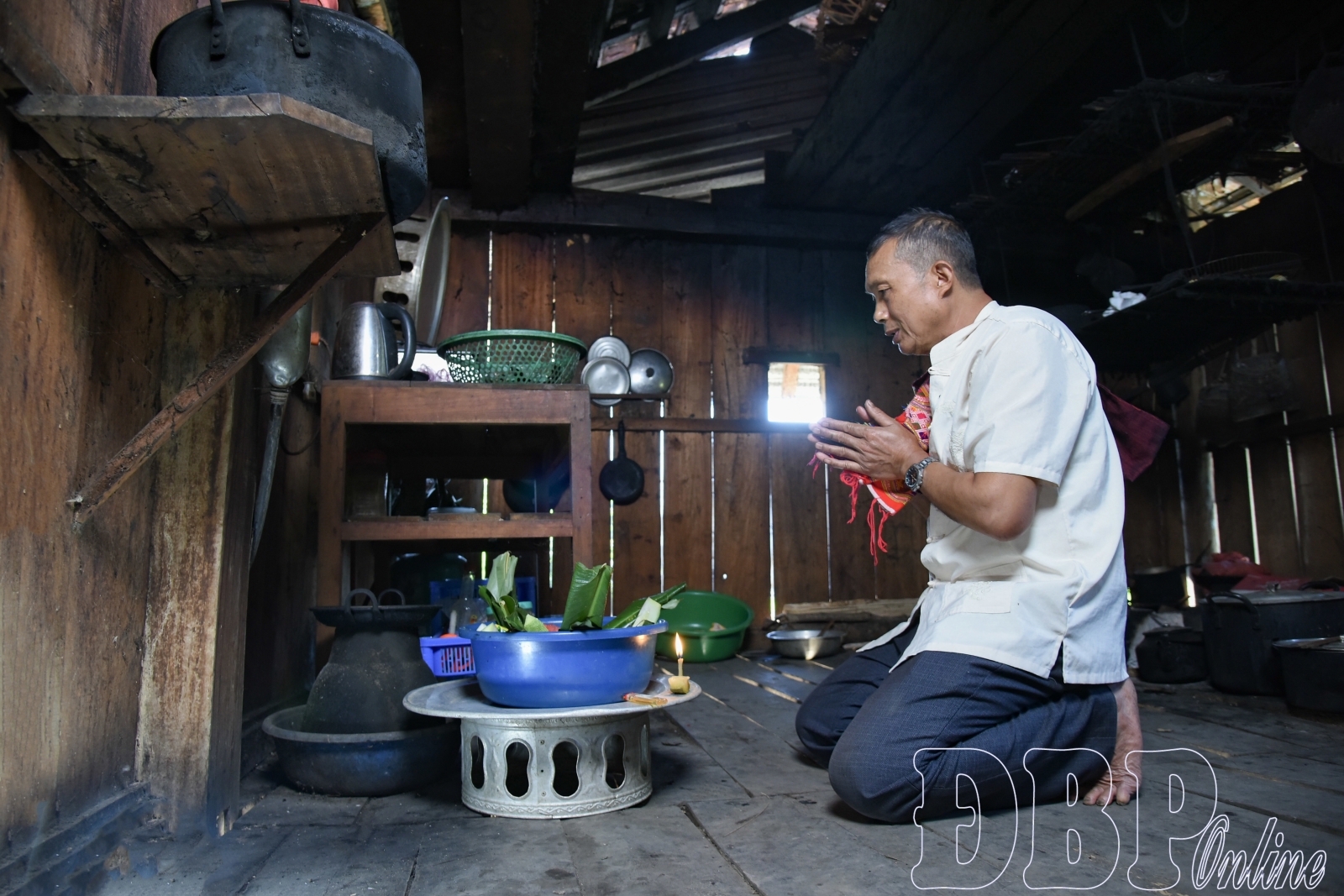
Within the spacious stilt house of Lò Văn Coong’s family (Na Há village), descendants have assembled in full attendance. Family elders carefully arrange the offering trays, while women and youths attend to supporting chores. The family’s Khẩu Hó offering tray features three primary groupings: grains (steamed young sticky rice, leaf-fermented wine); savory provisions (pork, chicken, stream fish, bee pupae, bamboo shoot worms); and agricultural produce (melons, pineapples, sugarcane, bananas, taro). All dishes are steamed, grilled, or boiled to retain their unpretentious natural flavors.
Standing before the altar filled with curling incense smoke, Lò Văn Coong conducts the ritual with solemn reverence. Coong noted that depending on household conditions, families organize two to three offering trays: for ancestors, the hearth deity, and the land spirit. “The Lào people believe that while living, people require care, and once loved ones pass to the afterlife, they lead a separate existence, requiring ancestral worship during major holidays and the Khẩu Hó Festival. Households where both parents remain alive do not perform an ancestral offering tray indoors. The ritual day is also selected with meticulous care to avoid coinciding with parents’ death anniversaries or the householder’s birthday,” Coong shared.
A nexus of community solidarity
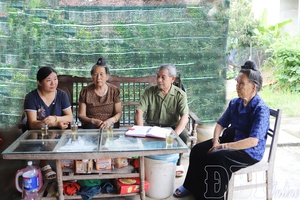
The atmosphere of the Khẩu Hó Festival radiates the warmth of communal solidarity. Having completed rituals at home, villagers take turns visiting neighboring households, exchanging blessings of good health and abundant harvests. At the residence of Lường Văn Nó in Na Khoang village, laughter and conversation reverberate from the courtyard to the hearth. On this occasion, children and grandchildren working far away arrange their schedules to return home for the celebration.
“The Khẩu Hó Festival has been sustained by the Lào ethnic community in Mường Nhà across generations, observed every full moon of the eighth lunar month. This year, our family is all the happier as local government leaders came to share the joy, present gifts, and offer encouragement. We take immense pride and remain determined to preserve and foster this traditional culture so it never fades,” Nó expressed.
Within festive spaces, sound constitutes an indispensable element. Inside the stilt houses, the bè panpipe played by Lò Văn Bun resonates melodiously with rising and falling notes, sounding like the whisper of the forest inviting villagers into the melody. As the music sounds, Lò Thị Pốc takes the lead vocal. Few realize that the poignant lyrics praising family devotion, reunions, cultural pride, and ancestral preservation were composed by Lường Thị Păn.
Păn shared: “I cannot sing because my voice does not match the cadence of the panpipe. But in my mind, every custom, culinary practice, and traditional mindset of our ancestors remains vivid. Every Khẩu Hó season, hearing the panpipe sounds, I compose lyrics along its rhythm from those memories and experiences. The women simply sing along with the panpipe, bringing joy and excitement. I remind my children and grandchildren that wherever they go and whatever they do, they must remember their roots, remember the New Rice Festival, and remain resolved to safeguard our native spoken language and traditional dances.”
As the panpipe plays, everyone holds hands joining the traditional lăm vông dance, circling counter-clockwise. Women gracefully curl their hands, pressing index finger to thumb in step with rhythmic footwork, while men join the collective circle to the beat. Elders, children, and visiting guests blend seamlessly into the reunion dance.
Preserving the ethnic soul
Today, the Lào ethnic community in Mường Nhà continues to safeguard and transmit their spoken tongue, written script, and traditional rituals. The Khẩu Hó Festival stands as clear proof of the enduring vitality of indigenous cultural identity.
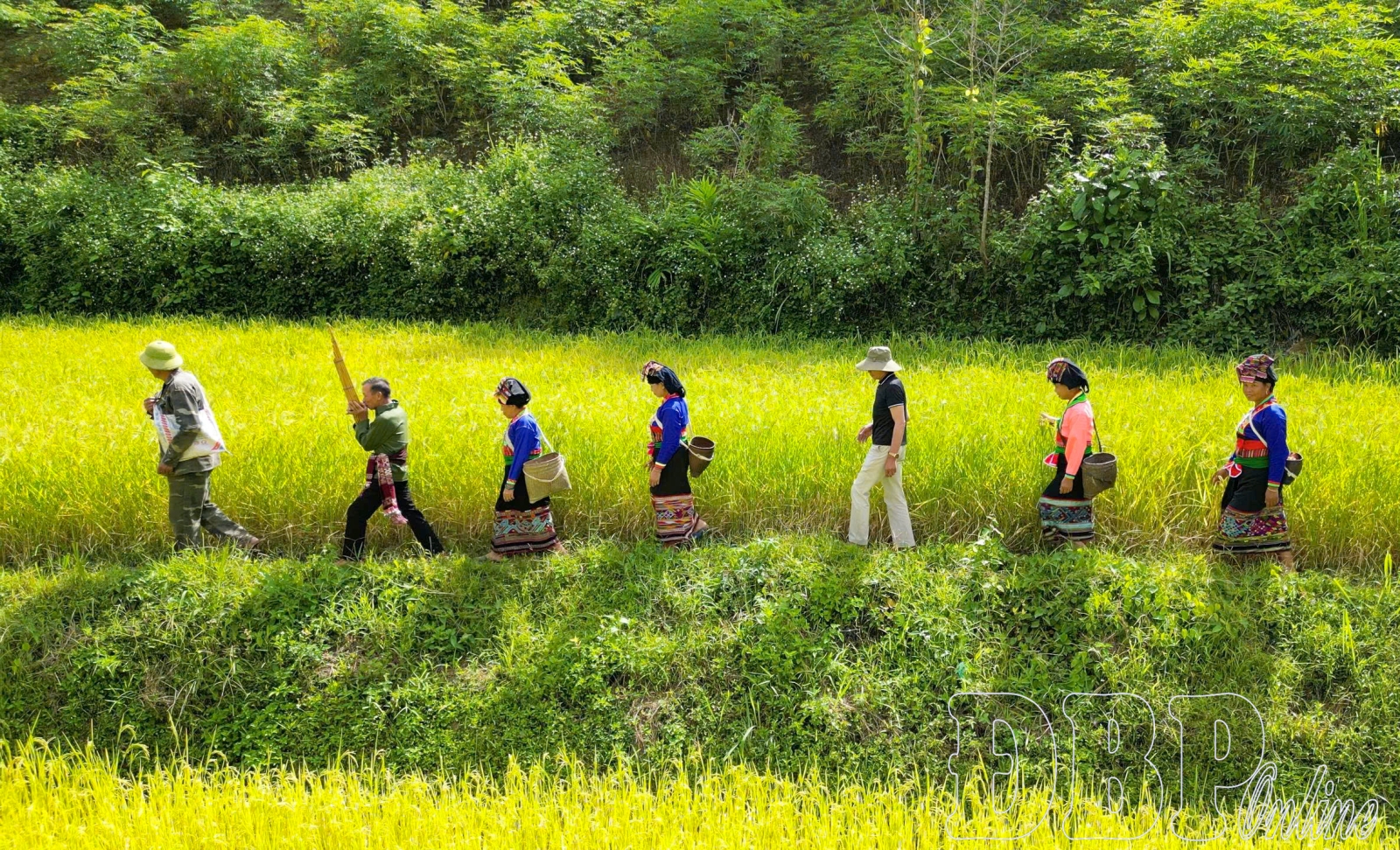
Assessing the value of this ritual in contemporary life, Hạng A Giàng, Vice Chairman of the Mường Nhà commune People’s Committee, observed that what is most precious is that through decades, Lào villagers across commune settlements have fully retained the soul of the Khẩu Hó Festival. Daily living customs, traditional attire, panpipe melodies, and the lăm vông dance preserved inside each stilt house represent invaluable assets. This is not merely spiritual practice, but a bedrock for Mường Nhà to orient community-based tourism paired with heritage preservation, allowing travelers to immerse themselves in authentic cultural environments rather than staged performances.
“To realize this orientation, local authorities are actively coordinating with the cultural sector to conduct inventories and compile documentation to propose recognition as an intangible cultural heritage. Documenting heritage is carried out directly within village living quarters, strictly avoiding excessive theatrical staging to guarantee authenticity as the core key to sustainable tourism development.”
Departing Mường Nhà at dusk, the image lingers of children skipping in traditional brocade attire, clutching packets of fragrant khẩu hang as they accompany their parents on festive visits. Nurtured naturally through each Khẩu Hó season, the heritage stream of the Lào people along the remote borderland will flow on through time.
Hà Linh



You have 500/500 characters left
Please enter 5 or more characters!!!