



By harnessing local cultural assets, investing in infrastructure, improving service quality and developing distinctive tourism products, the province is pursuing a path that can make its destinations more attractive, create new livelihoods and raise local incomes while helping preserve and promote the cultural identities of its ethnic communities.
Building destinations on cultural identity
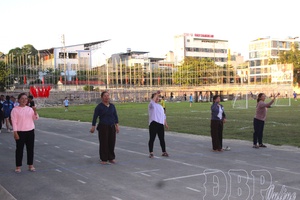
Recently, Pu Nhi commune organized a cultural and sports program to celebrate Independence Day and launched the Tù Lu - Tìa Ló community-based tourism village. The local authority has been investing in this model since 2024, gradually creating an experiential tourism space centered on the natural landscape and traditional cultural values of the Hmong community.
Located more than 1,200 meters above sea level at the foot of the major mountain ranges in the Phù Lồng area, Tìa Ló village enjoys a cool climate year-round, fresh air and a landscape often shrouded in mist. These natural advantages offer strong potential for ecotourism and leisure tourism combined with opportunities to experience local community life and culture.
Tìa Ló has 161 households with a population of 781, all of them Hmong. Local residents continue to preserve a rich array of distinctive traditions, including traditional clothing, customs, festivals, folk songs, dances and games, notably the traditional Tù Lu game (a Hmong spinning-top game). Local specialties, cuisine and traditional agricultural and forestry practices further enrich the village’s tourism potential, creating opportunities for authentic, distinctive visitor experiences.
Since 2024, the former Điện Biên Đông district has invested more than VND 170 million from the National Target Program on New Rural Development to build an entrance gate, creating a focal point for welcoming visitors. In 2025, the locality continued to invest more than VND 7 billion in an exhibition house, five rooms showcasing local specialties, a stage, a public lighting system along the village’s main roads, a public-address system and other technical infrastructure.
Community-based resources have also been mobilized. Agencies and units in Pu Nhi commune have been assigned to support households developing community-based tourism. More than 2,000 workdays contributed by local officials, civil servants, public employees and armed forces personnel have been mobilized to improve the landscape, clean up the environment and help residents prepare to welcome visitors.
To date, 15 households in the village have registered to participate in tourism activities, including five offering homestay accommodation and meals. These are the first steps toward turning Tù Lu - Tìa Ló into an attractive destination.
Chá A Mua, Head of Tìa Ló village, said the development of community-based tourism has received strong support from Party committees and local authorities, along with active participation from residents. Households registering to develop tourism have been guided in improving the surrounding landscape, renovating their homes, developing homestays and creating community-based products and experiences. Local residents are also gradually changing their mindset and understanding of how tourism development can go hand in hand with cultural preservation.
Đinh Quang Bạo, Chairman of the Pu Nhi commune People’s Committee, said the commune had proposed that the provincial Department of Culture, Sports and Tourism include Tù Lu - Tìa Ló in the list of destinations prioritized for annual investment, for consideration and approval by the competent authorities. The commune also plans to organize further community-based tourism training courses, with priority given to holding them directly in the village.
At the same time, the commune hopes provincial departments and agencies will continue to support and mobilize investment so that the village can gradually improve its infrastructure, attract more visitors and create higher incomes for local residents.
.jpg)
Expanding Điện Biên’s tourism landscape
According to Phạm Văn Thăng, Head of the Tourism Operations Division under the Department of Culture, Sports and Tourism, Tù Lu - Tìa Ló is part of a broader provincial effort to develop community-based tourism.
Under the province’s Community-Based Tourism Development Plan, by 2030, Điện Biên aims to have at least seven community-based tourism sites officially recognized as tourist destinations, as well as one community-based tourism site certified to meet ASEAN community-based tourism standards.
These destinations will be developed with a focus on preserving, safeguarding and promoting the traditional cultural values and identities of local ethnic communities. The province aims for 100% of community-based tourism sites to have a community activity house and a regularly active and effective folk performance group, while at least 70% of tourism facility owners and community-based tourism operators are expected to receive professional management training.
Điện Biên currently has 14 villages capable of welcoming tourists, with more than 40 homestay models in operation. Each village has a folk performance group and a food service team, catering to visitors seeking local music and dance, traditional cuisine, accommodation and hands-on experiences.
However, community-based tourism and other tourism products in ethnic minority and mountainous areas have yet to develop in line with their potential.
Infrastructure and tourism facilities remain incomplete; products are not yet diverse or sufficiently attractive; and the local workforce does not fully meet development requirements. Some homestay operators lack the resources to renovate their accommodation and upgrade services, while promotion and digital transformation remain limited. Experiential products also lack depth and competitiveness.
For community-based tourism to develop into a distinctive and attractive form of tourism capable of generating multiple benefits, training and developing human resources will be crucial.
Trần Hải Hà, Director of the Department of Culture, Sports and Tourism, said that in the coming period, the sector would work with clubs, community-based tourism villages and businesses to develop product chains rooted in local cultural values, create more experiences for visitors and improve the effectiveness of cultural resource development.
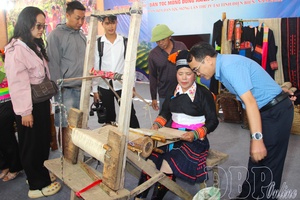
Art performances and demonstrations of traditional crafts will be organized regularly at tourist sites, accommodation facilities and public spaces. The sector will also assign specialists to provide training and communications support to local clubs, develop programs to stimulate demand during the low season and strengthen cooperation among tourism operators, creating fresh momentum for tourism development in 2026-2027.
Alongside Resolution No. 12-NQ/TU of the provincial Party Committee, the provincial People’s Council recently issued Resolution No. 16/2026/NQ-HDND, introducing a range of policies to support tourism product development, covering infrastructure, tourism products, human resources, communications, promotion and digital transformation.
The new policy support is expected to help address bottlenecks involving village roads, visitor reception facilities, street lighting, public toilets and internet access, while also supporting the development of OCOP products and experiential tourism products, as well as promotion and digital transformation.
For homestay operators, the policy also provides support for renovating accommodation facilities, purchasing equipment, improving surrounding landscapes and accessing preferential loans to expand their businesses.
From culturally rich villages to distinctive tourism products, Điện Biên is gradually expanding its tourism landscape in a more structured and sustainable direction. With infrastructure investment, higher-quality products, local residents taking a central role and culture placed at the heart of tourism development, Điện Biên is moving closer to establishing itself as an attractive destination on the regional tourism map.
Mai Phương


.jpg)
.jpg)


.jpg)
.jpg)
.jpg)

.jpg)
.jpg)
.jpg)
You have 500/500 characters left
Please enter 5 or more characters!!!