



The approach focuses not merely on attracting visitors, but on creating in-depth products, elevating service quality, promoting cultural values, mobilizing social resources, and step by step turning tourism into a spearhead economic sector.
Right from early 2026, the provincial People’s Committee issued a plan to implement Resolution 12. The plan clearly defines goals, tasks, timelines, and responsibilities across levels, sectors, localities, and the business community; requiring provincial departments, boards, sectors, and People’s Committees of communes and wards to formulate specific plans, mobilize resources, and organize practical execution. Under this orientation, for the 2026-2030 period, Điện Biên strives to welcome over 8 million visitor arrivals, generating total revenue of around VND 15,000 billion; specifically in 2030, reaching 2.65 million arrivals, including 600,000 international visitors, total revenue exceeding VND 5,000 billion, contributing 11% to GRDP, and generating jobs for 19,500 workers. The province also targets having 285 accommodation establishments, 60 homestays, developing 5 agricultural tourism models, 7 community-based tourism villages, and ensuring all 45 out of 45 communes and wards possess tourism products or destinations.
To turn goals into concrete actions, the province established an Assisting Team for the Tourism Development Steering Committee; while submitting to the Provincial People’s Council for the promulgation of Resolution No.16/2026/NQ-HĐND dated June 29, 2026, stipulating policies supporting tourism product development. Concurrently, destination management has received close attention. In the first 7 months of the year, the province officially recognized additional tourism destinations: Nà Sự village, Phiêng Lơi village, the Bản Phủ Citadel Historical-Cultural Relic, and A Pa Chải Flagpole. This recognition not only establishes a legal basis for administration, but also expands space to build products, attract investment, and serve visitors.
.jpg)
One of the key orientations identified by the province is developing tourism based on distinctive intrinsic values. The implementation plan for Resolution 12 guides three primary product groups: historical - spiritual tourism; ethnic cultural identity and nature exploration tourism; and resort, recreational, and wellness tourism. Among these, the Điện Biên Phủ Battlefield relics, the cultures of the Thái, Hmông, and Hà Nhì ethnic groups, community-based tourism, agriculture, OCOP products, and nature experiences are defined as vital foundations to create distinctive offerings.
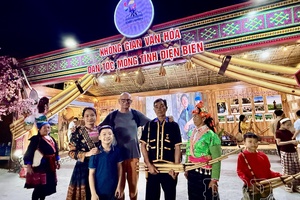
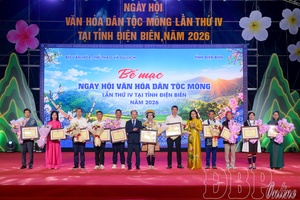
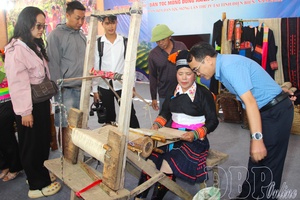
Practical implementation shows this direction is progressively taking shape. The entire province currently has 24 cultural heritages inscribed on the national list of intangible cultural heritage, an increase of 2 heritages compared to 2025; including 2 heritages inscribed by UNESCO as representative intangible cultural heritage of humanity. Many cultural values have been developed into tourism products, such as the Hoàng Công Chất Temple Festival, the Water Splashing Festival, and the Thái xòe dance.
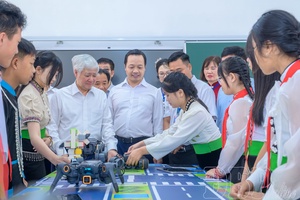
The 2026 Ban Flower Festival continued to be organized with a rich series of cultural, sports, and tourism activities; alongside new destinations such as the Memorial House of President Hồ Chí Minh and the Him Lam Resistance Center. Technology has also been integrated into exhibitions and experiential activities at cultural institutions, featuring 3D film screenings, 3D mapping scale models, 3D museums, and digital media products.
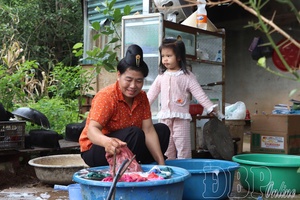
In community-based tourism, the methodology has shifted from general advocacy to surveying, learning, and assisting product development. Earlier this year, the province organized a study tour comprising Party cell secretaries, village heads, and exemplary households to learn from community tourism and homestay development experiences in Tuyên Quang; while surveying the current situation to finalize tourism product support policies across communes and wards.
Along with promotion, the province focuses on digital transformation, developing and perfecting the Smart Tourism System, while preparing promotional products and publications on culture and tourism. This is also identified as a long-term direction, aiming to digitize relics and destinations, develop digital maps, and apply AI, virtual reality, and smart tourism applications. Human resources are recognized as the decisive factor in service quality. The province has issued plans to organize tourism training courses and conducted training sessions on procedures and operational skills for community-based tourism. Concurrently, regional linkages with the expanded Northwestern provinces have been enhanced.
In the first 7 months of the year, Điện Biên welcomed an estimated 1,047,000 visitor arrivals, reaching 65% of the yearly target and increasing 19% over the same period in 2025; international arrivals reached 7,886. Total tourism revenue reached VND 1,897 billion, up 20% year-on-year. In the coming time, the province will continue urging communes, wards, departments, and sectors to issue action programs promptly; review and adjust plans to match realities; finalize procedures supporting product development; formulate the Tourism Development Master Plan for the 2026-2030 period with orientations toward 2035; and promote investment attraction, digital transformation, and workforce training.
Thereby, the objective of transforming tourism into a spearhead economic sector moves beyond orientation to become concretized into specific missions across every level, sector, locality, and enterprise community - laying the groundwork for Điện Biên’s tourism to grow deeply, sustainably, and with high competitiveness.
Đức Kiên
.jpg)
.jpg)
.jpg)
.jpg)
.jpg)

.jpg)
.jpg)
.jpg)
You have 500/500 characters left
Please enter 5 or more characters!!!