



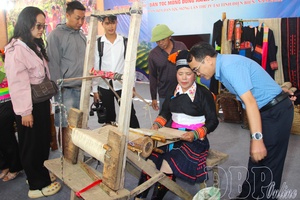
At the foot of Phù Lồng mountain, Tìa Ló village in Pu Nhi commune nestles within a relatively pristine mountain forest setting. All 161 households with 781 residents here belong to the Hmông ethnic group. Traditional costumes, folk tunes, folk dances, culinary traditions, and folk games remain present in community life.
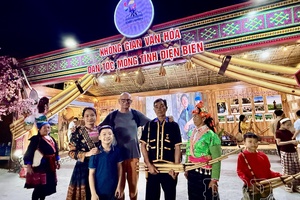
On the occasion of National Day this year, Tìa Ló village officially launched the Tù Lu - Tìa Ló community tourism product, a destination imbued with Hmông ethnic cultural identity. This represents the locality’s approach to transforming traditional cultural values into distinctive tourism products, attracting visitors to tour and experience them firsthand.
.jpg)
The model received investment attention starting in 2024, featuring a welcome gate, exhibition house, product showroom, performance stage, lighting system, and ancillary facilities. Alongside state resources, villagers contributed thousands of workdays to build the cultural house, renovate residences, landscape grounds, maintain environmental sanitation, and prepare conditions to welcome guests for experiential activities and accommodation. To date, Tìa Ló village has 15 households registered to participate in tourism, of which 5 households have initially organized homestays and dining services. Through this, an experiential space is progressively taking shape where tourists can explore and immerse themselves in the cultural life of the Hmông people.
Endowed with abundant resources, Mường Phăng has long been a familiar destination for visitors within and outside the province, especially during holidays. The locality features the historical relic of the Điện Biên Phủ Campaign Headquarters, Pá Khoang lake, Pu Tó Cọ peak, and the characteristic cultural space of the Thái ethnic group (Black Thái branch). Alongside these, the annual Cherry Blossom Festival forms a prominent highlight attracting travelers. However, visitors to Mường Phăng primarily toured and returned the same day, keeping stays short. Facing that reality, the province and local authorities have proactively undertaken concrete measures to diversify tourism offerings. Community tourism, accommodation facilities, homestay models, and new experiential activities have been developed, extending visitor stays and expanding exploration journeys in Mường Phăng.
Mường Phăng is piloting a model combining tourism with agriculture. Trần Văn Tuấn, Chairman of the People’s Committee of Mường Phăng commune, stated that the locality does not want tourism to stop merely at monument visits, but aims to progressively expand offerings tied to seasonal green agriculture. Over recent years, red-fleshed Ruby guava has been an agricultural product prioritized for development. Thanks to favorable climate and soil conditions alongside dedicated tending by residents, Ruby guava cultivated in Mường Phăng delivers high yields, with fruit that is crisp, fragrant, and richly flavored. During guava season, tourists can visit orchards, pick fruit with their own hands, enjoy it on the spot, take photos, and learn about local farming practices.
One household piloting this approach is the family of Lò Thị Diên in Hả village, with 50 guava trees. The orchard opens its doors to experiential visitors from August to October. Mường Phăng Ruby guava is finalizing its dossier to apply for OCOP certification, aiming toward brand establishment and market expansion.
“Beyond Ruby guava, the commune has established cultivation models for Black Finger summer grapes, strawberries, and macadamia. Among these, grapes cover about 0.65ha, strawberries 0.3ha, and macadamia around 25ha. The commune coordinated with the Department of Agriculture and Environment to conduct surveys, make an overall assessment of potentials, and set concrete orientations to build agricultural and rural tourism models in the area,” Trần Văn Tuấn noted.
Home to 19 ethnic groups, Điện Biên holds diverse cultural resources. However, the question remains how to preserve these values sustainably while turning them into products compelling enough to attract and retain tourists. Through cultural, sports, and tourism promotion events organized over recent times, the province has created additional opportunities to promote and bring local cultural products and images closer to travelers.
.jpg)
This orientation has been concretized by Resolution No.16/2026/NQ-HĐND on policies supporting tourism product development. The policy focuses on supporting items and activities that many localities lack, such as tourism village infrastructure, homestays, reception centers, parking lots, and restrooms; traditional art performances, experiential models, digital transformation, promotion, and support for travel enterprises bringing visitors to Điện Biên. For the 2026 - 2030 period, the province sets the target that 45 out of 45 communes and wards have tourism products; developing 5 agricultural tourism models, 7 community tourism villages, and raising tourists’ average length of stay to 3 days. Between now and the end of the year, Điện Biên plans to continue putting into operation multiple identity-rich tourism products and events, unlocking new experiences for visitors.
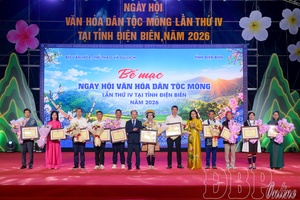
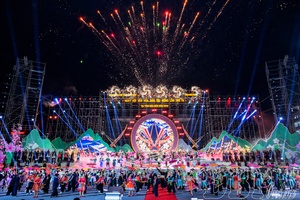
An immediate highlight is the 4th National Hmông Ethnic Cultural Festival, scheduled to take place from October 9 to 11, 2026. This serves as an occasion to introduce and showcase the distinctive cultural values of the Hmông people in tandem with sightseeing and experiential activities, thereby enhancing destination appeal. Following that, from October 17 to 22, the 2026 Điện Biên International Trade Fair will be held at 7/5 Square, featuring 230 booths from 120 domestic and foreign entities and enterprises. The fair offers a venue for tourists to experience and purchase OCOP items and signature agricultural produce. Through this, it contributes to presenting an image of a dynamic, identity-rich, and increasingly integrated Điện Biên.
According to Trần Hải Hà, Director of the Department of Culture, Sports, and Tourism, for tourism to develop effectively, destinations must continue tapping characteristic values in culture, history, ecological landscapes, and local specialties. On that basis, products with depth and distinct hallmarks can be formed step by step. The sector also identifies improving service quality, diversifying experiential activities, and strengthening linkages between culture, agriculture, sports, and tourism. Promotional efforts across digital platforms are being accelerated, bringing the image of Điện Biên closer to visitors within and outside the province.
Over the long term, the province directs the development of culinary tourism streets, pedestrian zones, night markets, agricultural tourism, and products surrounding Pá Khoang lake. Alongside these are research and investment into resort, sports, entertainment, and ecotourism products. This development direction aims to diversify experiences, extend lengths of stay, and raise visitor spending when coming to Điện Biên.
Hà Linh
.jpg)
.jpg)
.jpg)
.jpg)
.jpg)
.jpg)
.jpg)
.jpg)
You have 500/500 characters left
Please enter 5 or more characters!!!