



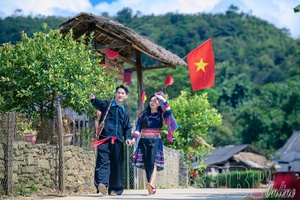
Amid the mountains and forests of Mường Pồn, more than 30 Hmông households in Huổi Nhả village once relied mainly on agriculture and struggled to make a living. Yet even with limited infrastructure, local residents have gradually changed their approach, making use of the resources and advantages they already have to develop tourism.
.jpg)
In 2023, residents of Huổi Nhả village came together to develop their village as a community-based tourism destination. With little funding for large-scale infrastructure, they started with what was readily available - timber, bamboo and stone - using these materials to build entrance gates, improve village roads and tidy up homes and surrounding areas.
Showing us around the village, Lầu A Minh said: “Economic conditions and infrastructure here are still limited. So we make use of whatever is available, such as timber, bamboo and stone, to build entrance gates and improve the roads. We start with what we have and make the village cleaner and more attractive. When visitors come in the future, they will see what makes our village unique.”
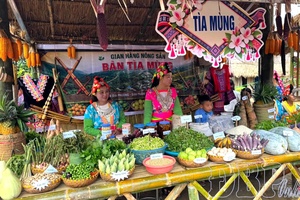
In September 2026, Tù Lu Tìa Ló community-based Tourism village in Pu Nhi commune was officially launched, with more than 160 households, all of them Hmông. Located at the foot of the Phù Lồng mountain area, at an elevation of more than 1,200 meters above sea level, Tìa Ló enjoys a cool climate, pristine natural landscapes and distinctive cultural traditions, all valuable assets for developing tourism products.
.jpg)
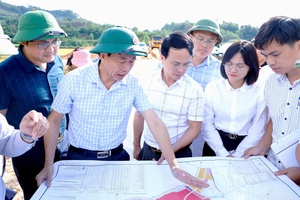
As tourism infrastructure began to take shape, local Party committees and authorities invested more than VND 170 million in 2024 to build an entrance gate for the village. In 2025, a further VND 7.1 billion was invested in an exhibition house, product display rooms, a stage, lighting systems and other technical infrastructure. Alongside public investment, local residents contributed more than 1,000 workdays and mobilized VND 150 million in social contributions to build a community cultural house. Individual households have also improved their homes, cleaned up the surroundings, enhanced the village landscape and prepared to welcome and serve visitors seeking sightseeing and hands-on experiences.
Sharing his joy at the village becoming a community-based tourism destination, Vừ Sĩ Di, a resident of Tìa Ló village, said: “Although the government has invested in the village, local people have also contributed their time and effort. Our village needs to be beautiful if we want visitors to come. We contribute workdays and money, build the community cultural house and clean up the village together. When visitors come to see and experience village life, we will have more jobs, sell our products and earn additional income.”
Residents are increasingly recognizing that tourism development must go hand in hand with preserving and promoting their traditional cultural values. To date, 15 households in Tìa Ló have registered to provide tourism services, with five initially developing small-scale homestays and offering meals to visitors.
.jpg)
Đinh Quang Bạo, Chairman of the Pu Nhi commune People’s Committee, said: “The most important thing is for local people to see themselves as the owners. Our culture and our landscape are ours to protect. When visitors come to experience our way of life, enjoy our food, learn about our culture and buy local products, the people must benefit. Only then will they have the motivation to preserve these values over the long term. That is the core of community-based tourism development.”
In reality, while the State provides infrastructure investment and local authorities provide direction for community-based tourism, residents must be the direct creators of tourism products and the ones who determine the vitality of a destination. The changing mindset and approach of the Hmông communities in Huổi Nhả and Tìa Ló are gradually bringing traditional cultural values into play and turning tourism into a new livelihood opportunity.
Under Resolution No. 12 of the provincial Party Committee, Điện Biên aims to develop seven community-based tourism villages across the province by 2030. Achieving this goal will depend heavily on strengthening the role of local residents as the owners and key actors, particularly in areas where ethnic minority communities are concentrated and many distinctive cultural values remain well preserved. The Hmông villages are already beginning to put this approach into practice. Alongside public investment and support from businesses, organizations, individuals and grassroots authorities, local residents themselves are helping create a new face for their villages.
.jpg)
Going forward, local authorities will continue improving infrastructure, strengthening tourism-service skills, developing distinctive tourism products, connecting destinations and promoting Điện Biên’s tourism image. At the same time, greater emphasis will be placed on the community’s role in preserving cultural identity, protecting the environment and landscape, and laying the foundation for sustainable tourism development.
Nguyễn Văn Lương, Chairman of the Mường Pồn commune People’s Committee, said: “In Huổi Nhả, local residents have focused on restoring the existing landscape to develop community-based tourism. Given their proactive spirit, the commune has called for investors to come to Huổi Nhả with a view to developing community-based tourism here. With the consensus of local residents and guidance from the authorities, Huổi Nhả is gradually building itself into an attractive destination.”
From Hmông villages, local residents are beginning to turn their cultural heritage and natural landscapes into community-based tourism assets. Each village has its own approach, but they share the same goal: taking ownership of tourism development in their own homeland. This is also the foundation for Hmông villages in Điện Biên to preserve their traditional cultural identity, create new livelihoods and gradually emerge as attractive, green, clean and culturally distinctive destinations in the Northwestern region.
Phạm Quang
.jpg)
.jpg)
.jpg)
.jpg)
.jpg)
.jpg)
.jpg)
.jpg)
.jpg)
.jpg)
.jpg)
You have 500/500 characters left
Please enter 5 or more characters!!!