



Pristine beauty holding back visitors
As dawn breaks over the Đà River reservoir, early morning mist softly blankets the water surface. A small boat glides gently, taking tourists to peaceful lakeside spaces. Amid the quiet atmosphere, engine sounds blend with forest bird calls to forge a distinct rhythm of the Northwest mountains and forests. That very pristineness prompts many visitors to willingly travel long distances to Tủa Thàng, a destination gradually becoming a preferred choice for nature lovers exploring Điện Biên.
.jpg)
Visiting the Đà River reservoir and Pa Phông bay in Tủa Thàng commune for the first time, Hà Thanh Thư from Hà Nội could not hide her delight before the scenery. She shared that she was truly surprised to discover Điện Biên holds such a majestic and poetic space, where cascading mountain ranges reflect upon blue waters, calling to mind a Hạ Long Bay amid mountains and forests. She added that she decided to stay overnight to fully enjoy nature’s beauty, noting that sitting by the fireplace in the evening and waking up amidst reservoir mist in the early morning were experiences she would remember for a very long time.
Leaving Tủa Thàng, the journey of discovery continues to open up enticing destinations. The Chiếu Tính field in Sính Phình commune unfolds like a vast rice valley amidst mountains, highlighted by a turtle-shaped hill. Further away lies the Tả Phìn ancient rock field, where millions of cat-ear limestone outcrops are layered to create a wondrous landscape that attracts lovers of experiential travel and nature exploration. Reaching the ancient Shan Tuyết tea forest in Sín Chải commune reveals hundreds-of-years-old tea trees recognized as Heritage Trees of Vietnam, with every stop offering an engaging experience that enriches the journey through Điện Biên province.
Along with these, Điện Biên possesses attractive natural beauty such as Pá Khoang lake, majestic cave systems, U Va hot mineral springs, Pha Đin pass, and Mường Nhé Nature Reserve. These advantages serve as the foundation for the province to orient the development of eco-tourism, resort, and experiential tourism products. According to Resolution No.12-NQ/TU of the Executive Board of the provincial Party Committee on tourism development for the 2026-2030 period with orientations toward 2035, Điện Biên province concentrates on attracting investment to develop tourism around the Pá Khoang lake area while establishing resort types linked with ecological landscapes. Concurrently, Mường Nhé Nature Reserve is oriented toward developing into an environmental research and education space combined with experiential tourism, contributing to promoting primary forest ecosystem values and raising nature conservation awareness.
.jpg)
Cultural identity forging distinct appeal
While nature creates initial appeal, cultural identity serves as the element retaining visitors. Home to 19 coexisting ethnic groups, Điện Biên possesses a rich heritage treasure trove in architecture, costumes, festivals, folk arts, traditional crafts, and culinary culture.
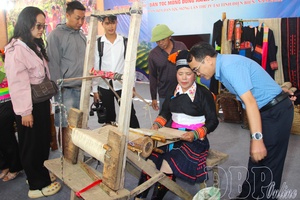
In recent years, the province focused on developing community-based cultural tourism villages, regarding them as signature products of Điện Biên tourism. Numerous villages of Thái, Mông, and Hà Nhì ethnic groups, such as Phiêng Lơi, Lồng, Huổi Nhả, Quan Chiên, Nà Sự, and A Pa Chải, have undergone landscape refurbishment, homestay model development, cultural troupe establishment, and experiential activity organization. Visiting community tourism villages, tourists stay in traditional houses, cook alongside locals, weave brocade, weave bamboo, and join daily farming activities, with these authentic experiences creating distinct appeal for community tourism in Điện Biên.
During his journey exploring Điện Biên, Lương Văn Tư from Thái Nguyên province chose to stop at the Phiêng Lơi community-based cultural tourism village in Điện Biên Phủ ward. Enjoying traditional Thái ethnic dishes, joining the solidarity Xòe dance circle, and learning about local lifestyles brought him engaging experiences. He shared that what impressed him most was how residents preserve and present their culture, as every stilt house, traditional outfit, folk song melody, and custom carries its own story, adding that the genuine hospitality of villagers made him feel like a returning relative rather than a mere visiting tourist.
.jpg)
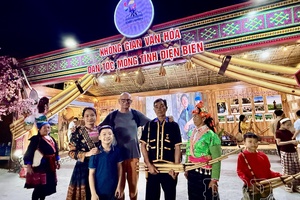
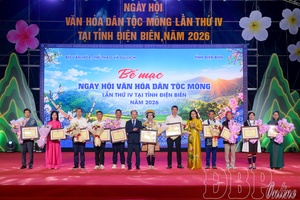
Concurrently, numerous traditional festivals are preserved, restored, and step-by-step transformed into signature tourism products. The Ban Flower Festival, Swallow-Tailed Boat Racing Festival, Bản Phủ Citadel Festival, and Cherry Blossom Festival have become annual tourist-attracting cultural events. Traditional New Year celebrations of Thái, Mông, Lào, and Hà Nhì ethnic groups also open opportunities for tourists to immerse themselves in festival atmospheres and learn about the spiritual life, customs, and practices of Điện Biên’s ethnic communities.
Trần Hải Hà, Director of the Department of Culture, Sports, and Tourism, affirmed that Điện Biên tourism possesses potential and advantages in natural resources alongside distinct cultural identity. The province determines to develop tourism sustainably, taking nature, culture, and history as foundations. Alongside infrastructure investment, the province focuses on developing eco-tourism and community tourism sites while preserving traditional cultural values so visitors to Điện Biên enjoy distinct and memorable experiences.
Pristine nature, rich cultural identity, and historical imprints form Điện Biên’s unique advantages on Vietnam’s tourism map. Developing cultural tourism and exploring natural landscapes is identified as one of three pillars in Resolution No.12 of the Executive Board of the provincial Party Committee on provincial tourism development for the 2026-2030 period with orientations toward 2035. As potential is preserved and exploited sustainably, Điện Biên will become a destination where tourists immerse themselves in nature, feel cultural depth, and treasure unforgettable experiences.
Nguyễn Hiền
.jpg)
.jpg)
.jpg)
.jpg)

.jpg)

.jpg)
.jpg)
.jpg)
You have 500/500 characters left
Please enter 5 or more characters!!!