



Clarifying relationships between controlled testing mechanisms
Contributing feedback on the draft Law on Cultural Industry Development, Trần Tiến Dũng, Member of the Party Central Committee, Secretary of the provincial Party Committee, Head of the provincial National Assembly Deputy Delegation, suggested clarifying the controlled testing mechanism (Sandbox), especially the relationship between provisions in the draft Law and mechanisms already stipulated in certain other statutes, such as the Law on Science, Technology, and Innovation.
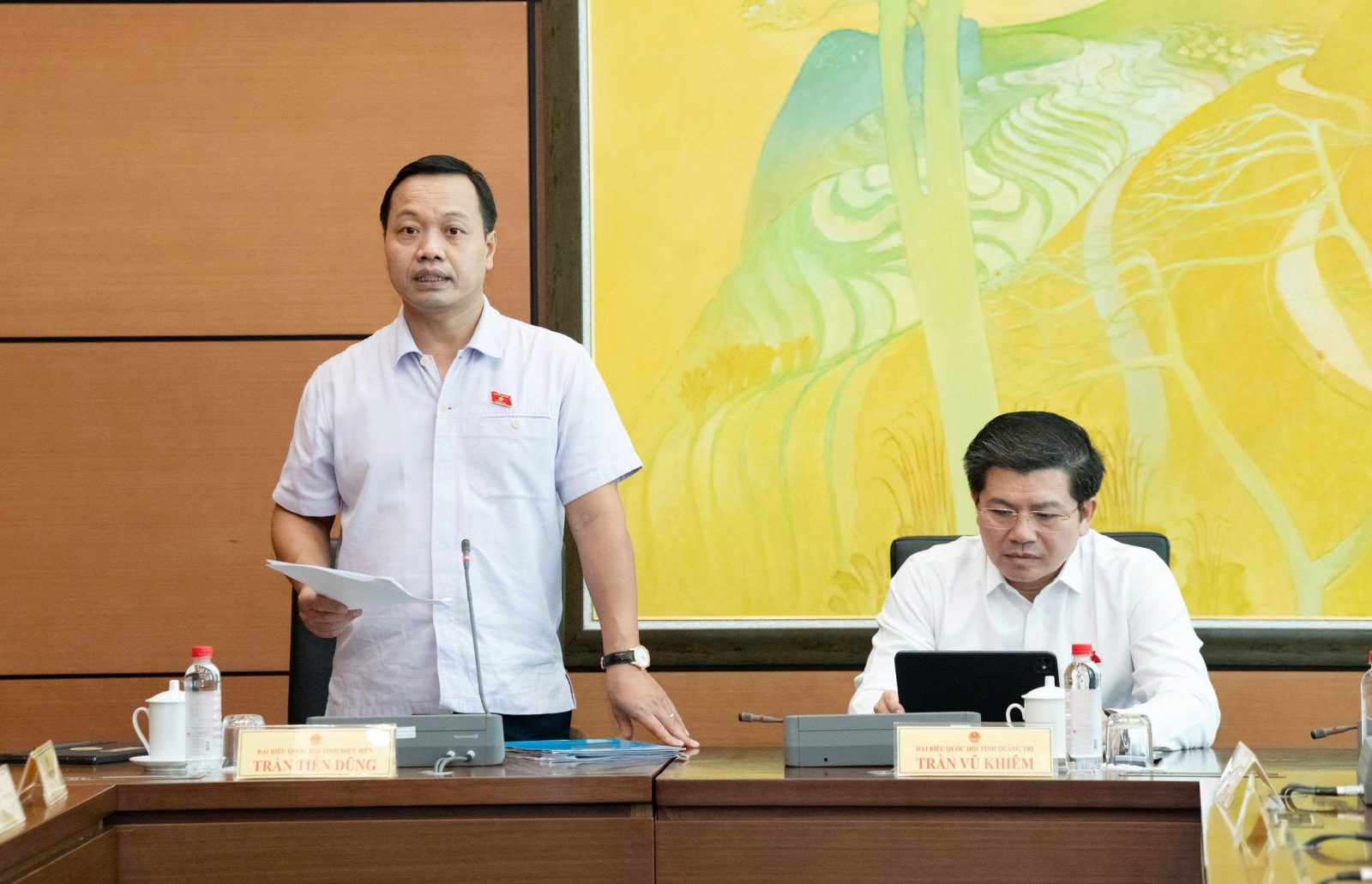
Regarding the establishment of creative complexes, clusters, and creative cultural industrial parks, the Head of the provincial National Assembly Deputy Delegation proposed clarifying the conditions, modalities, and formation mechanisms, particularly their relationship with the categories of zones already prescribed by land legislation. The deputy noted that current law contains provisions for high-tech parks, industrial parks, and economic zones, but lacks the specific designation of creative cultural industrial parks as introduced in the draft. Given ties to land acquisition mechanisms, if these do not fall under statutory land acquisition cases and must rely on voluntary agreements, deployment could encounter major obstacles.
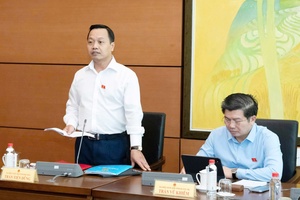
Also contributing opinions on mechanisms implementing cultural industry development policies, Deputy Vừ A Bằng proposed clearly delineating the competence of provincial-level People’s Councils and People’s Committees in determining support policies and organizing programs to stimulate the consumption of cultural industry products. Regarding provisions on utilizing local venture capital funds, the deputy suggested reviewing and demarcating decision-making authority, ensuring alignment with Government’s Decree No.264/2025/NĐ-CP, consistency with the prevailing legal system, and feasibility in operational enforcement.
Notably, Deputy Vừ A Bằng suggested explicitly stipulating that expert councils established by the Minister of Culture, Sports and Tourism or the Chairman of the provincial-level People’s Committee to advise, appraise, conduct specialized assessments, and determine the potential value of intellectual property rights in cultural industries shall operate on a concurrent basis and perform no price appraisal functions. Evaluation results from these councils should serve solely as reference information, rather than substituting formal price appraisal results pursuant to price legislation.
Tightly controlling food safety hazards
Regarding the draft Law on Food Safety (amended), Deputy Trần Tiến Dũng stated that the draft centers primarily on transitioning from pre-audits to post-audits. The deputy suggested further analyzing and clarifying methods to streamline administrative procedures while firmly maintaining control over food safety risks.
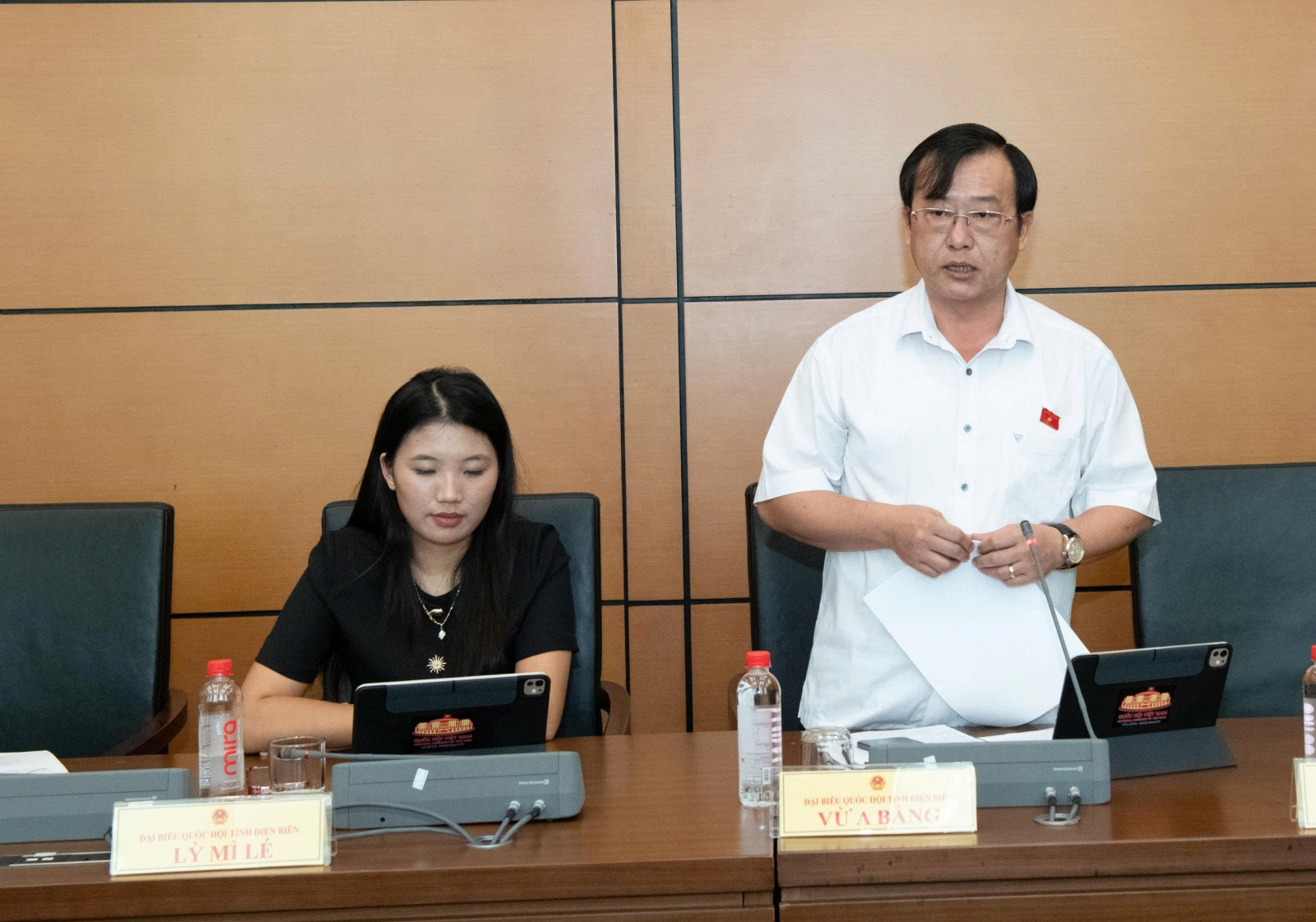
Sharing concern over the mandate to enhance food safety oversight, Deputy Vừ A Bằng proposed re-examining the list of establishments exempt from obtaining Certificates of Food Safety Eligibility in the draft Law, which currently includes hotel restaurants and collective canteens not registered under food business lines. According to the deputy, these entities can operate on a regular basis, serving large volumes of consumers; several hotel restaurants also host wedding banquets, conferences, and large-scale catering events, harboring potential food safety risks if not strictly overseen. It is essential to research classifications based on scale, operational nature, and serving capacity to specifically determine mandatory certification versus exemption cases, aligned with risk tiers and state management requirements.
Regarding provisions on revoking Certificates of Food Safety Eligibility, Deputy Vừ A Bằng argued that relying solely on the number of food poisoning incidents without official conclusions regarding their root causes could lead to arbitrary, inconsistent enforcement, encroaching upon the legitimate rights and interests of organizations and individuals. The deputy proposed amending the provision toward considering poisoning incidents as grounds for certificate revocation only when investigation and verification findings formally confirm ties to food manufactured, processed, traded, or supplied by the establishment. Concurrently, it is necessary to clearly distinguish certificate revocation from necessary emergency measures implemented to prevent and mitigate food safety hazards throughout the investigation and verification period.
Mai Hồng







You have 500/500 characters left
Please enter 5 or more characters!!!