



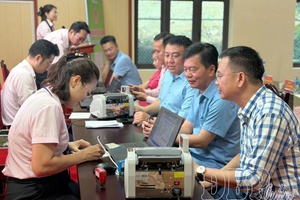
Núa Ngam currently has 12 hamlets and villages. With an expansive territory and a widely dispersed population across multiple areas, delivering information to the right people at the right time is of utmost importance. At the commune Public Administrative Service Center, procedures categorized by sector are publicly posted and simultaneously disseminated across digital platforms. Citizens can proactively research dossier components, workflows, processing times, statutory fee rates, and contact points for questions or bottlenecks. According to figures publicized on the commune’s electronic portal, from July 2025 to July 2026, the center received more than 4,100 dossiers and delivered results for nearly 4,100 dossiers, achieving an on-time resolution rate of 99.96%. Trần Phương Nam, Deputy Director of the Núa Ngam Commune Public Administrative Service Center, stated that alongside publicizing procedures, workflows, dossier requirements, and processing durations, cadres directly guide citizens on unclear matters so they can take the initiative in completing paperwork.
In the villages, information is conveyed in more approachable ways. In Ten Núa village, schedules for meetings, community gatherings, communal affairs, security and order, fire prevention, traffic safety, or scam warnings are announced through diverse forms. According to Lò Văn Chấp, Village Head of Ten Núa, matters requiring deliberation are brought to village meetings for discussion; appropriate contents are broadcast over public loudspeakers; and issues directly concerning specific households are handled through direct visits and detailed explanations by village heads and cadres. Through direct meetings and exchanges, information flows not only from the authorities down to the people but also in reverse. Cadres grasp what villagers care about or are concerned with, allowing them to clarify and address issues promptly. Thus, public disclosure is designed not merely for “the people to know,” but also to create conditions for “the people to speak.”
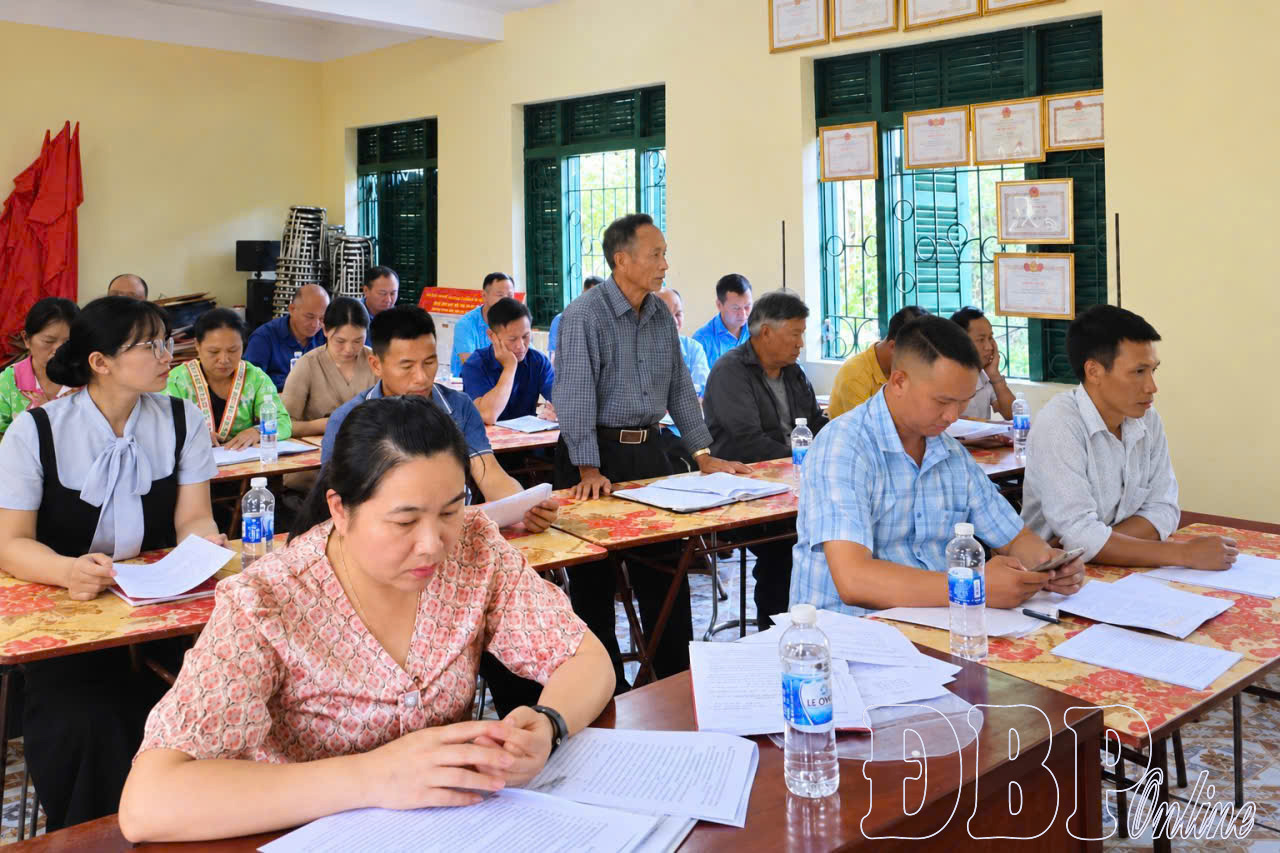
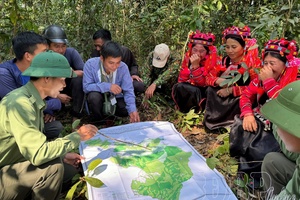
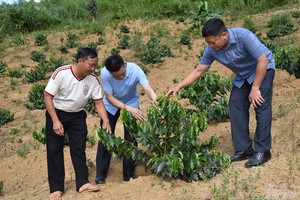
Moving from knowing to reaching consensus involves another vital step: the people must understand how guidelines relate to their livelihoods and daily existence. The development of coffee and macadamia in Na Son commune serves as an illustrative example. From early April 2026, the commune organized meetings across villages and residential clusters to inform residents about policies for developing these two crops, support mechanisms, tending techniques, investment capital, off-take markets, and potential risks. Inquiries were directly answered by specialized cadres before villagers decided whether to participate.
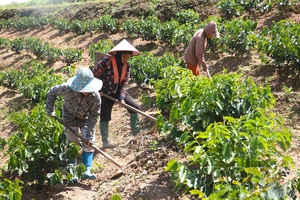
Thào A Di, from Keo Lôm village, observed that when village matters are communicated clearly, residents feel far more assured. Regarding coffee and macadamia planting, villagers were given specific explanations about what benefits they would receive, how they needed to implement the work, and only registered after gaining a thorough understanding. According to the report for the first nine months of 2026, Na Son planted over 361ha of new coffee and 50ha of intercropped macadamia. Behind every hectare lies production land, investment capital, manual labor, and household income. Therefore, mobilizing residents to restructure crops cannot rely solely on highlighting benefits; it requires full disclosure of costs, techniques, market outlets, and risks so that villagers can weigh options before deciding. In doing so, residents do not passively receive guidelines, but directly choose and participate in implementation.
Publicity and consultation are all the more indispensable for programs and projects that directly affect land, property, and livelihoods.
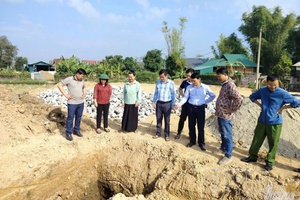
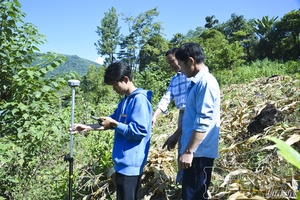
In Pu Nhi commune, the Điện Biên 1 Solar Power Plant Project affects 69 households and two collective organizations, with a total acquired land area exceeding 740,000m². By August 5, 2026, the commune had disbursed over VND 6.8 billion in compensation and support to 31 households in Pu Cai village. Because every plan, land parcel, and compensation rate directly touches upon each family’s rights and interests, full transparency and clear explanation are imperative. Nguyễn Đình Minh, Vice Chairman of the Pu Nhi Commune People’s Committee, affirmed that for matters directly affecting local citizens, the people must know, discuss, and participate. Comprehensive publicity helps the people understand guidelines, policies, and their civic responsibilities, while helping authorities receive cooperation and public oversight during execution. Pu Nhi currently has 1,978 households with 10,101 residents. In 2026, the plan to reorganize local villages from 25 down to 16 was also put forward for review and public consultation, receiving high consensus among the people. This was not merely a change in numbers or naming, but a restructuring directly linked to community organization and daily life; hence, the people needed to take part right from the preparatory phase.
Reality demonstrates that a posted document does not guarantee public comprehension, nor does an organized meeting ensure substantive discussion. Publicity must be accompanied by explanation, dialogue, and feedback. The people not only need to know “what the government will do,” but also need to understand how it affects them, what their rights and responsibilities are, and how their opinions are absorbed. From Núa Ngam and Na Son to Pu Nhi, each locality handles distinct assignments, yet all demonstrate a single truth: consensus is not merely everyone chiming in with “agreement.” Having lingering doubts or diverse viewpoints is natural when a policy touches upon the rights and livelihoods of multiple families. What matters is that those opinions are voiced, listened to, explained, and addressed satisfactorily.
When the people know from the very beginning, discuss matters directly concerning them, and supervise execution, consensus rests upon a sustainable foundation. Only then do guidelines penetrate practical life - not solely through governmental mobilization, but through the proactive, conscious participation of the people themselves.
Kông Thao

You have 500/500 characters left
Please enter 5 or more characters!!!