



Part 3: Maintaining the bridge linking the Party’s will with the people’s heart
The imperative placed upon each Party cell is how to stay genuinely close to the people, attuned to the grassroots level, unite Party members, and forge public consensus. This demands renewed leadership methods, innovating everything from how cadres grasp the people’s thoughts and aspirations to how guidelines are executed and practical emerging bottlenecks are resolved.
When Party cells become anchors of public trust
Nestled at the foot of Phù Lồng Mountain, Tìa Ló village in Pu Nhi commune has been home to generations of Hmông ethnic households. The year 2026 marked a major milestone when Tìa Ló A and Tìa Ló B villages were consolidated, forming a new residential cluster of 160 households and 781 residents. Alongside the spatial reorganization, two Party cells merged into the unified Tìa Ló village Party Cell, comprising 34 Party members.
During the 2024-2025 period, the community tourism model in Tìa Ló received state investment exceeding VND 7 billion to construct various infrastructure items, including a welcome gate, an exhibition hall, a performance stage, and lighting systems. Yet the greatest bottleneck at the time lay in residents’ hesitancy, self-sufficient subsistence habits, and a passive mindset of staying on the sidelines. Without transforming the mindset and practices of individual households, multibillion-dong facilities risked sitting idle and failing to unlock their true potential.
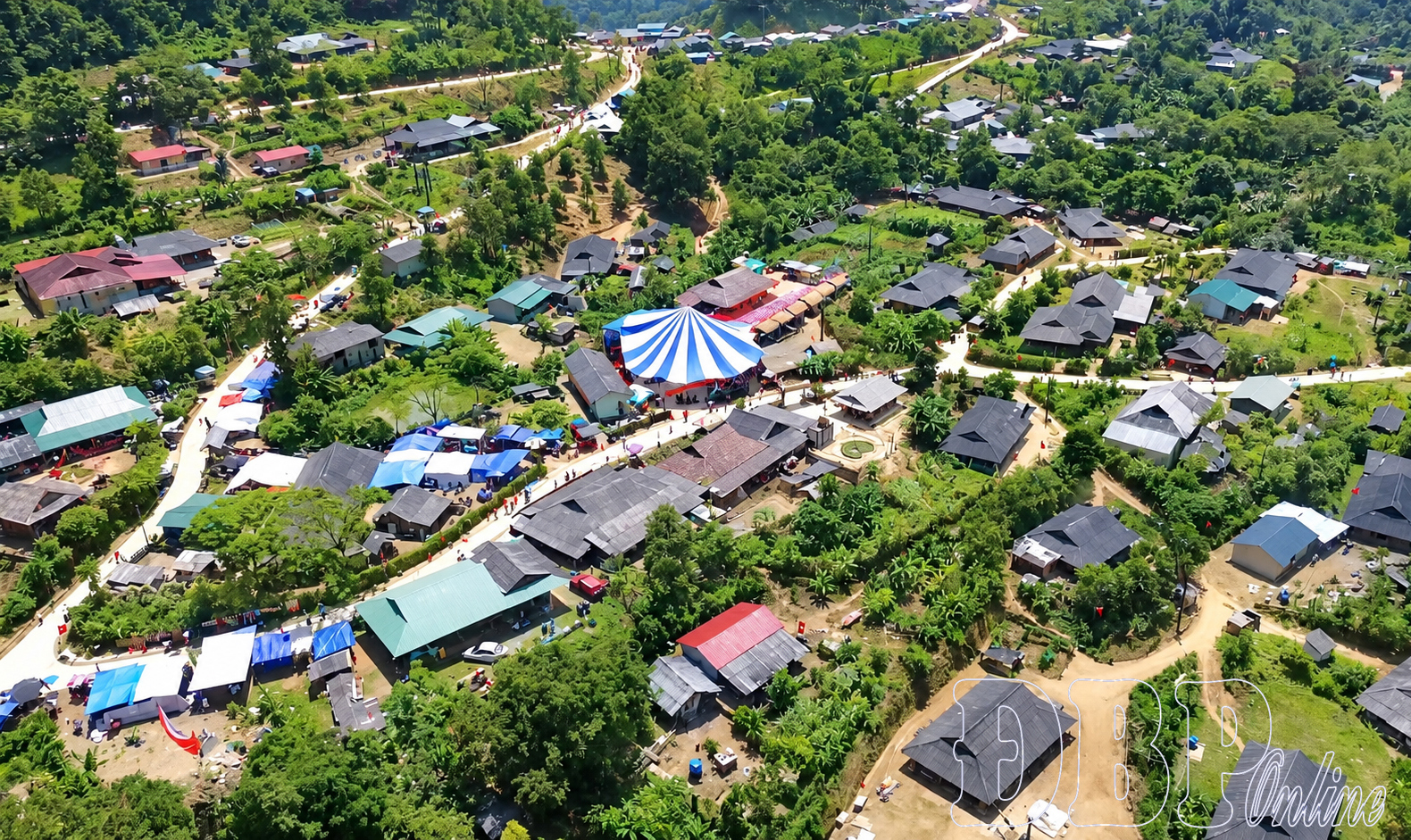
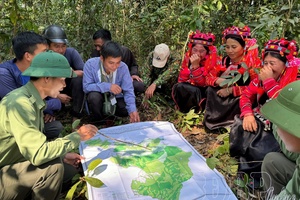
Pinpointing this exact bottleneck immediately after consolidating its apparatus, the Tìa Ló Village Party Cell determined: to transform the people’s mindset, the Party cell had to renew its leadership methods first, shifting from “one-way directives” to “rolling up sleeves to discuss together, work together, and assume end-to-end accountability.” Vừ Sĩ Di, Secretary of the Tìa Ló village Party Cell, enthusiastically shared: “Following the merger, the Party cell has more members and handles a heavier workload. The Party cell agreed on a unified stance: to gain the people’s trust, the 34 Party members must stand united and speak with one voice first. For all tasks concerning the villagers, we do not engage in empty talk; Party members must go straight to swidden fields and into homes to sit with the people, listen to their hurdles, and jointly find solutions.”
Words matched deeds. Immediately upon organizational consolidation, the Party cell assigned individual Party members to take charge of household clusters. Rather than generic exhortations, Party members visited each home, instructing villagers on everything from arranging livestock barns, collecting waste, and keeping village roads clean to communicating and interacting with tourists.
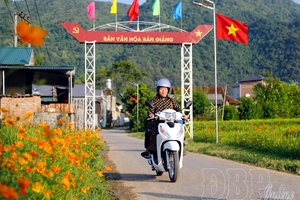
From sound guidelines to tailored mobilization, the Party cell step-by-step built consensus among the people. The household of Vừ A Tà was among the pioneers, renovating their wooden home, landscaping the premises, cleaning pens, and planting flowers along the entrance to operate a homestay. The family of Lầu A Tằng completed three guest rooms, learned to cook traditional Hmông dishes, and brought panpipe tunes and folk dances to serve tourists. When villagers clearly saw the benefits and trusted the collective orientation, the community tourism model steadily expanded from a handful of pioneering households, creating supplemental livelihoods right in the village.
Witnessing leading models bring about clean transformations and real income, initial hesitation and skepticism swiftly vanished. Tìa Ló villagers realized that their landscapes, culture, and rustic daily life represent “precious assets” for escaping poverty. Moving from passive bystanders, 21 households in the village have voluntarily registered to join hands in developing community tourism to date.
Chá A Mua, Head of Tìa Ló village, shared: “The Party cell does not impose orders or issue administrative decrees. When building roads or landscaping, Party member comrades are always the ones picking up hoes, carrying stones, and donating land first. Seeing Party members lead by example, villagers trust them and willingly follow. As a result, villagers voluntarily contributed funds and thousands of working days to widen roads and build the cultural house, forging a refreshed appearance for Tìa Ló today.”
A bridge translating guidelines into practical life
Following the merger of administrative units and the reorganization of Party cells in Mường Mùn commune, grassroots-level governance faced significant challenges: larger surface areas, fragmented terrain, and significantly increased household numbers. In this new setting, had Party organizations adhered to outdated leadership methods, the risk of “drifting away from the people” would have been unavoidable. Identifying this requirement, the Mường Mùn commune Party Committee promptly restructured leadership practices, adopting the spirit of “Cadres and Party members staying close to the people, understanding the people, and rolling up sleeves to work alongside the people” as the benchmark for each Party cell’s fighting capacity.
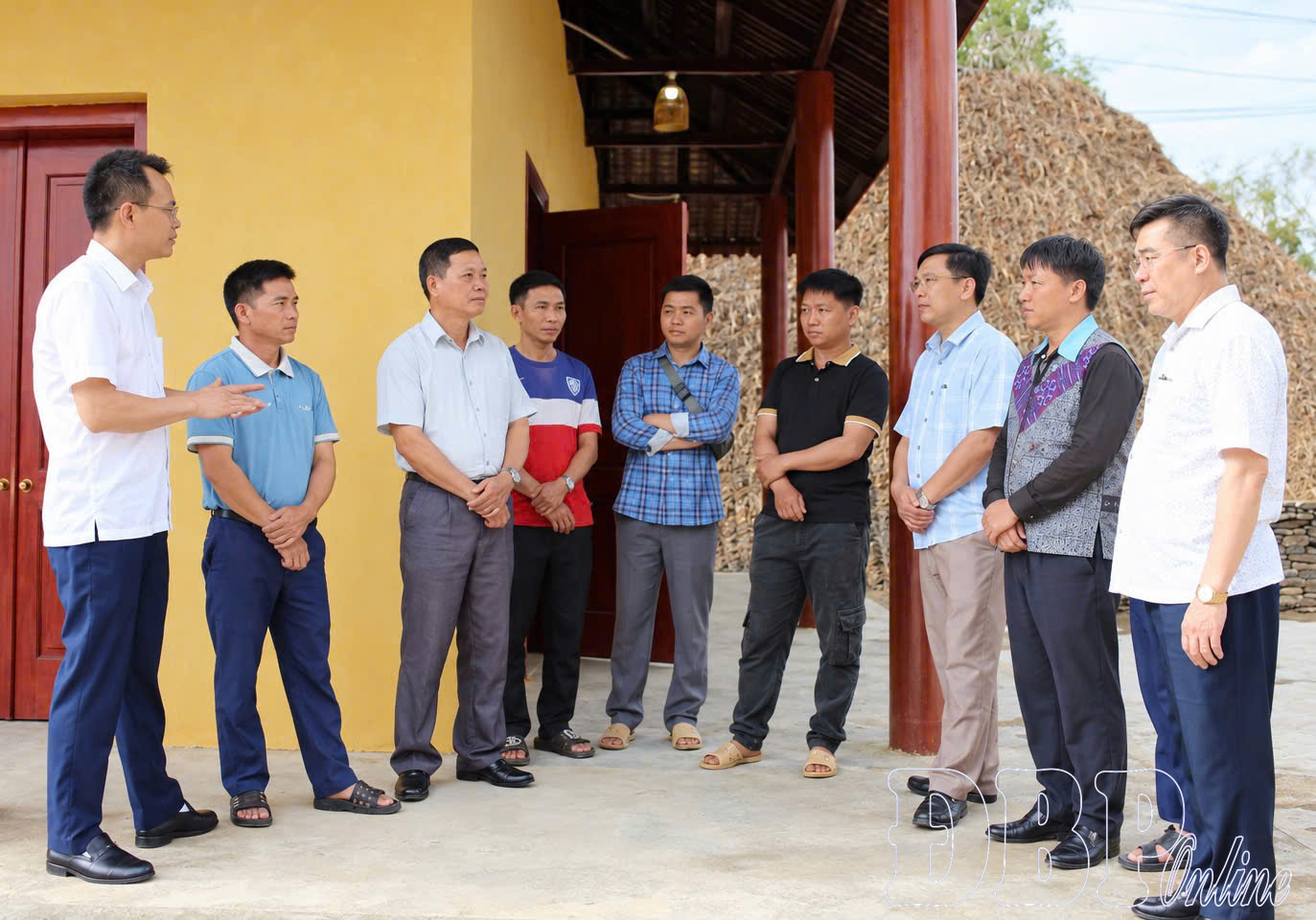
When the locality rolled out policies for large-scale coffee and macadamia development in 2026, post-merger grassroots-level Party cells immediately asserted their role as “on-site leadership cores.” Rather than assigning targets downward and abandoning oversight, Party cells assigned specific members to supervise household clusters under the “3-together” principle (discussing together, working together, and sharing responsibility together).
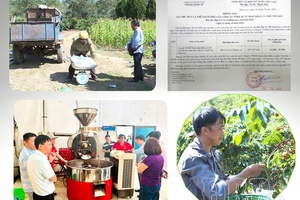
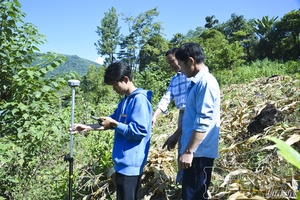
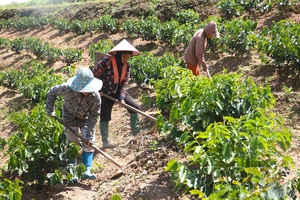
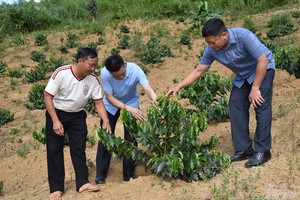
Across newly planted hillside slopes in Ta Pao village, the image of the Party cell secretary, the village head, and agricultural extension workers rolling up their trousers, wielding hoes to dig holes, and inspecting seedlings became a spiritual pillar cementing public trust. Meticulously caring for newly planted coffee saplings, Quàng Văn Tởn (Ta Pao village) confided: “The newly formed village has a larger population than before, but seeing cadres and Party members head straight to the fields and get their hands dirty alongside the people from day one gives my family great peace of mind. Whenever we encounter unfamiliar techniques, cadres and Party members come directly to the swiddens to guide us hand-by-hand, right at the roots.”
In Mường Mùn, the post-merger role of Party cells is most vividly reflected in shifting from “administrative management” to “partnering in livelihood governance.” The renewal of leadership methods and the proactive stance of grassroots-level Party organizations spearheaded breakthroughs for Mường Mùn. Assessing the transformation of Party organizations post-merger, Trần Khắc Tuấn, Secretary of the Mường Mùn commune Party Committee, affirmed: “Apparatus consolidation is merely the premise; the core element is elevating the leadership capacity of each Party cell to meet the demands of the new administrative space. To win public trust, the Party cell must be the center of solidarity, and cadres and Party members must roll up their sleeves to do real work and achieve real results.”
Sustaining the bridge from the grassroots level
Three months after the 888 newly formed villages, villages, and residential quarters commenced operations, practical experience in Điện Biên demonstrates: territorial reorganization is merely the first step; more crucially, Party organizations must demonstrate renewed leadership capacity, novel methods, and fresh efficiency in the new residential space. This embodies the overarching requirement in central and provincial orientations on Party building, rectification, and leadership method renewal in the new era: organizational apparatus must be tied to renovated operational methods; cadres and Party members - particularly leadership heads - must transition from awareness to action, matching words with deeds, and taking work outcomes as the benchmark of accountability.
Renewing leadership methods therefore does not lie in altering formal meeting formats or merely introducing technology into operations. The crux is that Party cells must perceive issues directly from daily life, identify the right tasks to undertake, designate clear individuals in charge, and persevere until final results are achieved. This entails clear assignments of personnel and tasks; the pioneering, exemplary role of cadres and Party members; and the capacity to translate resolutions into concrete actions verified through practical changes. Technology can support connectivity, exchanges, and workflow processing, but it cannot replace grassroots-level immersion, dedication, and the direct relationship connecting cadres and Party members with the people.
According to Bùi Xuân Trường, Deputy Head of the provincial Party Committee’s Organizing Commission, following the re-arrangements, the demands placed upon new Party cells go beyond organizational consolidation; they require elevating cadre responsibility and proactively untangling difficulties so newly formed villages and villages operate stably, stay close to the grassroots-level, and serve the people better. This demands that each Party cell thoroughly grasps local realities, accurately identifies problems arising from the grassroots-level, selects the right priorities for leadership, and executes them through to the very end.
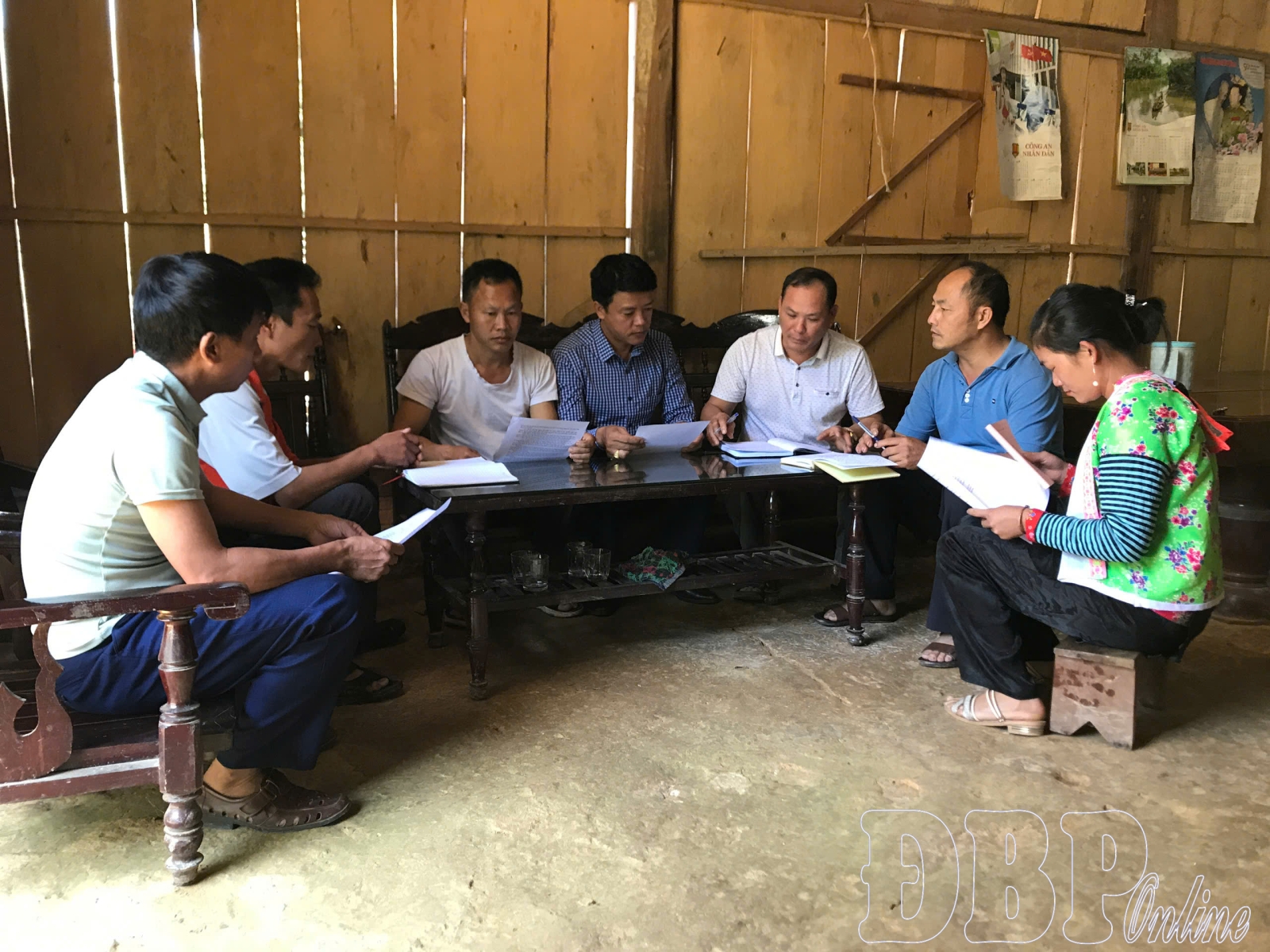
Innovating to elevate leadership capacity
Following July 1, 2026, Điện Biên’s 888 villages, villages, and residential quarters are shaping a new residential space. There, Party cells are not merely venues for disseminating policies or holding routine meetings, but have genuinely become organizations that assemble Party members and grasp the people’s aspirations; thereby identifying proper tasks to lead and execute end-to-end. The geographical expanse may be wider, and the community size larger, but the distance between the Party’s will and the people’s heart must be shortened through responsibility, leading by example, and working efficiency.
This serves as a true test for grassroots-level Party cells in Điện Biên entering the new era: the organization may be leaner, and the territory broader, but leadership capacity must be stronger, operational methods more attuned to reality, and ties with the people firmer. Ultimately, the strength of a grassroots-level Party organization lies not in the number of meetings held or resolutions issued, but in its ability to rally cadres, Party members, and citizens to tackle practical challenges, generating concrete, verifiable changes in real life.
When Party cells genuinely become political cores, leadership is demonstrated through action and results. And when the Party’s will harmonizes with the people’s heart in every specific endeavor, guidelines truly penetrate daily life, becoming a powerful collective force for communal action and development. That represents the benchmark of grassroots-level Party organization capacity across Điện Biên province in a new development space.
Bùi Quang - Chu Linh - Hà Linh


You have 500/500 characters left
Please enter 5 or more characters!!!