



Confronting the imperative to innovate leadership methods, on August 22, 2026, Party General Secretary and State President Tô Lâm, on behalf of the Politburo, signed and promulgated Resolution No.24-NQ/TW on promoting the pioneering, exemplary vanguard, innovative spirit, and the courage to think, act, and assume responsibility among cadres and Party members in the new era. The Resolution establishes concrete outcomes, specific deliverables, implementation efficiency, and the capacity to untangle bottlenecks as benchmarks. For Điện Biên, these requirements are becoming a concrete trial for each Party cell and its head. Territories are broader, distances are longer, and communities are more diverse. How, then, are Party cells shifting from “proper awareness” to “effective action”? The series “When Party Cells Enter a New Era” examines grassroots-level movements to find the answers...
Part 1: 24 hours of a new-era Party cell secretary
Having reduced hundreds of Party cells, streamlined numbers on administrative reports have been finalized. Yet, the real “baptism of fire” in the new administrative space has only just begun. Will a newly established organization automatically forge novel methods, or is it merely the old apparatus transplanted into an expanded geographical setting? Tracing the worn footsteps across 24 hours of the youngest ward Party cell secretary in Điện Biên Phủ reveals that the “key” lies not in administrative decrees, but begins with the spirit of “daring to think, act, and assume responsibility” from the smallest details!
No office hours
At dawn, while dense fog still blankets the winding concrete road hugging the hillsides up to Pa Pốm village, Điện Biên Phủ ward, the modest home of Vàng A Chí is already illuminated. In a cramped corner of the room, rhythmic clicks echo from an old desktop keyboard. The newly appointed Party cell secretary is painstakingly reviewing each land plot and swidden acreage belonging to local villagers, preparing to embark on a new working day.
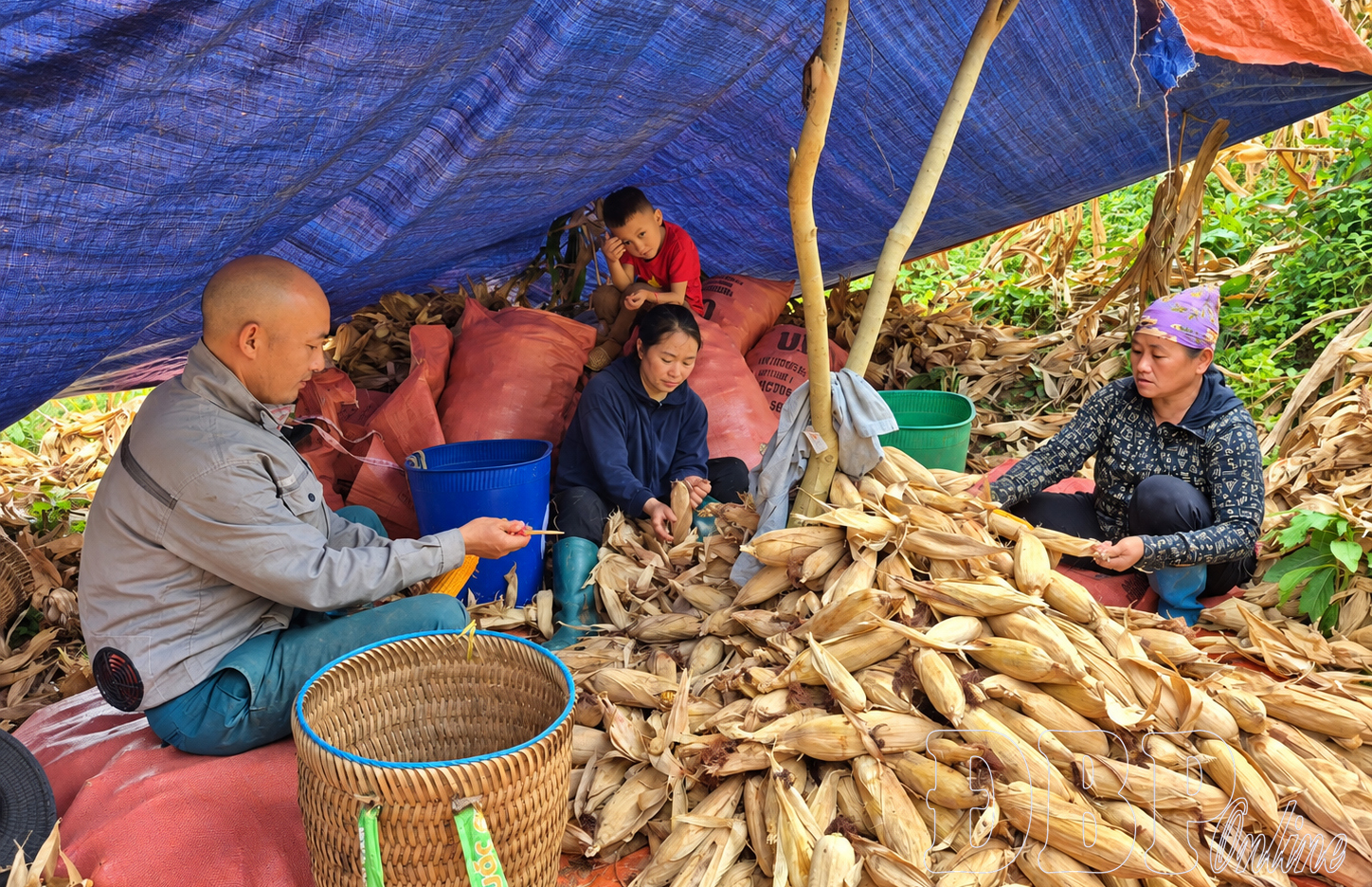
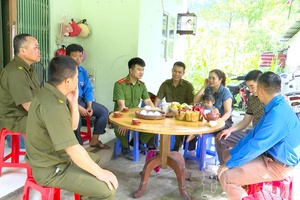
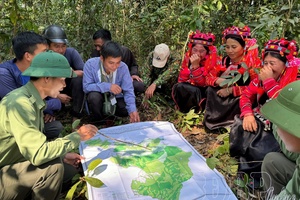
Leaving the computer screen once the fog has cleared entirely, Chí rides his motorbike up the slope down to a freshly harvested maize swidden. Approaching the makeshift canopy of a household group, he sits flat on the ground alongside fellow villagers, scooping up a handful of plump maize kernels while striking up an easy, conversational dialogue. Without issuing administrative commands or touting far-fetched crop or livestock ventures, he chooses to share common concerns with villagers: “If we cling tightly to maize and upland rice the old way, poverty will pursue us indefinitely. Could our village soil be suitable for testing a few new varieties?”
Following lengthy research, Chí understands the “logic” of the soil and the “mindset” of the Pa Pốm people. In this region, mentioning a new crop variety touches directly upon each household’s daily meal; a single misstep leaves villagers hungry. To mobilize villagers to break out of established ruts, the Party cell secretary must never rely on empty theory, but must hold concrete data, pocket practical expertise, and above all, dare to pioneer first, establishing a tangible basis for villagers to witness, evaluate, and replicate.
Returning from the maize swiddens and hurriedly finishing lunch, he sits back before the computer. After multiple exploratory field trips, Chí is pouring effort into scouring technical literature on cultivating guavas and pear-apples. He meticulously calculates local microclimates and soil conditions to determine whether the saplings can survive, then factors in seedling costs, fertilizer expenses, and product off-take markets. All collected knowledge is not meant to sit idle in a cabinet; he wants meticulous preparation for the next step: mobilizing several Party member households to “dare to act” alongside him first.
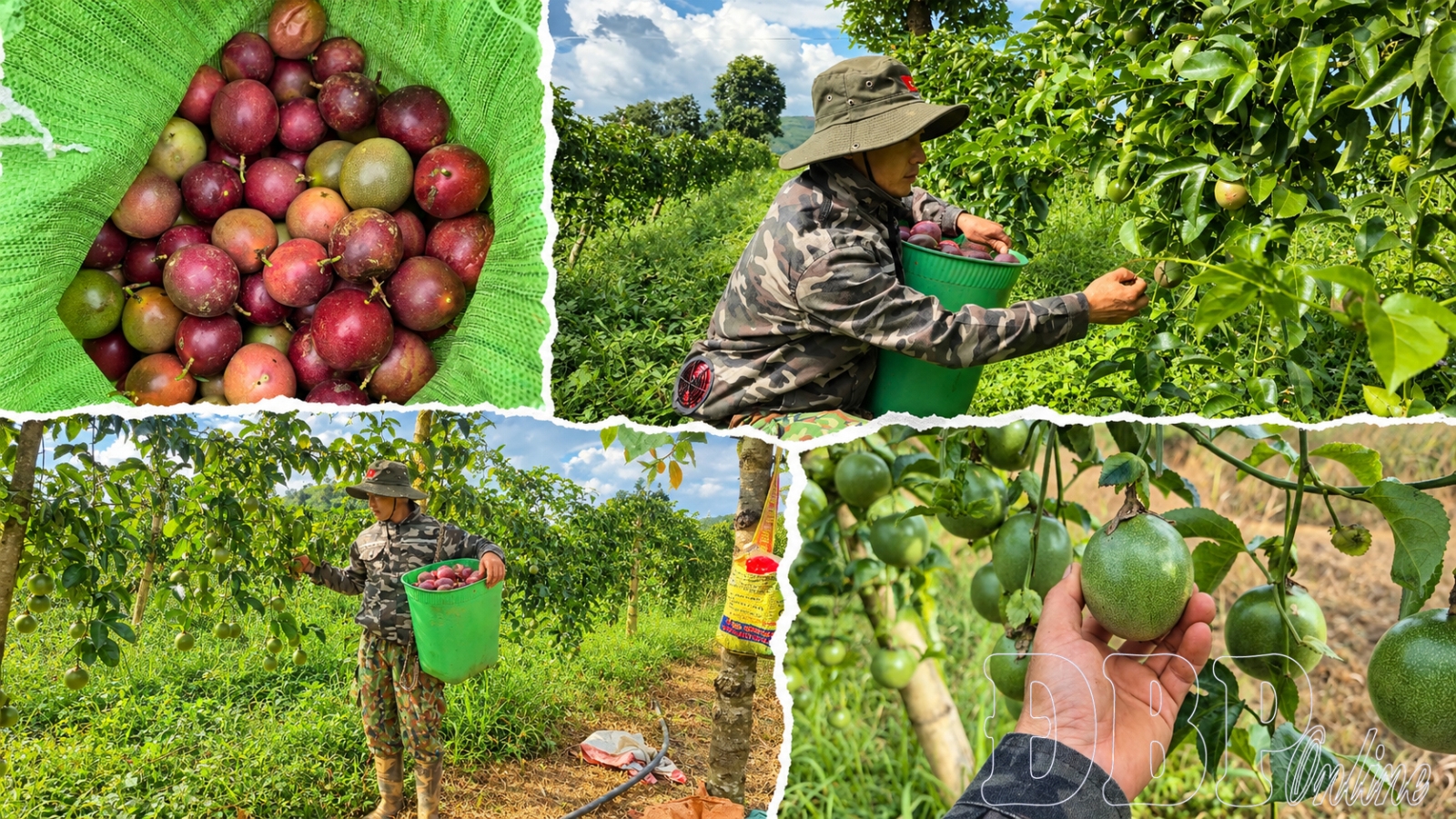
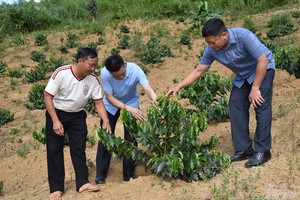
As the late afternoon sun softens, Chí hurriedly heads up to his family’s 1ha passion fruit hillside orchard currently entering harvest. This represents the model deployed in the village by the Department of Agriculture and Environment, for which he was the sole villager volunteering to experiment, gathering practical experience to mobilize villagers to expand acreage. Standing amidst trellis vines laden with fruit, swiftly picking the harvest with his hands while conversing with visiting households, villagers gather around asking about everything from sourcing saplings, digging planting pits, and applying fertilizers... to securing distribution outlets. Seeing villagers nod in agreement, Chí understands that his detailed answers at this moment represent the most vital mission of a Party cell secretary.
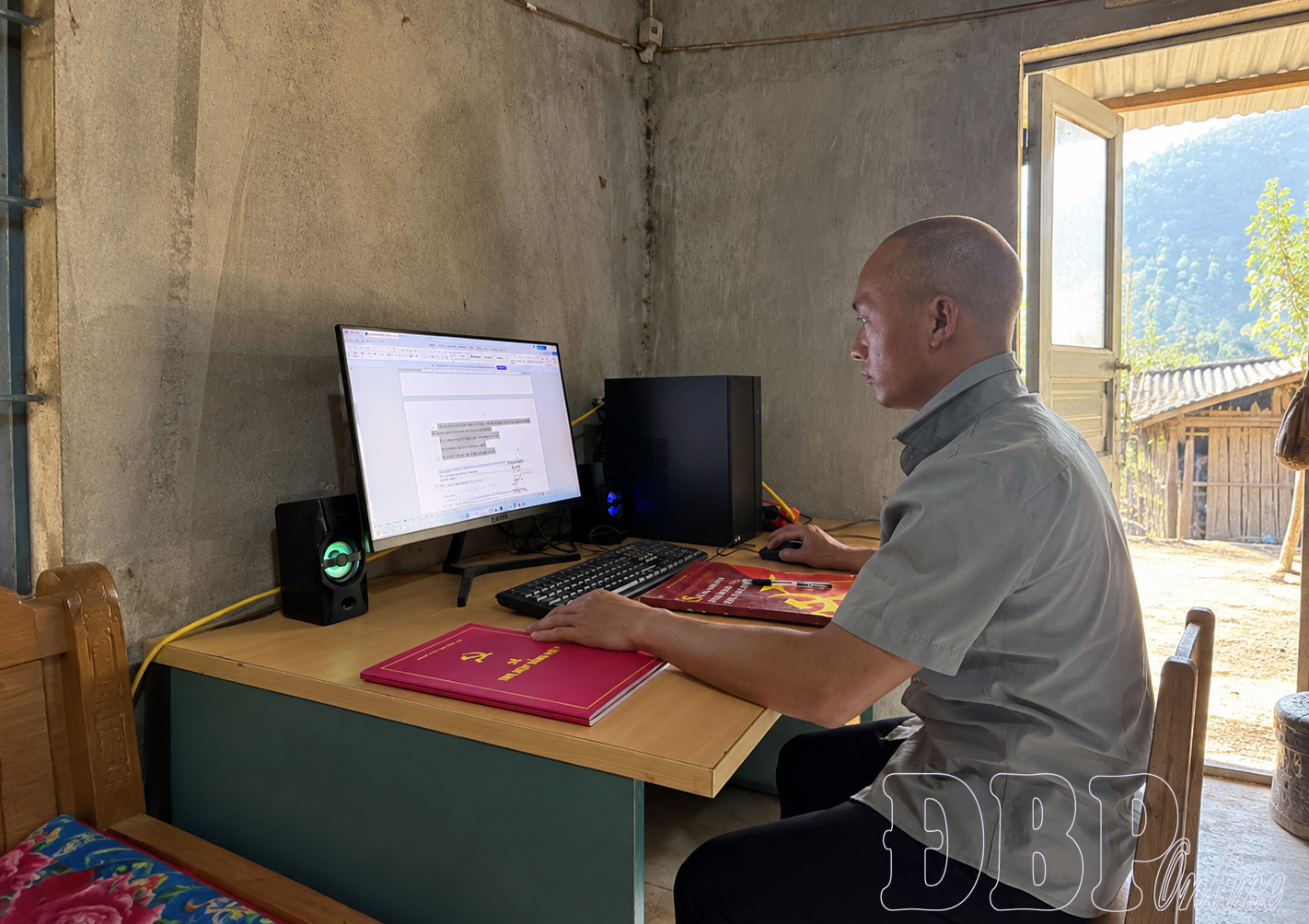
As the sun disappears behind the mountain range, work in the fields draws to a close, but the desk lamp in Vàng A Chí’s home lights up once more. Since operating under the new model, he spends most of his evenings examining every page of documents, scrutinizing new Party resolutions. Certain passages must be read repeatedly and cross-referenced extensively across the internet to grasp them accurately and thoroughly before convening the Party cell for dissemination.
Reflecting on the heavy pressure resting on his shoulders, the young secretary Vàng A Chí confided: “Now with only a two-tier local administration, grassroots-level workloads have concentrated heavily, multiplying the responsibilities of a Party cell secretary or village head manifold. I am the youngest Party cell secretary in the ward, overseeing the most disadvantaged locality. Whenever attending conferences alongside experienced, knowledgeable senior secretaries from central areas, to tell the truth, I feel quite self-conscious! Yet that very challenge compels me to learn every single day to keep pace with job demands.”
What does it take to measure up?
Born in 1992, Chí has served four years as Party cell secretary. In the recent reorganization drive, he continued to be trusted and retained in his position. Pa Pốm still sits within the “poverty core” of Điện Biên Phủ ward. Most local youth have migrated for factory work in industrial zones, leaving mostly the elderly and small children behind. The Party cell comprises a modest seven Party members, shouldering the responsibility of managing 50 households with over 270 residents, 100% of whom are Hmông ethnic people. Remaining local Party members are mostly advanced in years, making access to new knowledge and information technology an immense barrier. Under such circumstances, the imperative placed upon the Party cell secretary goes beyond maintaining Party organizational routines; he must innovate methods of mobilization, rally the people, and create transformations through concrete village tasks.
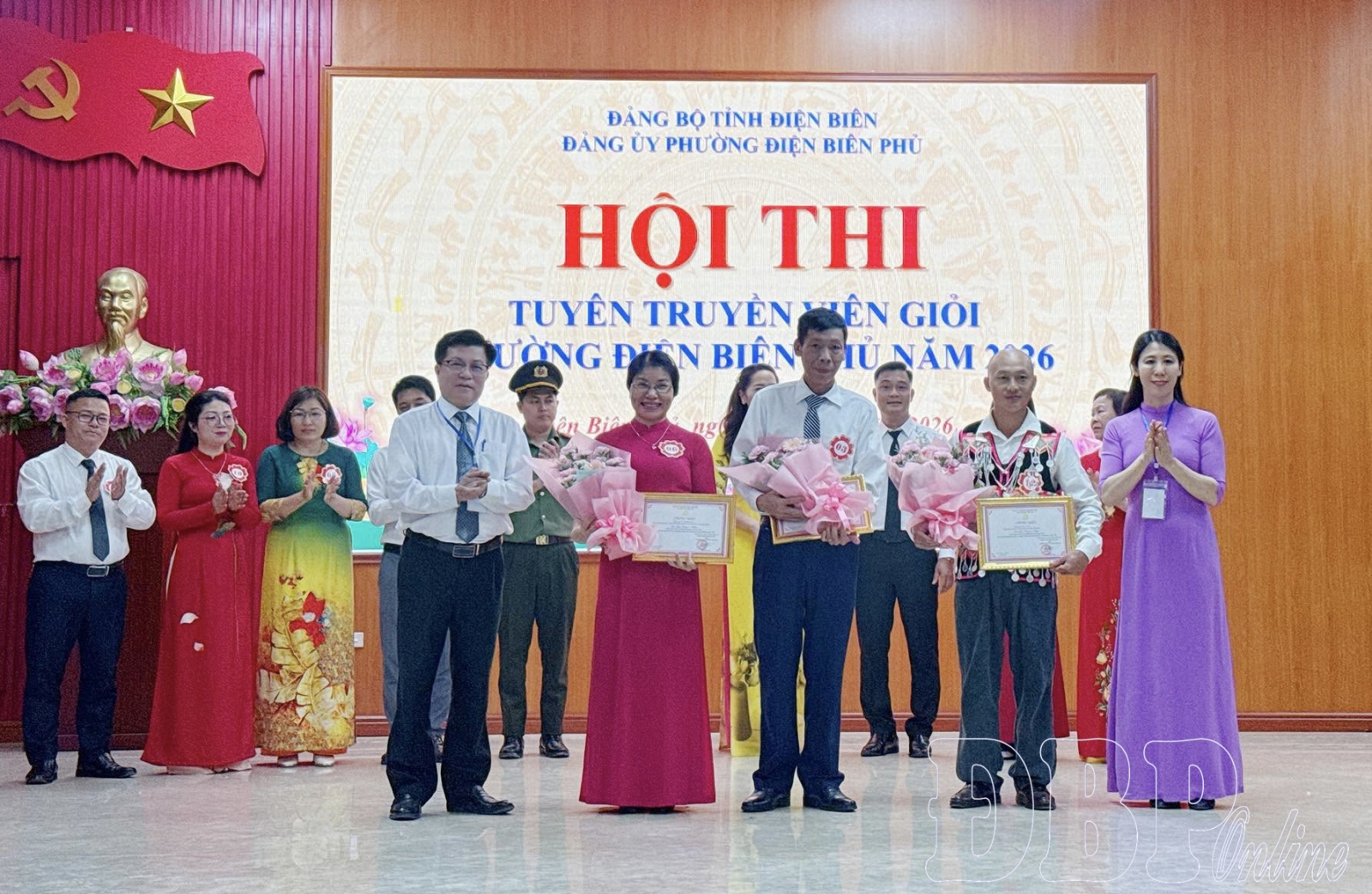
Pressure weighs heavily on the young secretary, yet looking at his mettle and journey, Party members and villagers place absolute trust in him. Graduating with a university degree in Land Administration, he was admitted to the Party in 2018 and has been trusted by voters for two consecutive terms as a Deputy to the commune and ward People’s Councils. During the recent peak campaign for land data digitization, he served as a core driver accelerating progress. Confronting inadequate material facilities, he paid out of his own pocket to purchase a computer serving the collective work of the Party cell and the village.
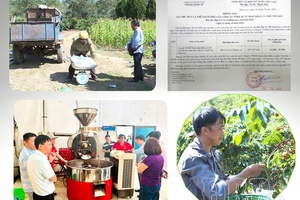
Secretary Vàng A Chí shared that in the current era, technology is critically important. To fulfill duties effectively, a secretary must proactively learn, master technology, and utilize it proficiently in daily operations. 4G cellular signals in Pa Pốm remain unstable, flickering on and off. Refusing to let difficulties impede work, he purchased a 4G SIM card and experimented on his smartphone to film technical husbandry steps, organic composting methods, and livestock disease prevention protocols... Then he edited and produced short video clips. Taking advantage of moments with stable network connections, he sent videos to village chat groups and shared them directly on his personal Zalo and Facebook accounts. Verbal explanations from cadres may be heard and forgotten, but visual videos allow villagers to rewatch whenever needed and follow instructions easily. For Chí, that serves as a modern vehicle integrating technology into grassroots-level outreach and mobilization, delivering information to the people in a more accessible and practical manner.
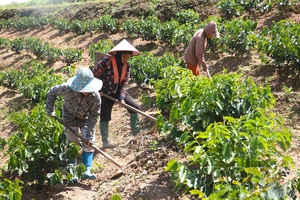
Nevertheless, in Pa Pốm, degrees and technology can hardly persuade villagers as effectively as what they see and hear with their own eyes and ears. Villagers only believe when they see cadres dare to act and models yield tangible results. That was why Chí decided to take part in the pilot passion fruit project across 1ha of degraded swidden land. As the passion fruit canopy began closing and blossoming, the dry season posed an acute irrigation challenge. For an entire month under blistering heat, villagers watched the young secretary single-handedly dig water storage basins, lay hundreds of meters of pipeline, and install pumps to draw water up to the hilltop trellises. Every drop of sweat that fell soaked deep into the earth, eventually rewarding him with sweet harvests. Chí’s passion fruit model has now become an economic highlight for the entire region.
Evaluating the maturity of the ward’s youngest Party cell secretary, Nguyễn Quang Hưng, Secretary of the Điện Biên Phủ ward Party Committee, emphasized: the story of Secretary Vàng A Chí is a vivid testament to the role of a “core” determining the fighting capacity of the grassroots-level Party organizational apparatus. As pressure on the grassroots-level mounts, the strength of a Party cell does not reside in resolutions on paper, but in the leadership head’s ability to “diagnose the pulse and prescribe the cure” for the people’s practical concerns.
The story in Pa Pốm village with the 1990s-generation secretary Vàng A Chí is merely a small mosaic piece within the province’s broader panorama. Compared to remote frontier villages or exceptionally disadvantaged pockets of Điện Biên, Pa Pốm may not be the harshest environment. Yet this unassuming slice of life illustrates the committed engagement of a new-era generation of Party cell secretaries.
A 24-hour day for Vàng A Chí eventually draws to a close as the late-night lamp goes out, but the pulse across 888 post-merger Party cells continues to prompt us to search for answers: when geographical distances stretch across dozens of kilometers of forest pathways, “how can Party leadership remain intimately close to every single household?” and “how can the voice of ethnic compatriots avoid missing a beat simply due to greater physical distances?”...
Bùi Quang - Chu Linh - Hà Linh



You have 500/500 characters left
Please enter 5 or more characters!!!