



Yet through such seemingly modest deeds, one can observe how grassroots-level administrations receive, process petitions, and partner with the people. Practical realities in Thanh Nưa and Sam Mứn demonstrate that when bottlenecks from the grassroots-level are resolved in the right place and according to actual needs, the impact does not stop at resolving an immediate civil livelihood issue, but helps open new production avenues and forge long-term livelihoods.
Beginning with what the people need
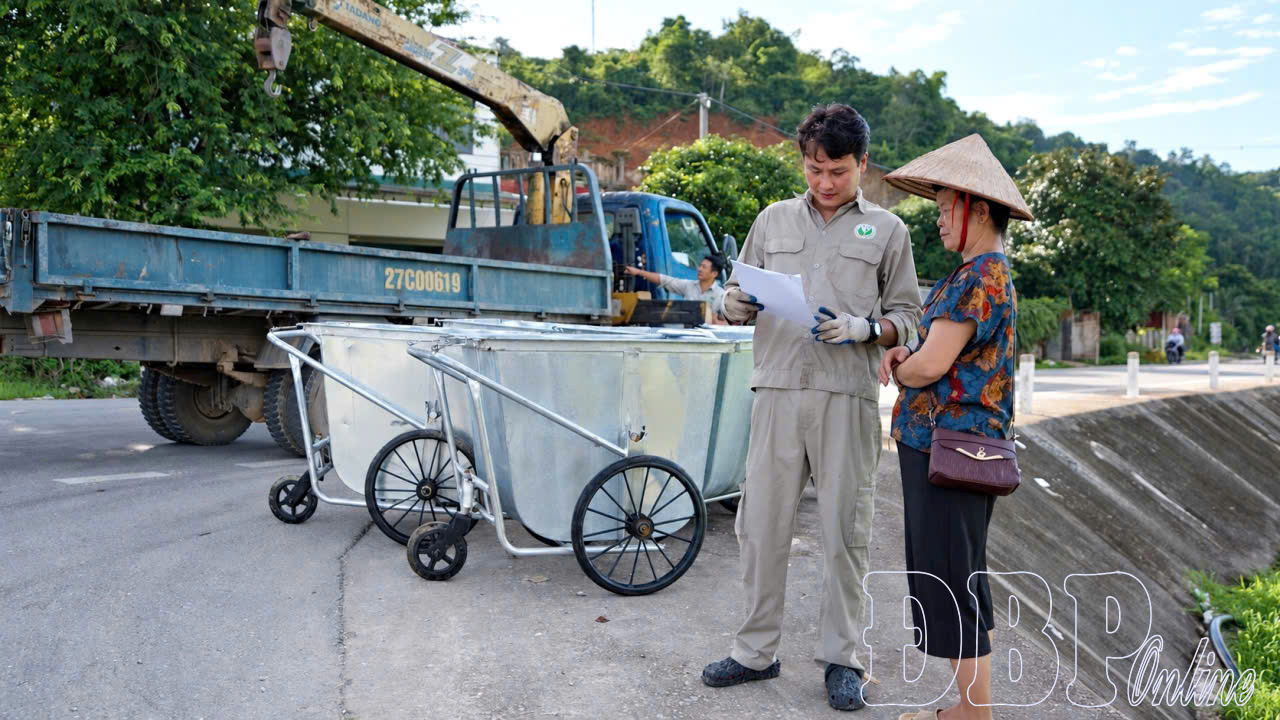
Previously, domestic waste was a persistent concern for many households in Mển village, Thanh Nưa commune. With no collection point and a lack of transport equipment, several households resorted to burying or burning waste, or even dumping it along streams, marring the landscape and posing environmental pollution risks. Following repeated feedback from residents, Thanh Nưa commune reviewed local needs and balanced its environmental career budget to equip hamlets and villages with garbage collection carts. Lò Thị Liên, from Mển village, shared that since the provision of waste containers and routine pickups by environmental sanitation units, the village’s hygienic conditions have noticeably improved.
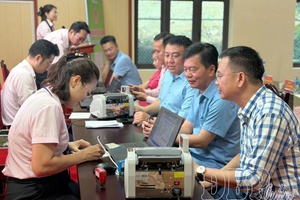
A garbage collection cart is not a massive capital investment, yet it accurately resolves an issue residents were struggling with. This bears even greater significance given that post-merger Thanh Nưa manages an expansive area formed from five former communes, covering a natural area of nearly 17,700ha with over 29,000 residents; the territory stretches from the low-lying Mường Thanh basin to highland border areas, meaning civil livelihood and production demands vary widely across regions. According to Lò Thị Cương, from the Agriculture and Environment Division of Thanh Nưa commune, technical petitions, once received, are reviewed and appraised; matters exceeding communal handling capacity are submitted to the commune People’s Committee to devise solutions.
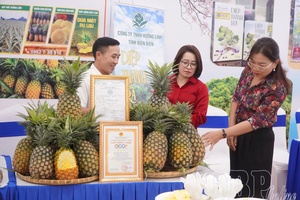
Chu Văn Bách, Chairman of the Thanh Nưa commune People’s Committee, noted: resource allocation must originate from the concrete demands of each area. Civil livelihood matters that can be resolved immediately should be prioritized by proactively balancing resources; in production development, suitable crops and models must be selected alongside technical support so residents can sustain them long term. This approach has been applied by Thanh Nưa to agricultural production. The entire commune currently has over 377ha of fruit trees; 194ha of coffee, of which over 48ha are already yielding commercial harvests; and 411ha of macadamia. In 2026 alone, the commune planted 96ha of new coffee, reaching 160% of the target assigned by the province.
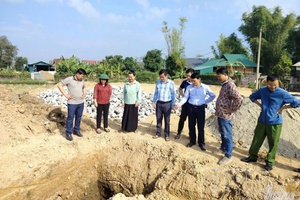
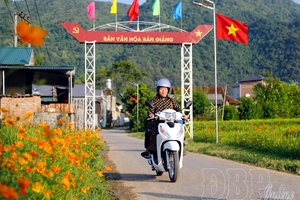
In Sam Mứn commune, the story began with a section of road frequently prone to flooding in Hòa Bình hamlet. Although the road was concreted, it lacked a drainage ditch; during heavy downpours, water overflowed across the surface, at times inundating villagers’ courtyards and gardens. Acting on residents’ petitions, the commune provided construction materials, while villagers contributed working days to build the drainage ditch. Đào Đức Trọng, Secretary of the Hòa Bình Hamlet Party Cell, noted that following the ditch’s completion, flooding during heavy rain was basically eradicated. The approach here was not the administration doing everything on behalf of the people, but the State providing essential assistance while citizens contributed labor to complete a work serving their own community.
From bottlenecks to sustainable livelihoods
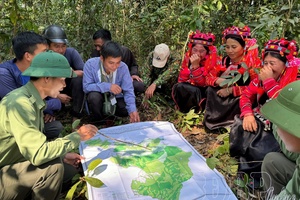
Not every petition from the people is a request for monetary or material aid. At times, what residents lack most is knowledge and a mentor to initiate an unfamiliar approach.
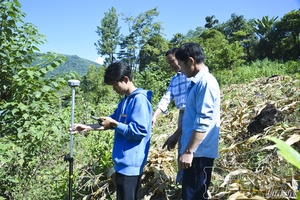
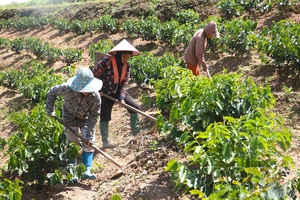
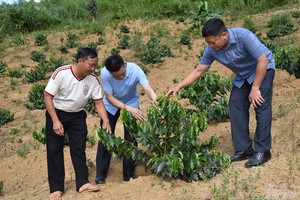
The story of 20ha of coffee in Na Hai village, Sam Mứn commune, is a prime example. When the coffee development policy was introduced, many households registered to participate, but most lacked experience - from digging holes and planting to crop care. The commune dispatched specialized cadres directly to the village to deliver hands-on technical guidance from the initial stages. To date, Na Hai has cultivated 20ha of coffee. The project supporting value-chain production linkages for coffee, utilizing macadamia as shade trees, has drawn 39 participating households. Moving from unfamiliarity with the new crop, villagers have progressively mastered cultivation techniques, laying the groundwork for transforming production methods. Na Hai also forms part of a broader transformation across Sam Mứn’s agriculture. Following more than six months of rolling out the coffee and macadamia planting plan, the entire commune planted 82ha, reaching 205% of the provincial plan, comprising 61ha of coffee and 21ha of macadamia.
According to Phạm Thiết Chùy, Chairman of the Sam Mứn Commune People’s Committee, in agricultural restructuring, one must first identify suitable acreage and ascertain what conditions residents lack to deliver targeted assistance. For first-time coffee growers in Na Hai, the immediate goal is helping villagers master techniques and care protocols; in the long run, raw material areas must be tied to production linkages so the new crop genuinely yields income.
However, not every grassroots-level issue can be resolved overnight. In Thanh Trường hamlet, Thanh Nưa commune, several households subject to site clearance for the Northwest Urban, Resort Tourism, and Sports Services Area Project in Điện Biên Phủ ward voiced opinions regarding land origin, land categories, and compensation options. Matters concerning land, statutory laws, and multi-party interests require dossier verification, on-site checks, dialogues, and resolution strictly in accordance with regulations.
Real-world experience in Thanh Nưa and Sam Mứn demonstrates that each petition requires a distinct handling method. Certain matters can be resolved immediately by local authorities; others require partial state support coupled with community participation; some require specialized cadres to provide on-site guidance; while other issues demand multi-step verification before a comprehensive answer can be delivered.
From the garbage collection cart in Mển village and the drainage ditch in Hòa Bình to 20ha of coffee cultivated by 39 households in Na Hai, the common thread begins with the practical needs of the people. Grassroots-level administrative efficiency is thus embodied not merely in massive construction works or growth figures, but is vividly felt in an unflooded roadway after rain, a village free of streamside garbage, or newly rooted coffee hillsides. When citizens’ voices are heard and answered through concrete deeds, guidelines truly penetrate practical life.
Kông Thao


You have 500/500 characters left
Please enter 5 or more characters!!!