



Part 4: Foundation for a new journey
From remote highland villages to border communes, every cadre has progressively adapted to new working methods, fostering competence, accountability, and a spirit of serving the people. Concrete actions, substantive outcomes, and public consensus serve as the clearest yardsticks of personnel work efficacy, creating the foundation for Điện Biên to build a cadre contingent that satisfies development demands along the new journey.
Imprints from the people’s trust
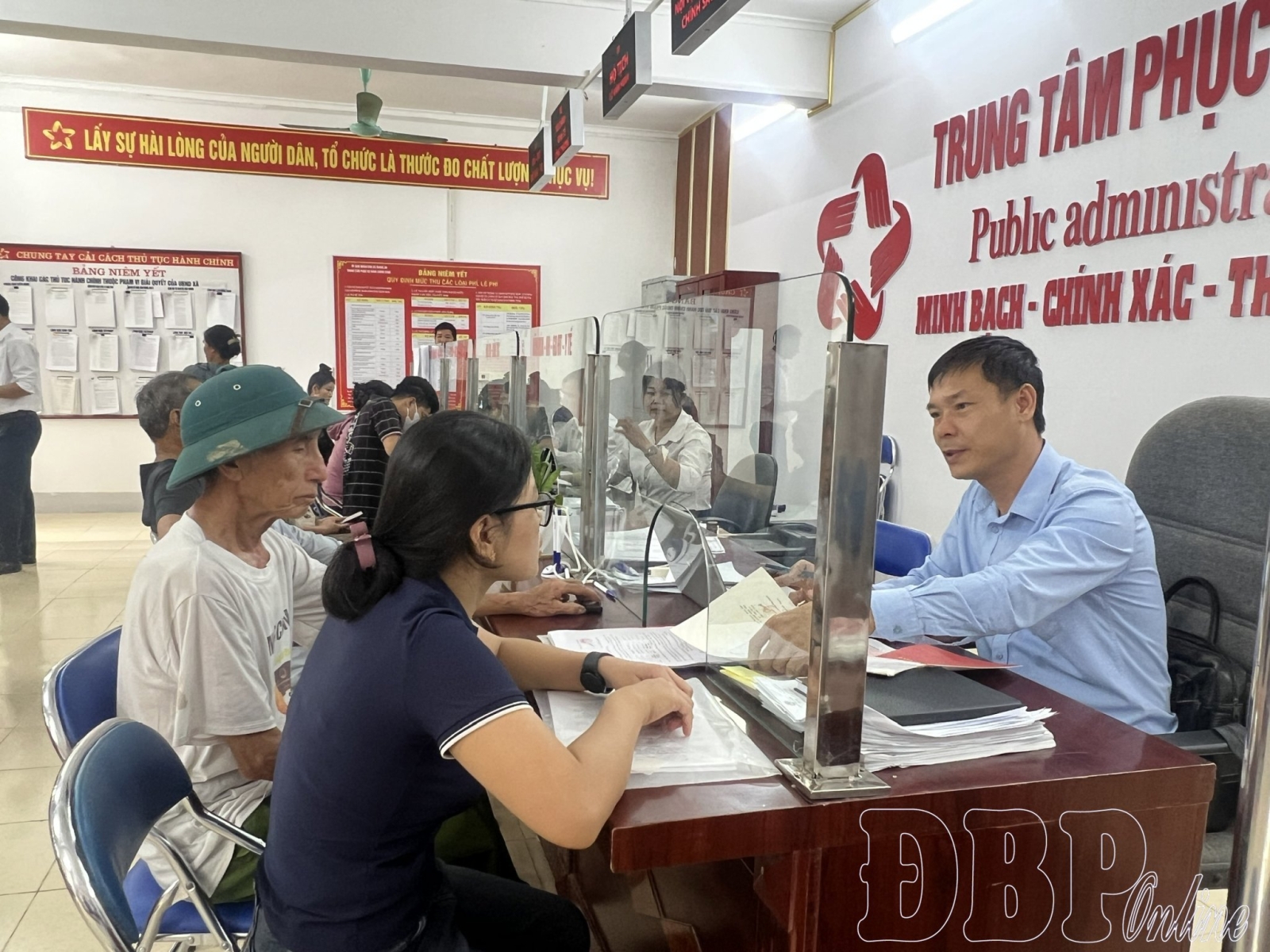
Following one year of running the two-tier local governance model, transformations are visibly manifesting across Điện Biên’s rhythm of life. With a sense of responsibility and proactive self-reinvention among cadres and civil servants, the administrative machinery has progressively operated with efficiency, staying close to and understanding the people. The economy has rebounded, administrative procedure reform has recorded distinct shifts, and the quality of service for citizens and businesses has steadily risen, injecting further momentum for Điện Biên to advance steadfastly on its development journey.
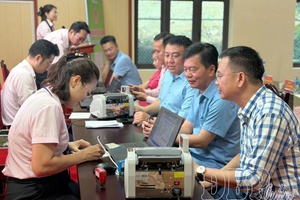
From July 1, 2025, to June 5, 2026, the entire province processed 130,668 dossiers, of which 130,432 were settled ahead of schedule or on time. The total number of administrative procedures at the commune level stood at 441; among them, there were no procedures requiring citizens to visit multiple offices, as all 441 procedures were completed at a single location. Notably, the provincial People’s Committee promulgated a list of 26 provincial-level and four commune-level administrative procedures applying the “green lane” mechanism, concentrating on sectors directly impacting investment, production, and business activities.
The economy continued its upward trajectory, the new rural landscape grew increasingly well-appointed, and the material and spiritual lives of ethnic communities were progressively enhanced. In the first six months of 2026, the province’s gross regional domestic product (GRDP) at 2020 constant prices was estimated at VND 15,437.32 billion, up 8.67% year-on-year, ranking 5th out of 9 provinces in the Northern Midlands and Mountainous Region, and 17th out of 34 provinces and centrally administered cities nationwide.
Hoàng Đình Chơi, an elder of prestige in Tủa Chùa commune, enthusiastically shared: “My fellow villagers and I are truly delighted, because the contingent of cadres and civil servants today works responsibly and approachable, ensuring smooth operations and swift settlements. We expect this model to continue functioning stably to serve the people better and better.”
In Tuần Giáo commune, after one year of operating the two-tier local governance model, the apparatus has steadily stabilized, operating with increasing order and efficiency. Thanks to dedication, close grassroots-level supervision, and the spirit of “resolving tasks as soon as they arise” among cadres, civil servants, and public employees, a noticeable transformation in administrative performance was achieved, cementing public trust.
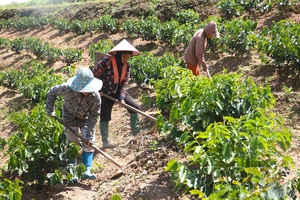
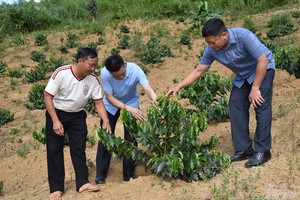
Quàng Văn Cương, Chairman of the Tuần Giáo commune People’s Committee, noted: following more than a year of implementing the two-tier local governance model, Tuần Giáo commune’s socio-economic landscape has witnessed noteworthy developments. Numerous projects and new livelihood models have been deployed, especially macadamia and coffee cultivation, helping diversify production, elevate income, and improve residents’ living standards. Per capita income reached VND 62.6 million per year. Notably, the commune is shifting strongly from the mindset of “waiting for investors” to “preparing conditions in advance and accompanying investors,” proactively untangling difficulties to create an open, transparent, and favorable investment climate, thereby mobilizing added resources for local socio-economic development.
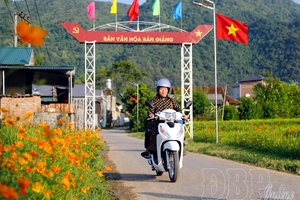
“The commune’s new rural appearance is increasingly flourishing, village roads and alleys are clean and beautiful, and residents’ living standards have steadily improved. Villagers are thrilled by these transformations and anticipate that the commune will roll out further solutions to build an increasingly well-appointed, thriving locality,” shared Quàng Thị Thoa from Minh Thắng village.
With high political determination and public consensus, Điện Biên province successfully executed territorial reorganization and apparatus streamlining, ensuring seamless operations from the very first days. This historic reform represents a powerful breakthrough to construct an administration close to the people and attuned to the grassroots-level, driving sustainable local socio-economic development.
Standardizing the contingent to meet demands
Deeply grasping the Party’s viewpoint that personnel work is the “key of keys” and that building a grassroots-level cadre team is a central, regular, and long-term mission of the entire political system, Điện Biên province continues to vigorously renew mindsets and methodologies in personnel affairs. Moving away from governance based primarily on dossiers, diplomas, and seniority, the province is steadily transitioning toward modern public human resource governance, taking public service execution capacity, work efficiency, and citizen satisfaction as vital benchmarks.
Trần Đình Nhuận, Secretary of the Nà Bủng commune Party Committee, shared: “Grassroots-level cadre work holds a uniquely important position, serving as the direct foundation guaranteeing Party leadership, state administrative efficacy and efficiency, and consolidating public trust. Therefore, elevating the quality of grassroots-level cadres is determined by the commune as a central, regular, and long-term task with decisive significance for local rapid and sustainable development.”
Practical experience reveals that amid expanding commune-level functions and tasks alongside escalating demands for high growth and sustainable development, restructuring and elevating the quality of cadres, civil servants, and public employees has become an urgent imperative. This represents not only a routine assignment, but also bears decisive weight on the governance, execution, and political task fulfillment capacity of each locality.
Nguyễn Mạnh Hùng, Deputy Director of the Department of Home Affairs, stated: “To elevate the caliber of the grassroots-level cadre contingent, the Department advises and focuses on comprehensively reforming training and professional development toward practical outcomes closely aligned with task requirements and job descriptions. In this effort, priority is placed on equipping commune cadres with comprehensive state management skills, situational handling, digital competencies, digital transformation, and administrative reform. Training outcomes are linked with appraisal, planning, placement, and cadre utilization, step-by-step eradicating perfunctory training that lacks connection to practical reality and fails to demonstrate post-training effectiveness.”
Personnel recruitment continues to be vigorously innovated toward public, transparent, competitive, and substantive procedures. The province boldly positions and utilizes young cadres, female cadres, and capable, promising ethnic minority cadres, overcoming parochial and closed mindsets in personnel work. Mechanisms are in place to discover, nurture, and assign difficult tasks to test and foster cadres possessing outstanding capacity, innovative mindsets, and the courage to think, act, and assume responsibility. Concurrently, authorities resolutely replace cadres who exhibit weak competence, lack responsibility, remain sluggish, evade duties, or fail to satisfy assignment demands in the new situation.
In particular, postgraduate training support policies are expected to forge added incentives for cadres, civil servants, and public employees to proactively elevate their qualifications to better meet task requirements. Under Resolution No.21/2023/NQ-HĐND of the provincial People’s Council, cadres, civil servants, and public employees designated for postgraduate training receive VND 35 million per person upon graduating with a master’s degree or Level-I specialty (with female or ethnic minority personnel receiving VND 40 million per person); and VND 55 million per person upon graduating with a doctoral degree or Level-II specialty (with female or ethnic minority personnel receiving VND 60 million per person).
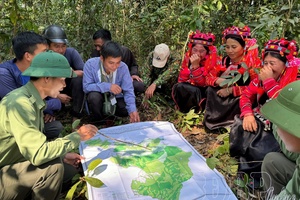
From the nation’s westernmost territory where highland villages still navigate hardships, the spirit of self-study and proactive self-reinvention among grassroots-level cadres is spreading into lasting transformations. Every piece of knowledge, innovative practice, and dedicated deed for the public adds building blocks to development. When cadres genuinely serve the people and possess the capacity to resolve practical problems, guidelines swiftly permeate life, and public trust is enriched. Through these quiet movements, a refreshed visage is steadily emerging, opening a pathway for Điện Biên to advance firmly, bringing increasingly prosperous and wholesome lives to ethnic peoples across the province.
Sầm Phúc - Thu Hằng



You have 500/500 characters left
Please enter 5 or more characters!!!