



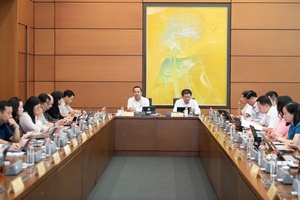
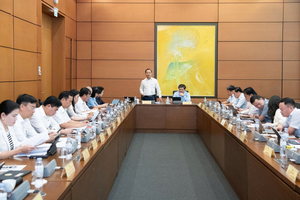
Trần Tiến Dũng, Member of the Party Central Committee, Secretary of the Điện Biên provincial Party Committee, Head of the provincial National Assembly Deputy Delegation, presided over the discussion session. Participating in the group discussion was Nguyễn Văn Thắng, Member of the Party Central Committee, Deputy Prime Minister of the Government, and National Assembly Deputy of the province.
Proposing the removal of bottlenecks concerning carbon credits
Contributing feedback on the draft Law amending and supplementing several articles of the Law on Environmental Protection, Head of the provincial National Assembly Deputy Delegation Trần Tiến Dũng noted that the draft cuts approximately 90% of subjects required to conduct environmental impact assessments (EIAs) and obtain environmental permits, shifting them to environmental registration or procedural exemptions. The suggested continuing to review the extent of these reductions while clarifying decentralization and delegation of authority to accelerate administrative processing, ensuring expeditious and favorable execution.
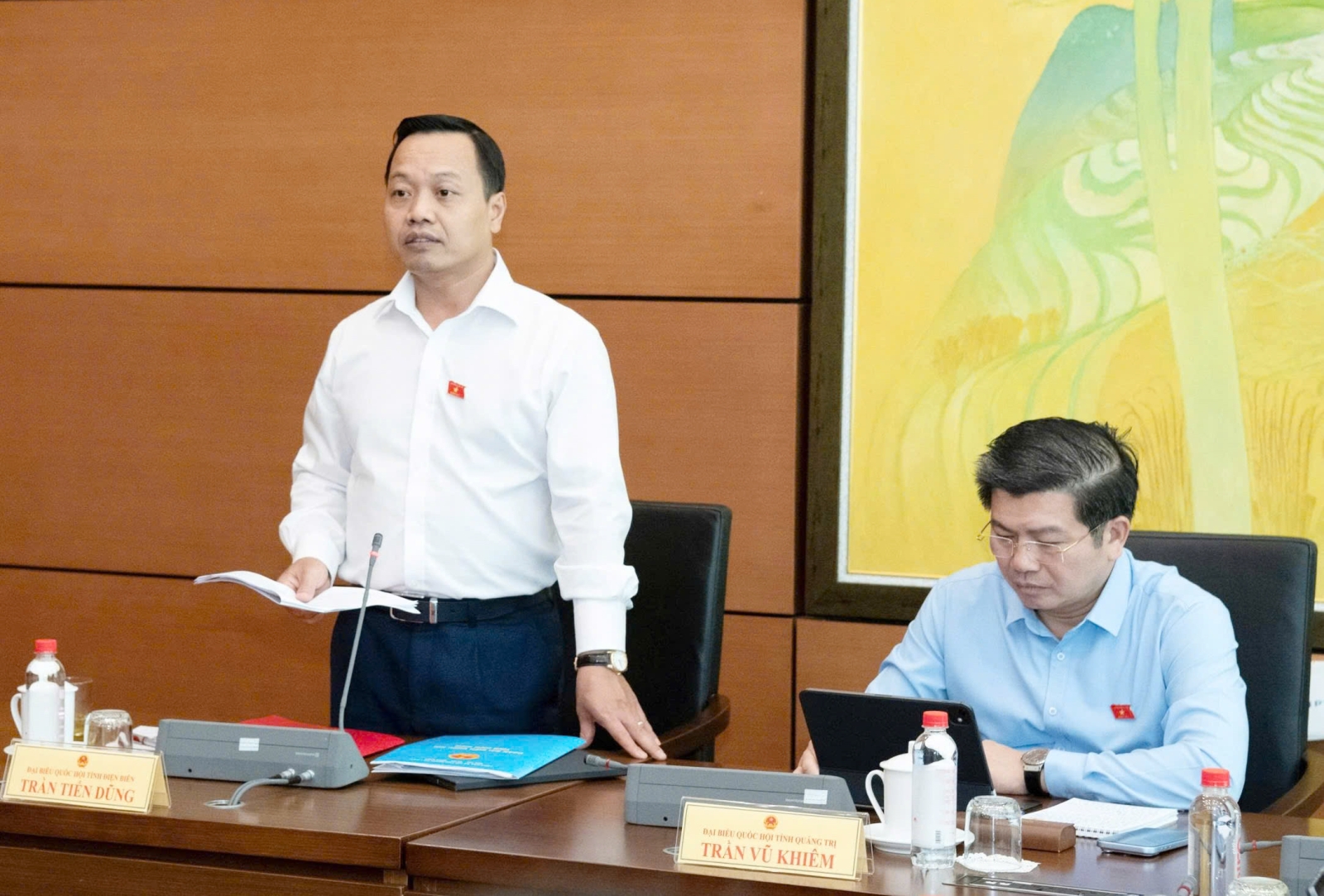
Regarding regulations on collection and recycling, Trần Tiến Dũng stated that the draft abolishes the form of paying financial contributions into the Việt Nam Environmental Protection Fund, obligating enterprises to fulfill substantive collection and recycling responsibilities; while supplementing criteria for recognizing recycled materials and regulations governing the carbon market and international carbon credit trading. Concerning the carbon credit trading mechanism, the proposed clarifying its feasibility and implementation modalities to meet practical demands in forested localities.
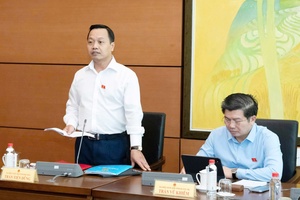
Concurring with this orientation, Deputy Head of the provincial National Assembly Deputy Delegation Lò Thị Luyến asserted the necessity to refine mechanisms so forested localities can access the carbon credit market. According to the deputy, despite possessing forestry advantages, many mountainous localities still lack funding to inventory and assess forest carbon stocks and determine carbon credit volumes. Therefore, the deputy recommended that the Government promptly finalize guiding regulations, standardize credit-generation criteria, unify registration systems and data verification, and clarify selling rights and benefit-sharing mechanisms. Simultaneously, support for measurement and appraisal expenditures for small-scale projects is required, creating conditions for residents to earn incomes and thrive from forests.
Strengthening post-audits, perfecting environmental impact assessment regulations
Deputy Lò Thị Luyến affirmed that shifting from pre-audits to post-audits in environmental management is necessary, helping reduce compliance costs and enhancing the responsibility of production and business facilities. However, cutting pre-audits without augmenting personnel, funding, monitoring equipment, and sampling vehicles could create administrative vacuums, particularly in mountainous provinces characterized by expansive territories and fragmented topography. Hence, the deputy suggested that reducing pre-audits must go hand in hand with enhancing post-audit capacity; decentralizing to the grassroots must be coupled with guaranteeing resources, specialized personnel, and professional guidance.
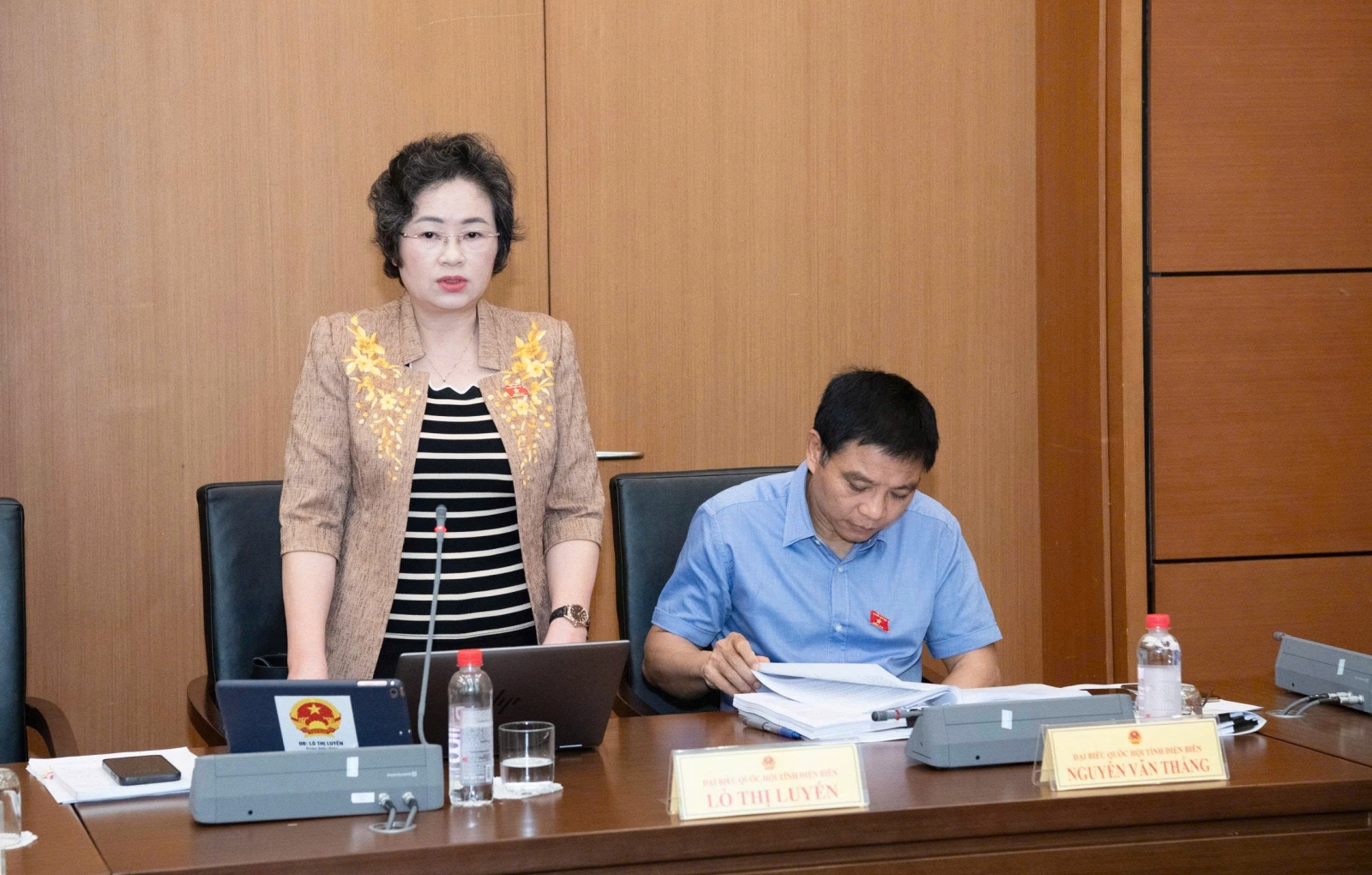
Regarding regulations on residential communities, the deputy proposed not assigning commune-level People’s Councils to determine “other designations,” but referencing relevant laws generally to ensure consistency in authority and naming. For investment projects located within concentrated production, business, and service zones or industrial clusters that are exempt from EIAs, the deputy suggested clarifying eligibility conditions and supplementing regulations on environmental registration to prevent overlooking waste management for secondary investment projects, while ensuring equality in legal application.
Regarding procedures and competence for appraising EIA reports, the Deputy Head of the provincial National Assembly Deputy Delegation recommended clarifying the handling protocol when approved detailed planning does not conform to environmental protection requirements or EIA appraisal outcomes. It is necessary to explicitly determine whether planning or the report must be adjusted in such cases, avoiding emerging administrative red tape and investment delays. The deputy also proposed reviewing and harmonizing competence provisions between the draft Law and the draft guiding decree. Accordingly, for tasks assigned to institutions, the term “competent agency” should be used instead of “competent person,” clearly delineating responsibility and guaranteeing consistency in enforcement.
Mai Hồng











You have 500/500 characters left
Please enter 5 or more characters!!!