



Part 4: The ballot enters life
To meet those expectations, the responsibility of an elected deputy does not conclude with listening to and conveying the people’s voice; it demands monitoring, supervising, urging implementation, and responding with tangible results. Execution outcomes serve as the yardstick of a deputy’s prestige, while affirming the value of the ballot through palpable transformations in the lives of the people.
Behind the ballot lies responsibility
For voters - especially those with limited fluency in the national language - the ballot reflects not only the exercise of choice on election day, but embodies faith and expectations deposited in the individuals representing their voices and aspirations. That faith is genuinely cultivated only when petitions are listened to, reflected in full, monitored, and urged through to final resolution.
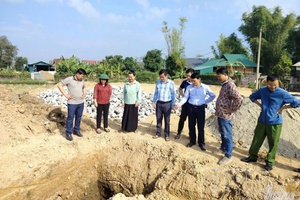
Realities in Suối Lư village, Na Son commune, clearly illustrate this during the execution of the Na Phát Hydropower project, where compensation and site clearance posed several bottlenecks requiring settlement. The project occupies approximately 38.42ha of land, slated for completion and commercial electricity generation in the fourth quarter of 2028. However, during execution, certain residents lacked consensus regarding compensation and assistance schemes - particularly individuals unable to speak the national language - slowing project progress.
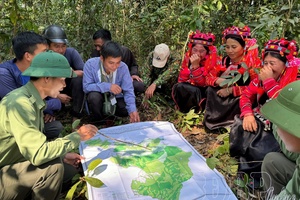
In his dual capacity as commune People’s Council deputy and Vice Chairman of the Na Son commune People’s Committee, Nguyễn Thanh Lâm regularly grasped grassroots conditions, listening to the thoughts and aspirations of local residents. He coordinated with relevant bodies, Party cell secretaries, and village heads to disseminate and explain policies in both the national language and local ethnic dialects, receiving petitions and seeking solutions to resolve emerging hurdles. Through dialogue, residents’ concerns were clarified step by step, strengthening consensus during project implementation.
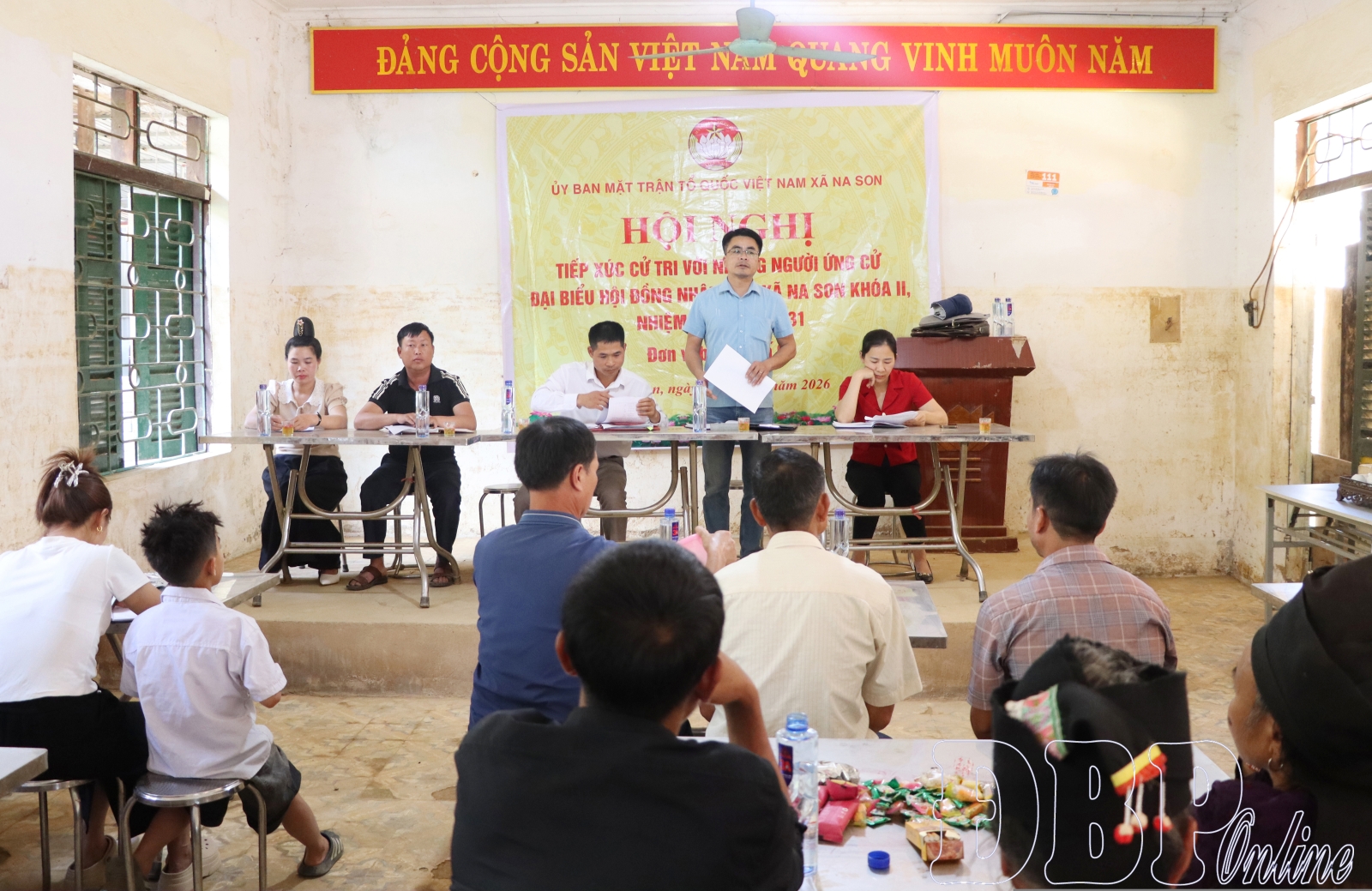
Throughout this process, Lò Văn Nhọt, head of Suối Lư village, acknowledged deputy Nguyễn Thanh Lâm’s close involvement in addressing the worries of villagers. Nhọt noted that initially, several households disagreed with compensation unit prices, but through direct dialogue and explanations from the deputy, residents gained a clearer grasp of relevant policies. According to Nhọt, what put villagers at ease was seeing their opinions received and answered in detail. To date, households have reached consensus, creating favorable conditions for the project to proceed.
The experience in Suối Lư demonstrates that consensus is forged when citizens thoroughly understand policies, directly voice their views, and receive satisfactory explanations. Across localities home to dense ethnic minority populations, appropriate communication - particularly for those with limited fluency in the national language - is all the more critical to ensure voters’ voices are heard and reflected comprehensively.
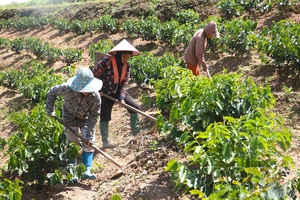
While dialogue defused concerns in Suối Lư, in Mường Luân commune, the responsibility to track and expedite the resolution of voter petitions was exemplified through post-disaster resettlement efforts. In Phiêng Muông village, petitions from Lò Văn Inh and fellow villagers highlighted urgent demands. Following natural disasters in 2025, Phiêng Muông villagers requested designated resettlement sites, road repairs, drainage ditch construction, and conversions of low-yielding crops to varieties of higher economic value.
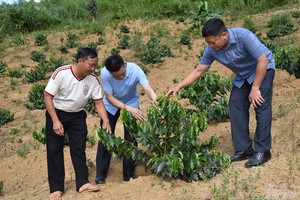
Confronted with urgent, practical petitions, Nguyễn Trọng Huế, Chairman of the Mường Luân commune People’s Committee and communal People’s Council deputy, received the feedback and coordinated with relevant agencies and units to review priorities. For petitions under commune jurisdiction, in his role as communal chairman, he directed functional departments to examine and resolve them. For issues exceeding commune authority, he forwarded them to competent agencies for consideration and petitioned the provincial People’s Council.
Arising from these petitions, on June 15, 2026, the provincial People’s Council established a field survey team to inspect the progress of the resettlement area for 41 households in Phiêng Muông village. Through the survey, Vice Chairman of the provincial People’s Council Bùi Minh Hải emphasized that certain resettlement construction packages were lagging, requesting the project owner to finalize site formation and hand over land to the commune to stabilize people’s lives early. Thanks to this, by October, ground leveling for the resettlement site accommodating households in hazardous zones in Phiêng Muông village was completed, allowing residents to settle into their new homes.
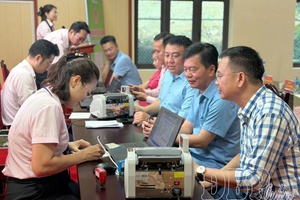
According to Mùa A Vảng, Deputy Secretary of the provincial Party Committee and Chairman of the provincial Việt Nam Fatherland Front Committee, during the elections for deputies to the 16th National Assembly and People’s Councils at all levels for the 2026-2031 tenure, the entire province recorded 2,145 opinions and petitions from citizens. For voters with limited proficiency in the national language, these opinions convey genuine grassroots thoughts and aspirations, while providing grounds for deputies to track, urge, and coordinate settlement within competence. The responsibility of an elected representative is not merely to listen and receive, but to stand alongside voters, persistently pursuing issues entrusted to them.
Reciprocating trust with results
While the responsibility of a deputy is reflected in tracking, petitioning, and urging issue resolution, tangible outcomes are what voters ultimately anticipate. The Pa Phông village residential cluster in Tủa Thàng commune comprised 28 households lacking access to the national electricity grid. The aspiration to secure grid power was repeatedly raised by residents to Party committees, administrations, National Assembly deputies, and People’s Council deputies across all levels, and subsequently forwarded to functional authorities requesting investment in power supply infrastructure.
In early April 2026, the power supply project for the Pa Phông residential cluster commenced. On August 9, 2026, the project was officially energized and commissioned, providing 28 households with national grid electricity. After years of anticipation, residents secured conditions to improve daily living standards, access information, and advance household economies. The completed project met vital needs while reflecting the efficacy of conveying grassroots petitions to functional agencies.
For Pa Phông, electricity lit up homes and unlocked community tourism opportunities. Quàng Thị Hoa, owner of the Pa Phông homestay, stated that in 2023 she invested in a community tourism model, but the lack of grid power caused significant inconvenience in hosting visitors. Now that power has reached the village, she can invest in guest amenities, food refrigeration, and expanded hospitality offerings. “Most importantly, we have gained confidence for long-term investment,” Hoa shared.
In Nà Hý village, Thanh Nưa commune, a domestic water supply project launched in 2022 was designed to serve 672 households in the village and surrounding areas. However, operational rollouts faced obstacles, leaving water supplies inadequate. This issue was repeatedly petitioned by voters during meetings with People’s Council deputies at all levels, seeking prompt rectification.
Absorbing voter feedback, communal and provincial People’s Council deputies forwarded petitions to functional bodies, requesting reviews and corrective solutions. By May 2026, the project supplied water to 569 households; the remaining 103 households were left unserved due to pipelines damaged during upgrades to National Highway 12. Facing that reality, deputies continued monitoring and urging repairs. By October 4, 2026, functional agencies and the construction contractor completed remediation, and the remaining 103 households had meters and water pipelines fully installed.
Lò Văn Dũng, head of Nà Hý village, said that after receiving villagers’ petitions, People’s Council deputies regularly tracked repair progress, while reflecting issues and urging functional bodies to resolve bottlenecks swiftly. Thanks to this, pipeline repairs and connections were executed, delivering clean water to the remaining households. According to Dũng, what villagers deeply appreciated - especially those with limited fluency in the national language - was not merely seeing the facility restored, but witnessing their petitions closely monitored and championed by deputies through to completion.
Positive shifts in resolving voter petitions demonstrate that a deputy’s responsibility manifests not only in listening to and receiving opinions, but in tenaciously following through, urging action, and coordinating to untangle real-world problems. Nonetheless, a five-year tenure is only just beginning; ahead lie numerous issues requiring settlement and legitimate public aspirations demanding thorough handling. What voters expect is not just noted petitions, but clear answers regarding progress, accountability, and practical results.
For voters with limited proficiency in the national language, ensuring their voice is heard in full, reflected accurately, and pursued to the end carries immense weight. Faith entrusted through the ballot cannot be measured solely by high turnout on election day; it must be nurtured by concrete deeds throughout the entire term. When every petition is reviewed and every issue resolved thoroughly, the ballot truly delivers its enduring worth. That serves as the true standard of a deputy’s accountability before the trust bestowed by the People.
Văn Tâm




You have 500/500 characters left
Please enter 5 or more characters!!!