



Part 3: Trust placed in every ballot
Understanding to choose
Through the perseverance of Party cell secretaries and village heads, election information was conveyed in a relatable, accessible manner tailored to each demographic group and ethnic minority. Consequently, voters with limited fluency in the national language understood their rights, duties, criteria for deputy candidates, and the significance of the ballot. Once informed, citizens had grounds to deliberate and select representatives for their voices and aspirations. At that point, casting a ballot ceased to be a mere formal procedure, transforming into a responsible choice imbued with trust and expectations.
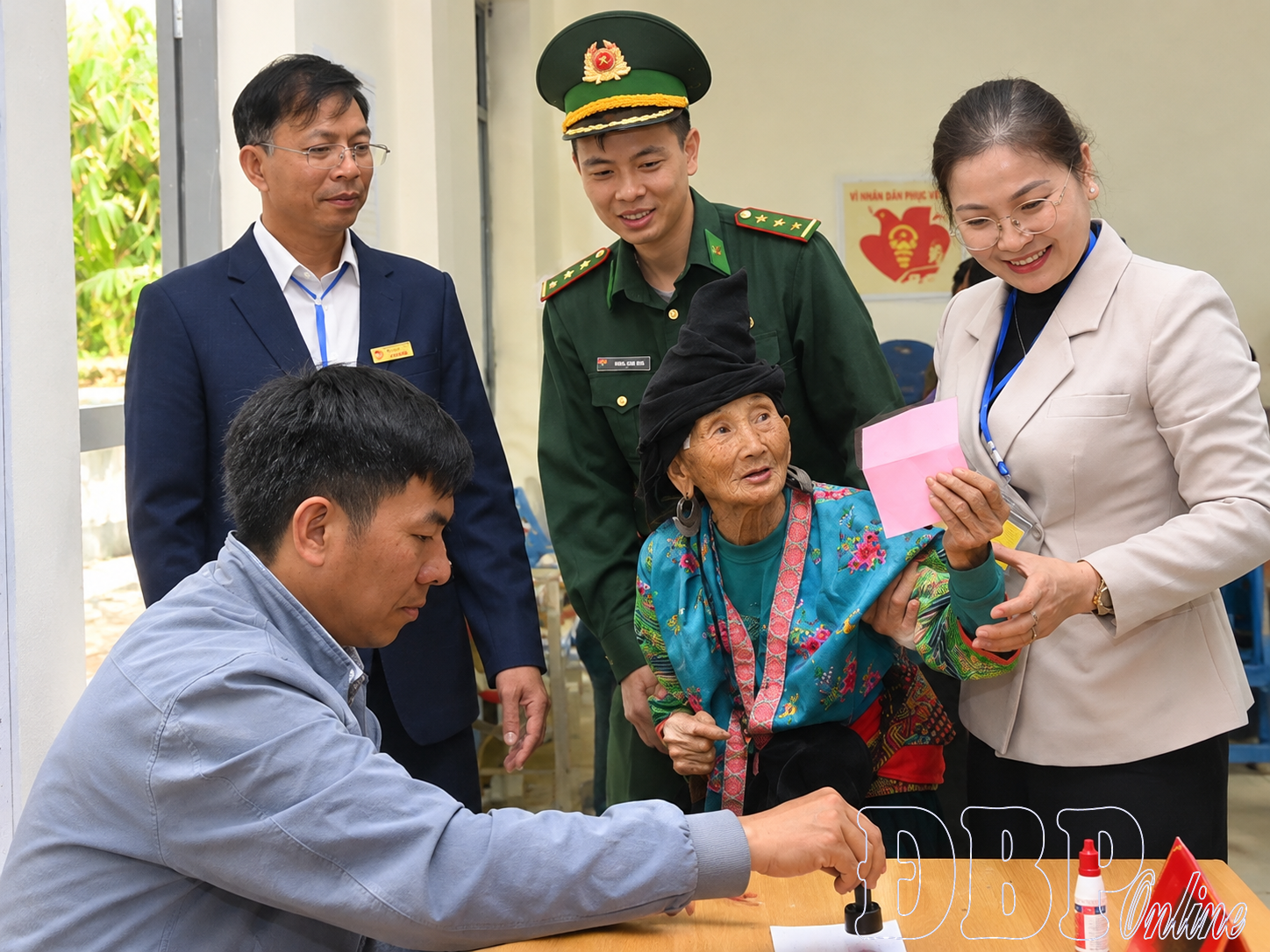
March 15, 2026, was a special day for Trá Thị Dềnh (107 years old) - the oldest voter in the province, residing in Nậm Là 2 village (now Tân Phong village), Mường Nhé commune. After receiving explanations and communication regarding voters’ rights and obligations in her native tongue, she requested assistance to reach Polling Station No.15, Mường Nhé commune, to exercise her civil rights. Her presence demonstrated that when information is conveyed appropriately, electoral rights can reach every citizen.
At the polling station, joy and emotion were clearly visible on Dềnh’s face as she held the ballot in her own hands to select the representative for her voice and aspirations. Through an interpreter, Dềnh shared: “I am deeply moved to hold the ballot and personally choose an outstanding person to represent me, conveying my voice and aspirations to the National Assembly and People’s Councils at all levels.” For her, the ballot was a means to exercise civil rights and deposit trust in the chosen representative.
The story of voter Sùng Thị May, from Phù Lồng village, Pu Nhi commune, illustrated another transition. Illiterate and unable to speak the national language, May received communication and explanations regarding voters’ rights, obligations, and the significance of the ballot in her mother tongue ahead of election day. From what she heard and comprehended, May selected the individual she considered best suited to represent her voice and aspirations.
Remarkably, that understanding did not end with May. According to the head of Phù Lồng village, Hạng A Mua, after grasping the information, May actively explained it to illiterate villagers. The insights she absorbed were relayed to relatives and neighbors using intimate, accessible expressions. From someone requiring communication assistance, she became a disseminator for the community. From a recipient of information, she helped deliver it to others. Thanks to this, 100% of voters in Phù Lồng village participated in balloting.
That was also when communication work ceased being a one-way process of “cadres speaking, citizens listening,” evolving into a ripple effect across the community. Once they understood, citizens not only received information but acted as extended arms, helping relatives, neighbors, and especially illiterate individuals or those not fluent in the national language understand their rights and duties in the election.
In Sín Thầu commune, that effectiveness was clearly demonstrated in how citizens received and spread election information. Spanning an expansive territory of 516.42km², with challenging transport links, dispersed settlements, and persisting language barriers, according to Đặng Thành Huy, Secretary of the Party Committee and Chairman of the People’s Council of the commune, when informed and guided to clearly understand their rights and duties, voters not only proactively exercised their right of choice but continued sharing information with relatives and neighbors. From comprehension to action, and from one person to many, election information reverberated through the community, helping Sín Thầu become one of the two localities completing the election earliest, with 100% voter turnout.
Grassroots stories were reflected in the province’s overall election outcomes: 407,164 out of 407,339 registered voters province-wide cast their ballots, reaching 99.96%; 898 out of 926 polling areas and 34 out of 45 communes and wards attained 100% voter turnout. Behind these figures lay a sustained process wherein citizens accessed and understood information, proactively exercising their right of choice. Communication was thus conducted not merely to urge people to vote, but more importantly, to help them understand their rights, the value of their ballots, and their responsibility when choosing representatives.
Trusting to entrust
Behind high voter turnout lies more than a quantitative milestone. It represents the conversion of awareness into action, and the exercise of rights into deposited trust. Citizens voting fulfill their civil rights while choosing and entrusting representatives for their voices and aspirations. By the end of election day, voters elected the full statutory quotas: 7 deputies to the 16th National Assembly, 50 deputies to the provincial People’s Council, and 924 deputies to commune-level People’s Councils; no electoral units were required to organize re-elections or supplementary elections.
Trust deposited in ballots was reflected in the demographic composition of elected deputies. Across all three tiers, chosen deputies encompassed diverse segments, including ethnic minorities, women, young people, re-elected candidates, non-Party members, and religious followers. Among the 7 elected National Assembly deputies, there were 3 ethnic minority deputies, 3 female deputies, and 1 religious deputy. The provincial People’s Council comprises 27 ethnic minority deputies, accounting for 54%. In commune-level People’s Councils, ethnic minority deputies account for 64.07%.
Beyond demographic diversity, deputy quality witnessed notable qualitative improvements. According to Nguyễn Tiến Đạt, Deputy Head of the provincial Party Organization Commission and Director of the Department of Home Affairs, at the commune level alone, out of 924 elected deputies, 60.06% hold university degrees and 20.13% possess postgraduate qualifications. Compared to the 2021-2026 tenure, the proportion of deputies with postgraduate degrees surged from 1.07% to 20.13%; university qualifications rose from 33.8% to 60.06%, while the sub-university tier dropped from 65.33% to 19.81%. These figures not only reflect shifts in composition and educational attainment, but demonstrate voters’ deliberate choices regarding those who will represent them throughout the new tenure.
From the ballot, trust is deposited and responsibility is placed upon the shoulders of deputies. Nguyễn Thị Thủy, head of Tạm Vạn village, Sam Mứn commune, was entrusted by voters to become a deputy to the Sam Mứn commune People’s Council. As a grassroots-level cadre, that trust is not only a matter of personal honor but carries the responsibility to listen to and reflect issues of public concern, conveying grassroots voices to Party committees, administrations, and elected bodies. Behind every ballot lies not merely the selection of a representative, but concrete desires and expectations entrusted by voters.
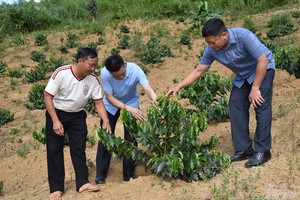
Expectations conveyed through ballots are not distant abstractions; they stem directly from essential daily needs - from livelihoods, crops, and livestock to transport infrastructure and housing. In Phiêng Muông village (now Luân Giói village), Mường Luân commune, voter Lò Văn Inh hoped elected deputies would attend to and accelerate efforts to stabilize livelihoods and restore production for 41 households affected by natural disasters in 2025, which caused families to lose homes and farmland, facing severe hardships.
To ensure such aspirations do not stall at the ballot box, it is essential that chosen individuals possess adequate capacity to listen, reflect, and persistently follow through on issues raised by voters. To enhance deputy competency and organizational machinery across People’s Councils at all levels, the Standing Board of the provincial People’s Council coordinated with the National Assembly’s Board of Deputy Affairs to organize capacity-building training for People’s Council deputies at all levels for the 2026-2031 tenure. According to Vice Chairman of the provincial People’s Council Bùi Minh Hải, rising deputy caliber demands that operations of elected bodies become increasingly substantive and effective. This serves as vital preparation for deputies - particularly first-time members of elected bodies - to enhance their knowledge, skills, and capacity to perform their representative roles for the people.
Grounded in understanding, voters proactively made their choices and entrusted their faith to their representatives. Yet the ballot does not close that journey; it opens a new chapter where trust must be reciprocated with responsibility, decisive action, and tangible changes in daily life. The true value of every ballot resides not only in the choice made, but in what the elected representatives accomplish for the people.
Văn Tâm







You have 500/500 characters left
Please enter 5 or more characters!!!