



Part 3: Empowering the grassroots level to foster proactiveness
Power brought closer to the people
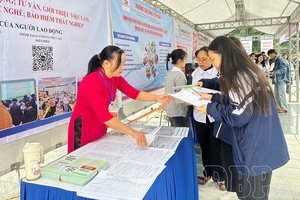
In early September, at the Public Administrative Service Center of Chiềng Sinh commune, residents gathered from early morning to process civil status and land dossiers. Officials guided, reviewed, and received dossiers on the electronic system; each submission required only a few minutes to finalize intake, curtailing the need for residents to make repeated trips.
Lò Văn Toàn, a resident of Nà Sáy 1 village, Chiềng Sinh commune, shared: “Handling administrative procedures is now far more convenient than before; there is no need to travel multiple times across various administrative tiers. I submitted my application online through my VNeID account without carrying extensive paperwork. The officials provided enthusiastic guidance, and I am very satisfied.”
.jpg)
This represents one of the marked transformations achieved after a year of executing the new model. Specifically, the operation of commune-level Public Administrative Service Centers has created a distinct turning point in resolving administrative procedures. Workflows have been standardized, publicized, and made transparent; handling times for numerous procedures have been curtailed, and many matters previously requiring referral to higher authorities are now settled right at the grassroots level, cutting travel expenses and transit time for the public.
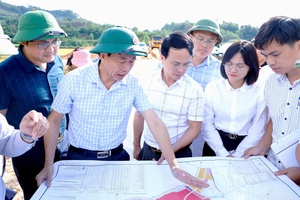
A vivid illustration of this operational shift is a land dispute between the households of Quàng Văn Toàn and Lường Văn Tưởng in Khong Tở village, Chiềng Sinh commune. Instead of merely receiving dossiers and forwarding them to higher authorities as previously practiced under the district tier, specialized commune officials now conduct on-site field inspections directly, verify land origins and historical usage, compile dossiers, and coordinate local conciliation sessions.
Lường Văn Thơ, Village Head of Khong Tở, shared: “When the dispute arose over nearly 2,000m² of swidden land between the families of Toàn and Tưởng, the village management board coordinated closely with commune officials to visit the site directly, survey boundaries, verify land origins, and clearly define titleholders. Alongside verifying land origins through historical evidence and statutory regulations, we engaged reputable village elders to conduct conciliation sessions repeatedly. Through close grassroots-level presence, public transparency, and sensible persuasion, both families voluntarily shook hands in reconciliation and withdrew prolonged petitions.”
.jpg)
While this constitutes a single grassroots-level land dispute, it reflects a major underlying transition in governmental administration. When authority is devolved to the grassroots level, commune cadres must confront matters directly, establish legal grounds, work with citizens, and bear accountability for tasks within their assigned jurisdiction.
Lò Văn Thanh, a specialist at the Economic Division of Chiềng Sinh commune, shared: “Executing the two-tier local governance model, the accountability and initiative of cadastral civil servants have been markedly enhanced. We directly advise on appraisals, verifications, conciliation of land disputes, cadastral record management, and the resolution of various authorized functions right at the grassroots level.”
From resolutions to a new workflow
Decentralization and delegation do not stop at mechanically transferring mandates from higher to lower tiers. The key imperative is creating mechanisms ensuring the devolved tier possesses adequate legal baselines, resources, and decision-making capacity. In Điện Biên, as soon as the two-tier local governance model became operational on July 1, 2025, the provincial People’s Council promulgated multiple resolutions regarding organizational restructuring, state budgets, public investment, and the decentralization of revenue sources and spending mandates. Administratively, the provincial People’s Committee reviewed and resolved bottlenecks in devolution to enable assigned mandates to materialize in practice.
In Chiềng Sinh commune, the principle of “6 clears: clear personnel, clear tasks, clear responsibilities, clear authority, clear timelines, and clear outcomes” was integrated into task assignments. Operational results recorded over 11,000 notarizations and certifications and more than 700 civil status files processed smoothly. Domains directly affecting residents - such as land affairs, site clearance, social welfare, natural disaster prevention, and citizen petitions - are directed directly by commune leadership or assigned to focal coordinators for decisive resolution.
Đỗ Văn Sơn, Chairman of the Chiềng Sinh commune People’s Committee, stated: “After one year of deploying the two-tier local governance model, the administration of the commune government has shifted toward greater initiative and closer grassroots-level alignment. Clear decentralization and delegation help shorten processing workflows; numerous procedures are resolved directly at the commune, trimming time and expenses for citizens. Furthermore, the commune has been granted greater autonomy in addressing matters related to business registration, construction, and public investment.”
.jpg)
In Nà Bủng commune, immediately following restructuring under the two-tier model, the commune People’s Council promptly consolidated its apparatus, formulated working regulations, supervision programs, session schedules, and assigned tasks across specialized boards and delegate groups. Concurrently with the People’s Committee, the Fatherland Front Committee, and related agencies, the commune People’s Council maintains coordination mechanisms to settle emerging issues during the operation of the new model.
Prominent achievements are reflected in the volume and quality of decisions adopted from the commune legislative forum. From July 1, 2025, to the conclusion of the 2021-2026 tenure, the Nà Bủng commune People’s Council issued 26 resolutions, focusing on organizational apparatus, socio-economic development, budget estimates and allocations, public investment, national defense and security, social welfare, and post-restructuring local functions. Entering the 2026-2031 tenure, the commune People’s Council issued an additional 18 resolutions during its first session.
Supervisory activities closely tracked practical issues tied to citizen livelihoods. In 2026, the commune People’s Council monitored administrative procedure resolution following the rollout of the two-tier local governance model; the Standing Board of the People’s Council supervised budget revenue and expenditure; while People’s Council boards monitored policy execution for semi-boarding students, domestic water support, electricity allowances, vaccinations, and election work. Through four voter-contact drives, the Standing Board of the Nà Bủng commune People’s Council gathered over 60 petitions, concentrating on issues such as land, construction order, food safety, electrical grids, and transportation.
Initial operational realities indicate that empowering the grassroots level goes beyond merely shifting tasks downward. Decisions must be matched with competence, resources, and accountability. From emerging issues resolved on the ground in Chiềng Sinh commune to resolutions adopted by the Nà Bủng commune People’s Council, it is evident that decision-making authority has been placed at the grassroots level. Decisions that previously traversed multiple administrative layers now fall within the authority of the commune tier. The distance of power has shortened, yet the weight of responsibility has concurrently risen. Ultimately, the effectiveness of the two-tier governance model is measured not by dry administrative statistics, but by the satisfaction of the people.
Tuấn Anh - Phạm Trung
.jpg)
.jpg)
.jpg)
.jpg)
.jpg)

.jpg)
.jpg)
.jpg)
.jpg)
.jpg)
.jpg)
You have 500/500 characters left
Please enter 5 or more characters!!!