



Presiding over the discussion, Trần Tiến Dũng, Member of the Party Central Committee, Secretary of the Điện Biên provincial Party Committee, Head of the provincial National Assembly Deputy Delegation, requested delegates to focus recommendations on newly revised and supplemented provisions compared to the current law. Among these is the regulation on the written accountability and public disclosure required of competent authorities when issuing decisions with contents diverging from the opinions of over 50% of the citizens who voiced opinions. He suggested clarifying the calculation method for this ratio, forecasting potential difficulties and bottlenecks during practical execution, and thoroughly examining provisions governing residential communities’ self-governing rights and decisions.
Clarifying response accountability, ensuring voluntary contributions
National Assembly Deputy Tạ Thị Yên, Permanent Vice Chairwoman of the Board of Deputy Affairs, Deputy of the provincial National Assembly Deputy Delegation, highly valued the draft law’s addition of the people’s right to receive feedback, but argued that specific duties executing this right must be clearly defined. According to the deputy, citizens are entitled to know whether their feedback and petitions have been examined; if rejected, clear explanations and justifications must be provided.
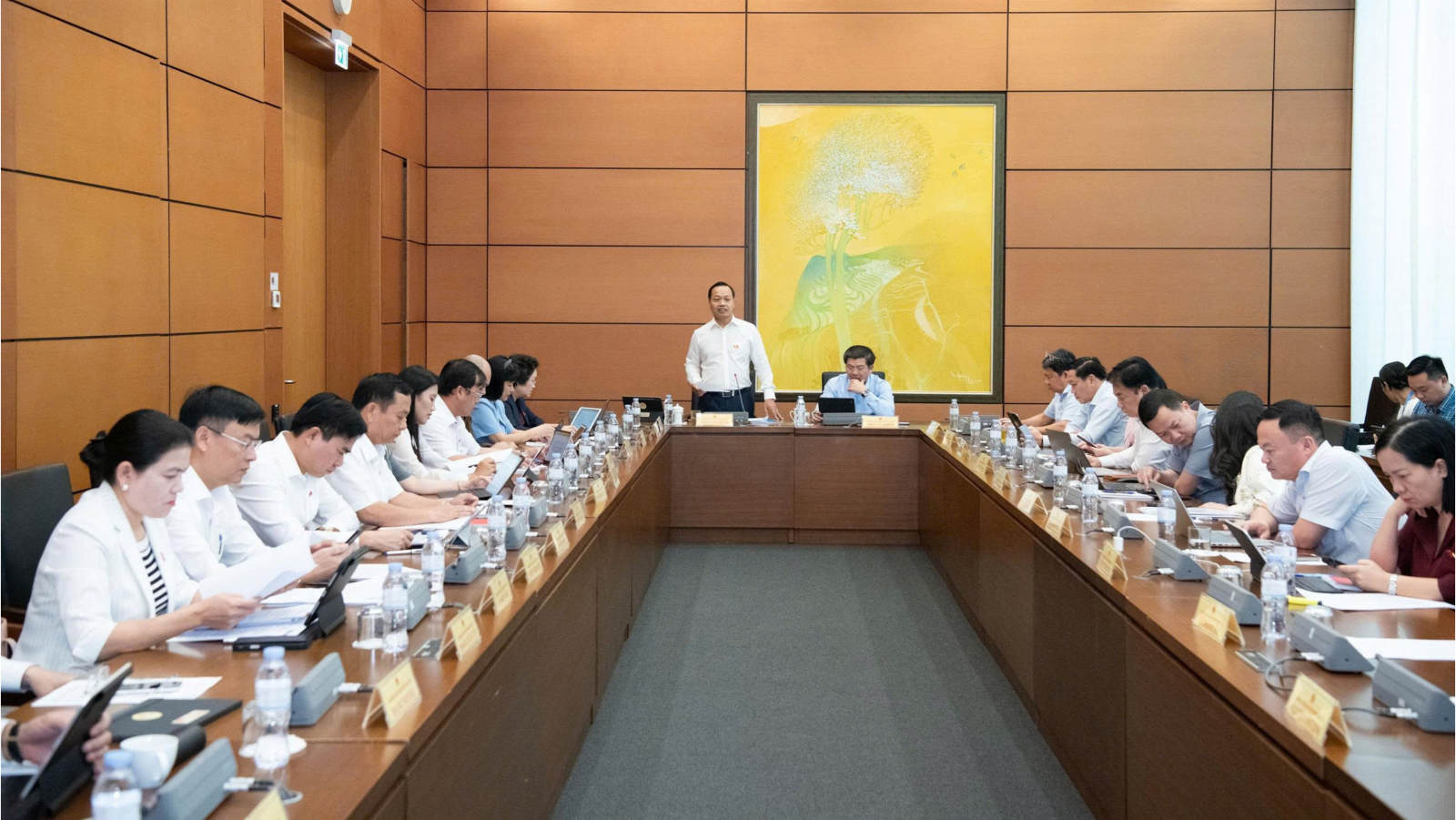
Therefore, the draft law needs to explicitly designate the agencies and individuals responsible for providing feedback, settlement timeframes, and handling and notification procedures in cases where petitions fall outside their direct competence. Assessing the implementation of grassroots democracy must also rely on substantive criteria - such as the rate of petitions resolved on time, explanations provided for unaccepted feedback, and the level of information transparency - rather than merely tallying the number of petitions or dissenting opinions.
Regarding the discussion topic raised by the Head of the provincial National Assembly Deputy Delegation concerning Article 19 provisions when more than 50% of the people express opinions, Deputy Tạ Thị Yên recommended clarifying whether this ratio is calculated against the total number of individuals eligible for consultation or the number of actual participants. Concurrently, it is necessary to make public the number of eligible individuals, the number of actual participants, and specific opinion clusters, ensuring unified understanding and application across localities.

Deputy Tạ Thị Yên emphasized that the over-50% threshold cannot serve as a boundary determining which opinions are listened to. For matters directly affecting the interests of a group of people - such as land acquisition, compensation, and resettlement - the opinions of directly impacted individuals must still be comprehensively reviewed and addressed. According to the deputy, the over-50% ratio should act as a threshold triggering a higher standard of mandatory public accountability, rather than a dividing line to decide which opinions are considered and which are dismissed.
Another issue highlighted by the deputy concerned contributions discussed and decided upon by residential communities. The deputy asserted that community self-governing rights cannot be leveraged to turn voluntary donations into mandatory financial obligations when not prescribed by law. Hence, it is necessary to explicitly stipulate that voluntary contributions must not be tied to the processing of administrative procedures, the certification of documents, or the delivery of public services.
Regarding the implementation of democracy on digital platforms, the deputy supported technological adoption but stressed that digitization must expand participation opportunities rather than replace direct in-person formats. For residents in mountainous, remote, and ethnic minority regions, the elderly, and individuals not proficient in technology, appropriate in-person engagement channels must be maintained, especially concerning matters directly impacting citizens’ rights and interests.
Guaranteeing equal access to information for citizens
Contributing feedback on Clause 2, Article 3 of the draft law regarding principles for implementing grassroots democracy, Deputy Lỳ Mì Lé noted that the provision regarding the State’s support and creation of favorable conditions for persons with disabilities, ethnic minorities, and residents living in specific areas to exercise grassroots democracy has not been fully concretized across the articles of the draft, especially concerning persons with disabilities. Therefore, suitable forms of support should be added to ensure these target groups have the conditions to access information and participate equally and substantively in grassroots democracy.
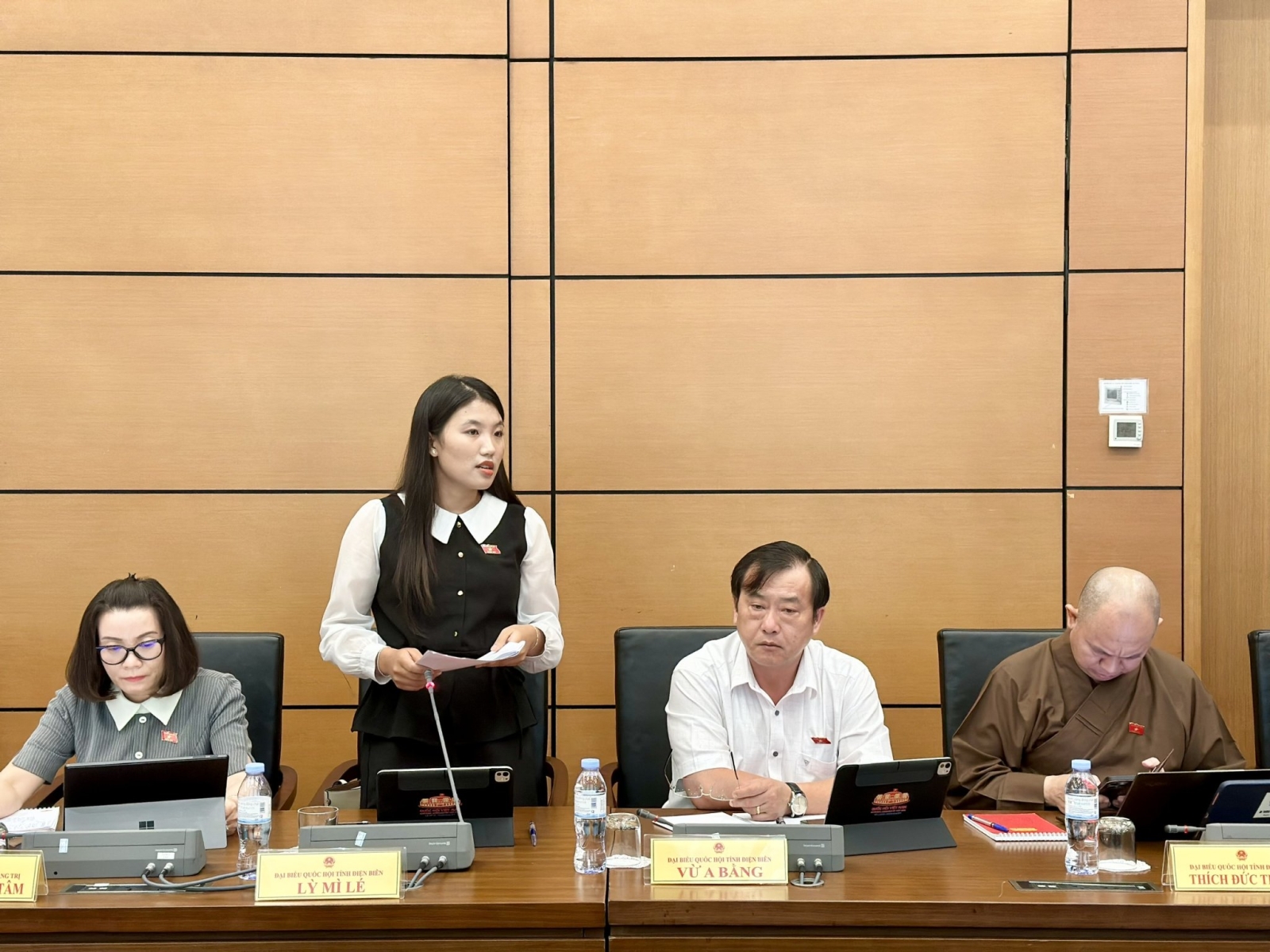
Concerning citizens’ rights in Clause 2, Article 5, the deputy proposed replacing the phrase “to have information made public” with “to access information made public in accordance with the law.” According to the deputy, this wording helps clearly demarcate citizens’ right to access information from agencies’ and organizations’ responsibility to disclose information, while guaranteeing consistency with the law on access to information.
Regarding Clause 2, Article 6 on citizens’ obligations, the deputy recommended explicitly specifying that citizens are obligated to abide by decisions made by residential communities, local authorities, agencies, units, and employer organizations only when such decisions are issued strictly within statutory competence, order, procedures, and legal provisions. Adding this condition guarantees legal rigor, averting interpretations that citizens must comply even with unlawful decisions.
Notably, in Clause 5, Article 10 regarding contents that commune-level local governments must disclose publicly, the deputy suggested adding the word “wastefulness” alongside contents related to corruption and negative phenomena. According to the deputy, anti-wastefulness is a crucial task requiring open and transparent execution so that the people can monitor and supervise, while elevating the accountability of relevant agencies, organizations, and individuals.
Mai Hồng












You have 500/500 characters left
Please enter 5 or more characters!!!