



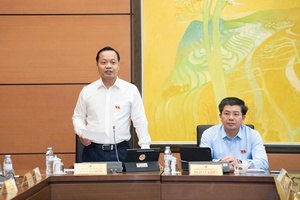
Trần Tiến Dũng, Member of the Party Central Committee, Secretary of the Điện Biên provincial Party Committee, Head of the provincial National Assembly Deputy Delegation, presided over the discussion at Group 4, which comprises the National Assembly Deputy Delegations of Điện Biên, Quảng Trị, and Đồng Nai provinces.
Reviewing provisions banning the livestreaming of pharmaceutical sales
Regarding amendments and supplements to the Law on Pharmacy, the Head of the Provincial National Assembly Deputy Delegation recommended reviewing regulations governing strictly prohibited acts concerning livestreaming the sale of pharmaceuticals and active pharmaceutical ingredients. According to the deputy, pharmaceutical starting materials can encompass agricultural produce such as black cardamom, artichokes, and ginseng. Meanwhile, local citizens might sell these items purely as ordinary commercial goods, whereas whether they are used as medicinal raw materials depends entirely on the purchaser’s intent. Therefore, careful consideration must be given to the scope of prohibited acts, clarifying the definition of “pharmaceutical starting materials” to avoid erecting barriers against pharmaceutical industry development and concentrated commercial agricultural production zones.
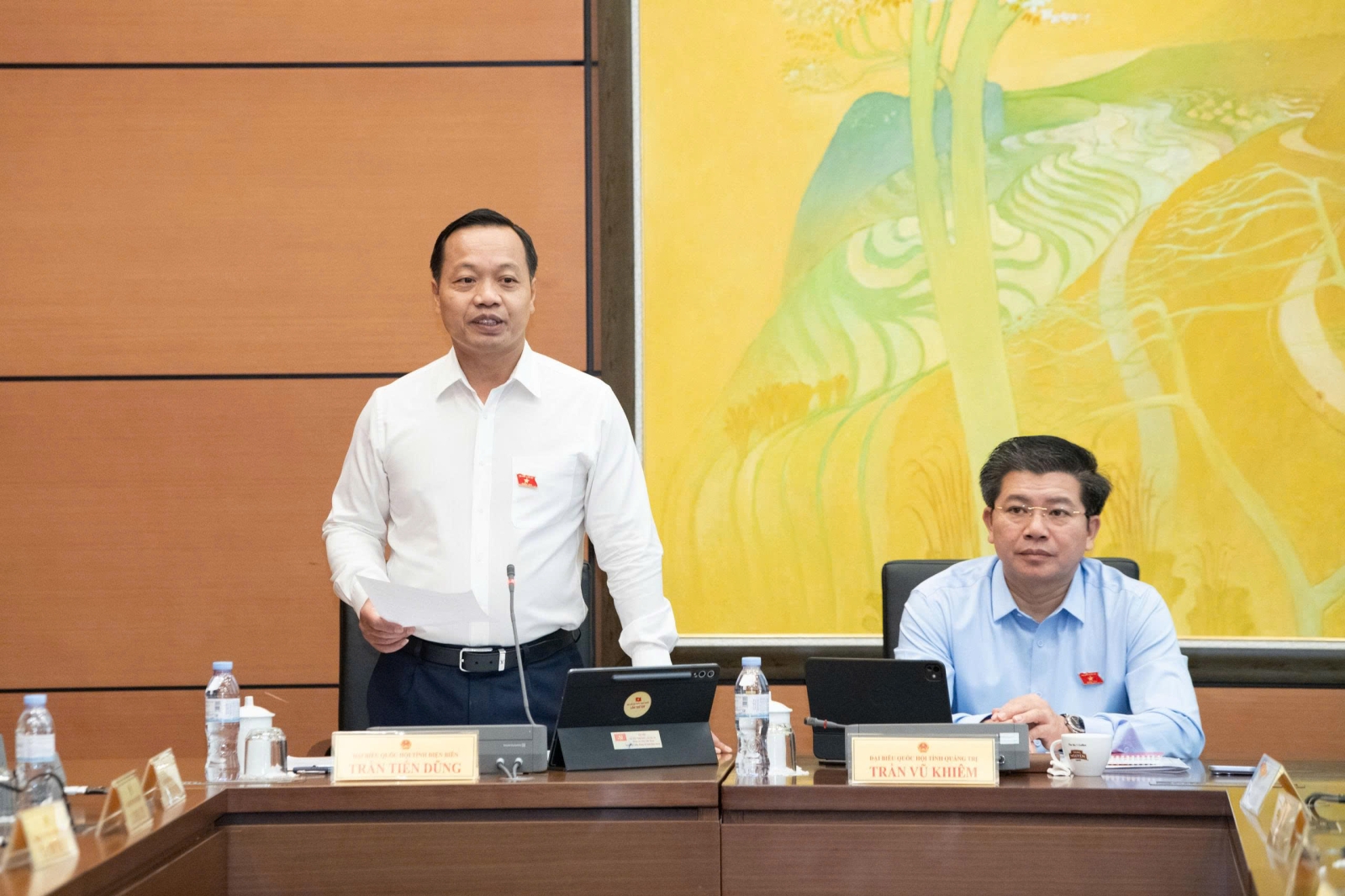
Concerning responsibility in developing the pharmaceutical sector, Trần Tiến Dũng suggested reviewing and further evaluating provisions encouraging investment in this field. According to the deputy, merely applying general regulations equivalent to ordinary investment lines makes it difficult to generate momentum strong enough to advance the pharmaceutical industry - especially when Việt Nam possesses substantial potential in medicinal plants and botanical drug sources, yet the domestic pharmaceutical sector has not developed commensurately with these potentials and advantages.
Regarding drug price controls, Deputy Tạ Thị Yên suggested establishing clear comparison benchmarks when regulatory agencies deem pharmaceutical prices published by enterprises to be unreasonably high, while requiring businesses to provide explanations based on concrete grounds. The price control mechanism must also consider distinct factors regarding supply sources, the number of users, transportation and storage expenditures, and distribution conditions, avoiding rigid applications that cause delays in bringing essential medications to patients. The deputy emphasized that price controls must go hand in hand with guaranteeing citizens’ access to medicines, without creating added burdens for regulatory authorities and enterprises that ultimately impact patients.
Clarifying risk classification, controlling medical equipment costs
Regarding the Law on Medical Examination and Treatment, Trần Tiến Dũng proposed reviewing provisions under Article 113 concerning medical equipment management, particularly classifying equipment into four risk tiers: low, medium-low, medium-high, and high. According to the comrade, this classification is not yet consistent with the Law on Product and Goods Quality, which classifies goods into three risk tiers: low, medium, and high. Discrepancies in classification systems coupled with risk assessment mandates could give rise to specialized procedures, administrative red tape, and implementation bottlenecks. Consequently, it is necessary to review the relationship between these laws, ensuring consistency, synergy, and statutory feasibility.
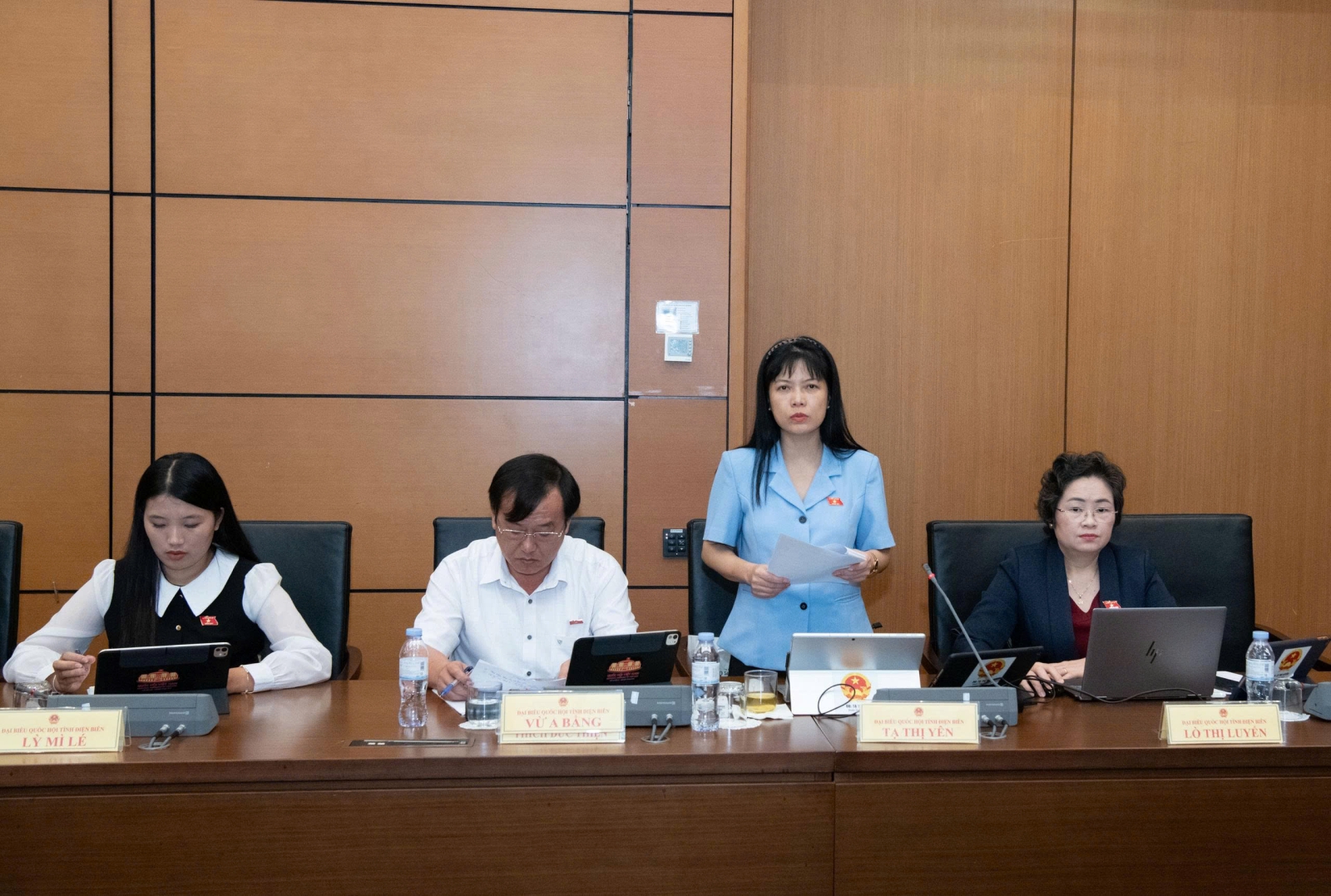
Sharing interest in medical equipment oversight, Deputy Tạ Thị Yên highlighted the imperative to tightly control pricing, quality, and lifecycle costs throughout equipment utilization. According to the deputy, practice shows instances where equipment has a modest initial purchase price, but associated consumables, maintenance, and repair expenses are exorbitant; across multiple intermediaries, equipment prices can also be inflated.
From that reality, the deputy proposed clarifying management responsibilities across every phase - from procurement and commissioning to maintenance, repair, and disposal - while adding requirements to disclose equipment prices, related expenditures, distributors, maintenance services, and mandatory accompanying supplies.
Refining regulations on child protection and eldercare
Regarding the Law on Children, Deputy Vừ A Bằng suggested reviewing Article 59 provisions on suspending and terminating the operations of child protection service providers. According to the deputy, authorizing such measures when a facility fails to meet the requirements of the Law on Children or violates legal provisions in its registered scope of activity is overly broad.
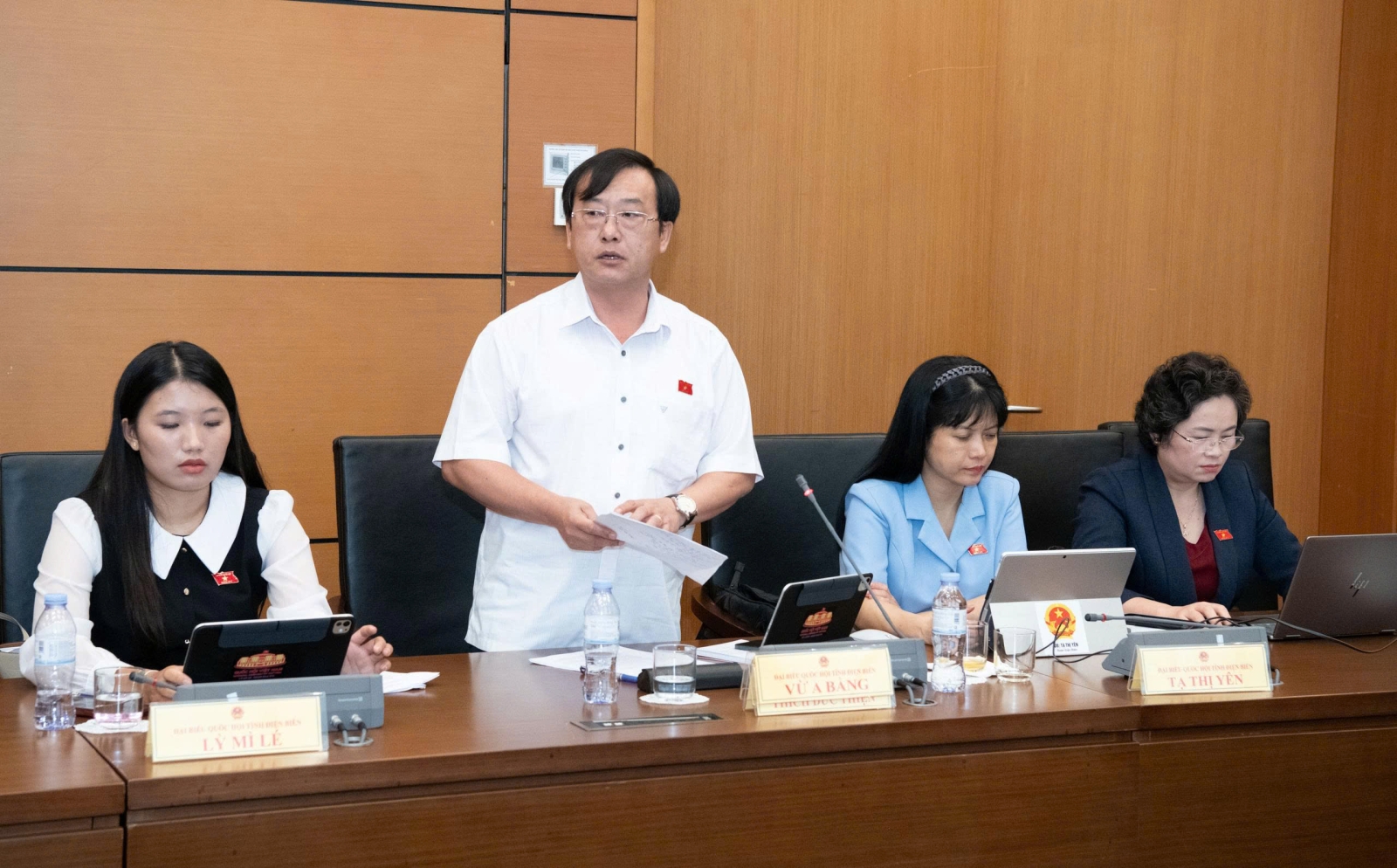
In reality, a child protection service provider may simultaneously operate multiple distinct activities. Therefore, certain violations might not directly pertain to child protection services. For such infractions, handling must be grounded in the laws governing the corresponding sectors, ensuring alignment with the nature and severity of the violation, avoiding overlap, and preventing the disproportionate application of suspension or termination measures.
Regarding the Law on the Elderly, Deputy Vừ A Bằng proposed amending the age threshold for priority medical examination and treatment by lowering the priority age from 80 years and older to 75 years and older, ensuring consistency with the current Law on Medical Examination and Treatment.
Mai Hồng













You have 500/500 characters left
Please enter 5 or more characters!!!