



Many tasks previously handled by district authorities have been devolved to communes and wards, requiring grassroots-level administrations to be more proactive. Consequently, across numerous localities, cadres not only work at office headquarters but also step up visits to hamlets, villages, and production sites to grasp practical situations and untangle difficulties. This approach contributes to shortening the distance between government and citizens, bringing guidelines and policies closer to daily life.
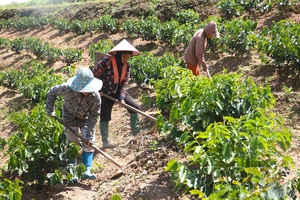
Over recent years, Mường Nhà commune has prioritized developing industrial crops (macadamia, coffee) alongside fruit orchards. However, implementation across several villages encountered hurdles and bottlenecks regarding farming land, seed varieties, and farming techniques. For instance, in Na Phay, Na Khoang, Ban, and Mường Lói villages, priority has been given to expanding macadamia and coffee; however, limited land availability and overlaps with three-forest-category planning have posed major bottlenecks to expansion. To resolve these difficulties, Mường Nhà commune leaders have routinely visited the grassroots-level to assess conditions.
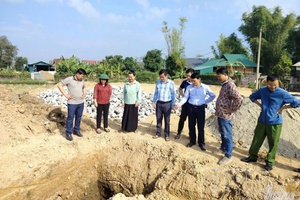
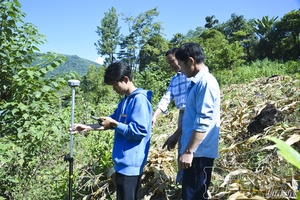
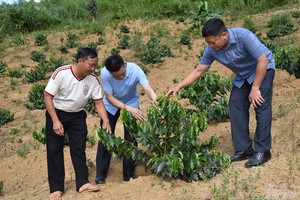
Recently, an inspection team led by Lường Văn Biên, Permanent Vice Chairman of the Mường Nhà commune People’s Committee, conducted on-site inspections of cultivation acreage, met with residents, and listened to issues emerging during production. Based on field observations, commune leaders requested the Economic Division to coordinate with villages to continue reviewing and identifying specific land parcels eligible for coffee and macadamia cultivation, while instructing villagers on planting techniques, crop tending, and selecting varieties suited to practical conditions.
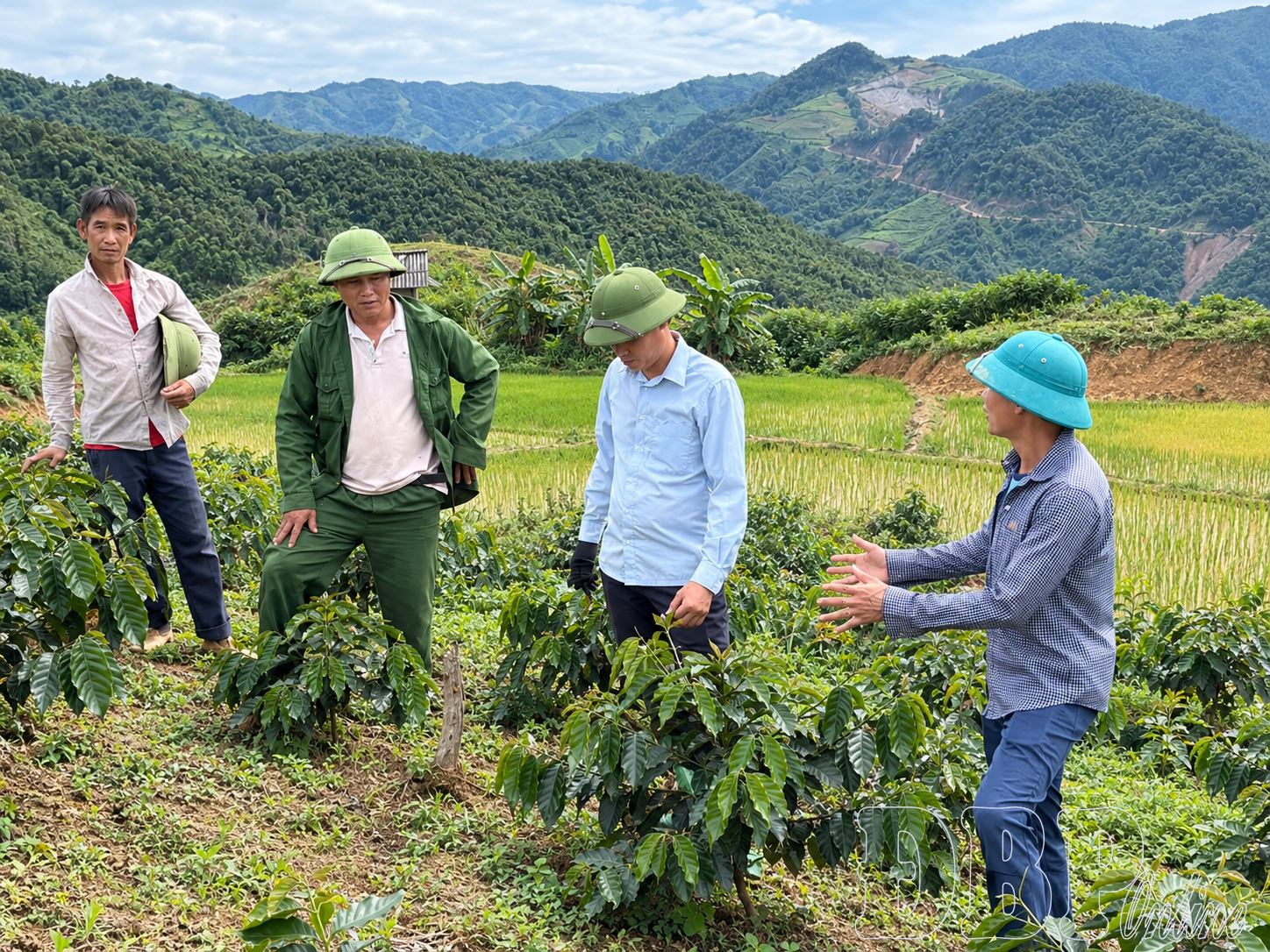
This working method enables authorities not only to know which crops villagers wish to cultivate, but also to pinpoint where bottlenecks lie and identify how government can assist. Lò Văn Nhung, Head of Na Phay village, shared: “Villagers want to develop coffee and macadamia, but still have concerns about land, seed varieties, tending techniques, and long-term economic efficacy. Commune cadres visited our village directly, inspected production fields, and held direct discussions with villagers, making issues much clearer. Villagers have peace of mind because their difficulties and petitions are heard and matched with concrete solutions.”
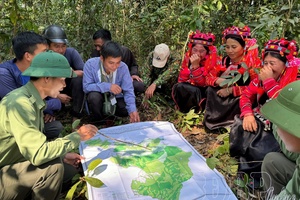
Acting on petitions from residents of Thín village, Chiềng Sinh commune, on September 30, the Secretary of the commune Party Committee and the Chairman of the commune People’s Committee directly surveyed the Thín village Waterfall area to evaluate potentials for community tourism development. The inspection team assessed current conditions, reviewed challenges in management and landscape protection, and identified areas requiring prioritized preservation. According to Hà Cầm Hồng, Secretary of the Chiềng Sinh Commune Party Committee, through on-site surveys, the locality gained added ground to formulate solutions that simultaneously preserve natural landscapes and leverage their value to serve community tourism development around Thín Village Waterfall.
Immediately following on October 1, Hà Cầm Hồng, Secretary of the Chiềng Sinh commune Party Committee, held a direct face-to-face dialogue with residents of Thín village to clarify petitions and proposals concerning the preservation and promotion of Thín village Waterfall. At the dialogue, the commune Party Secretary instructed specialized divisions to review each item raised by residents, clearly demarcate issues falling under commune jurisdiction versus matters requiring coordination with higher authorities, and propose plans to resolve bottlenecks.
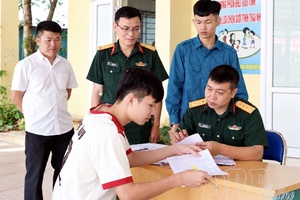
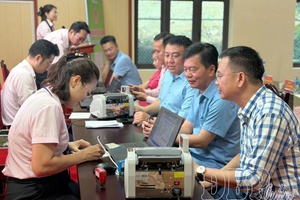
Practical operations under the two-tier local governance model reveal that the commune level is facing greater requirements in both workload and responsibility. Since July 1, 2025, Điện Biên reduced from 129 down to 45 commune-level administrative units. Many tasks previously handled by district authorities are now deployed directly at communes and wards. Under such conditions, cadres are required to master their jurisdictions, thoroughly understand their duties, and assume end-to-end accountability for assigned work.
Staying close to the grassroots-level is not merely knowing what resources exist locally; more crucially, it means knowing what difficulties residents are facing and which issues need resolution. In this regard, administrations do not wait for written petitions to arrive before acting; they proactively seek out where issues arise, meeting citizens face-to-face to listen and verify practical realities. Thereby, feedback that once remained general is concretized into specific tasks, designated localities, distinct problem groups, and clear responsibilities of relevant agencies and cadres.
Reality shows that when cadres visit villages, walk alongside residents across production fields, inspect areas under petition, or sit down for direct exchanges, many issues are perceived far more comprehensively. Certain matters within local jurisdiction can be resolved immediately; other issues require further reviews of planning, land administration, and resources, or coordination with higher-level agencies. Crucially, residents know where and how their petitions are being handled, rather than merely waiting for a non-committal response.
As Điện Biên focuses on accelerating socio-economic development, the role of grassroots-level administrations becomes even more prominent. Positive grassroots-level momentum is actively driving the province’s overarching socio-economic expansion. During the first nine months of 2026, provincial GRDP grew by an estimated 9.81% year-on-year; numerous sectors such as industry, commerce, tourism, budget collection, public investment disbursement, and job creation witnessed positive shifts. Over the remaining months of the year, the province continues to concentrate on driving growth, accelerating disbursement, fulfilling budget revenue targets, supporting production, and guaranteeing social security, striving for a full-year GRDP expansion of 11.02%.
With Điện Biên implementing numerous tasks directly affecting people’s livelihoods, this requirement becomes all the more vital. All guidelines and policies are ultimately realized at each commune and village. Therefore, visiting the grassroots-level is not merely to grasp the situation, but to enable cadres to see problems firsthand, listen accurately to what the people need, and define appropriate solutions. When authorities proactively seek out where difficulties arise, grassroots-level recommendations are received and resolved in a more timely manner. From there, the distance between government and the people is narrowed, administrative efficiency is elevated, and public trust is solidified.
Thu Phương




You have 500/500 characters left
Please enter 5 or more characters!!!