



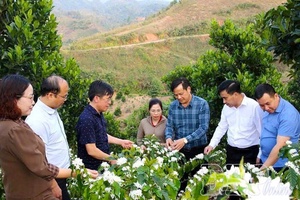
Under its development strategy, Tuần Giáo has identified macadamia, coffee, medicinal plants and several fruit crops as high-potential, high-value crops. Alongside expanding cultivated areas, the commune is focusing on converting inefficient farmland to higher-value crops while promoting the application of science and technology and digital technologies in the management of raw-material zones, production, preliminary processing and product distribution.
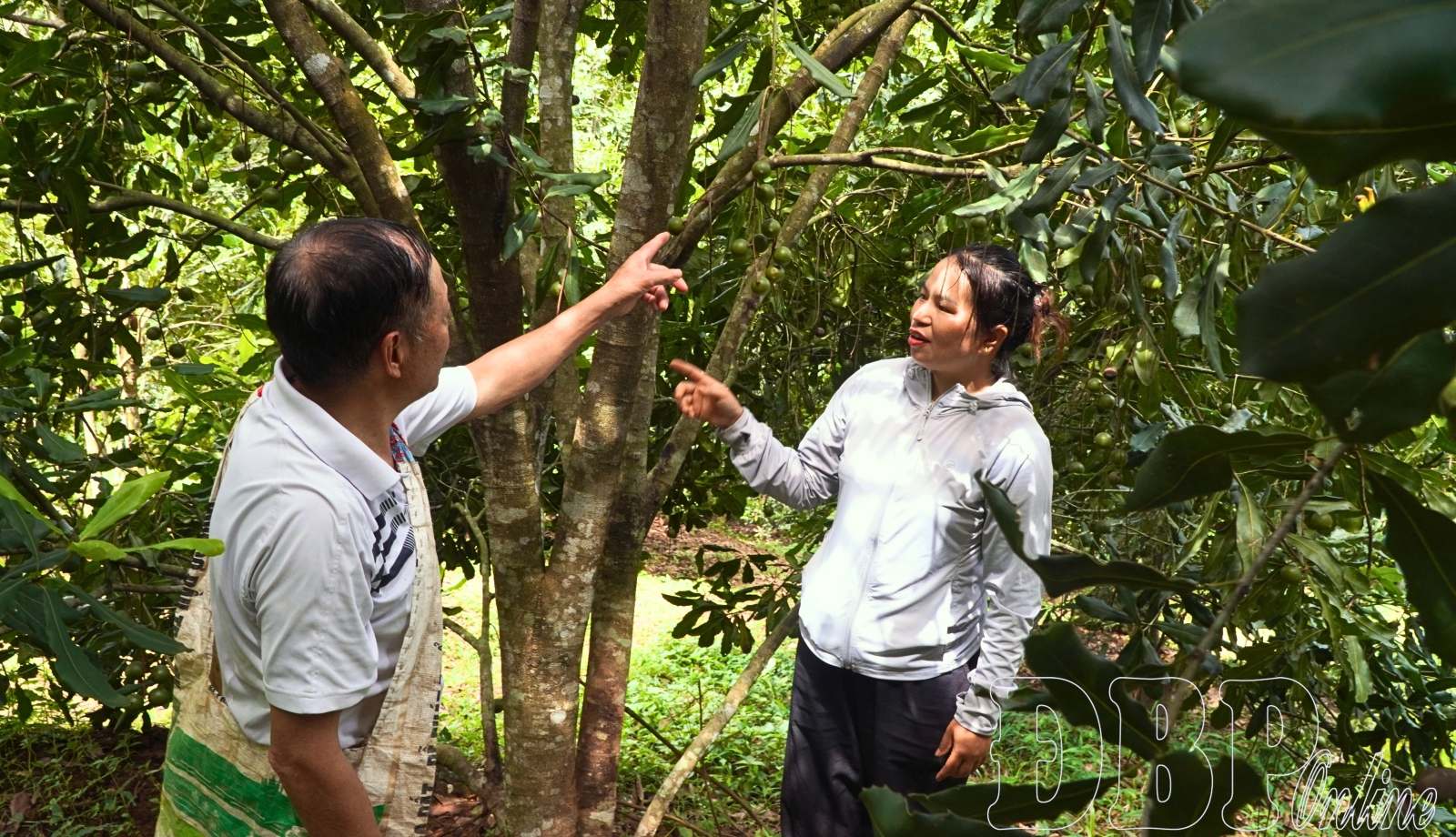
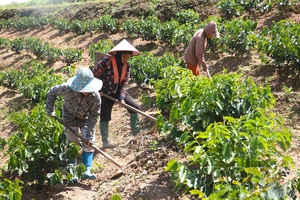
The commune currently has more than 2,390ha of macadamia, of which around 350ha are already producing harvests and generating income, with an estimated output of about 2,442 tons. Coffee covers more than 624ha, including over 67ha currently producing fruit, with a coffee bean output of 165 tons. These figures provide an important foundation for reorganizing production, establishing stable raw-material zones and linking production more closely with the market.
Quàng Văn Cương, Chairman of the Tuần Giáo commune People’s Committee, said that alongside reviewing, planning and expanding concentrated raw-material zones, the commune is strengthening production-area management in accordance with regulations. It is gradually registering and issuing growing-area codes while controlling product quality under VietGAP, organic standards or equivalent specialized technical standards.
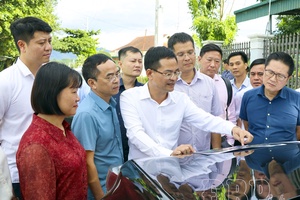
The commune is also stepping up the transfer of scientific and technical advances and strengthening producer groups and cooperatives so that they can serve as links between farmers and businesses in supplying inputs, production, purchasing, preliminary processing and marketing. Most recently, the commune coordinated with a working delegation from the Ministry of Science and Technology to survey a controlled trial, or “sandbox,” for developing a low-altitude economy using unmanned aerial vehicles, contributing to the development of green, smart and sustainable agriculture.
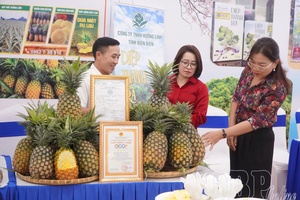
For macadamia, 25 producer groups and two cooperatives in the commune are currently involved in value-chain linkage projects, mainly developing macadamia-based products. Tuần Giáo has 17 OCOP products, including 15 rated three stars and two rated four stars. Most of these products are processed from macadamia and coffee, including Việt Hà Macadamia, Thoa Quang shelled roasted macadamia nuts and Thoa Doãn crispy roasted macadamia kernels.
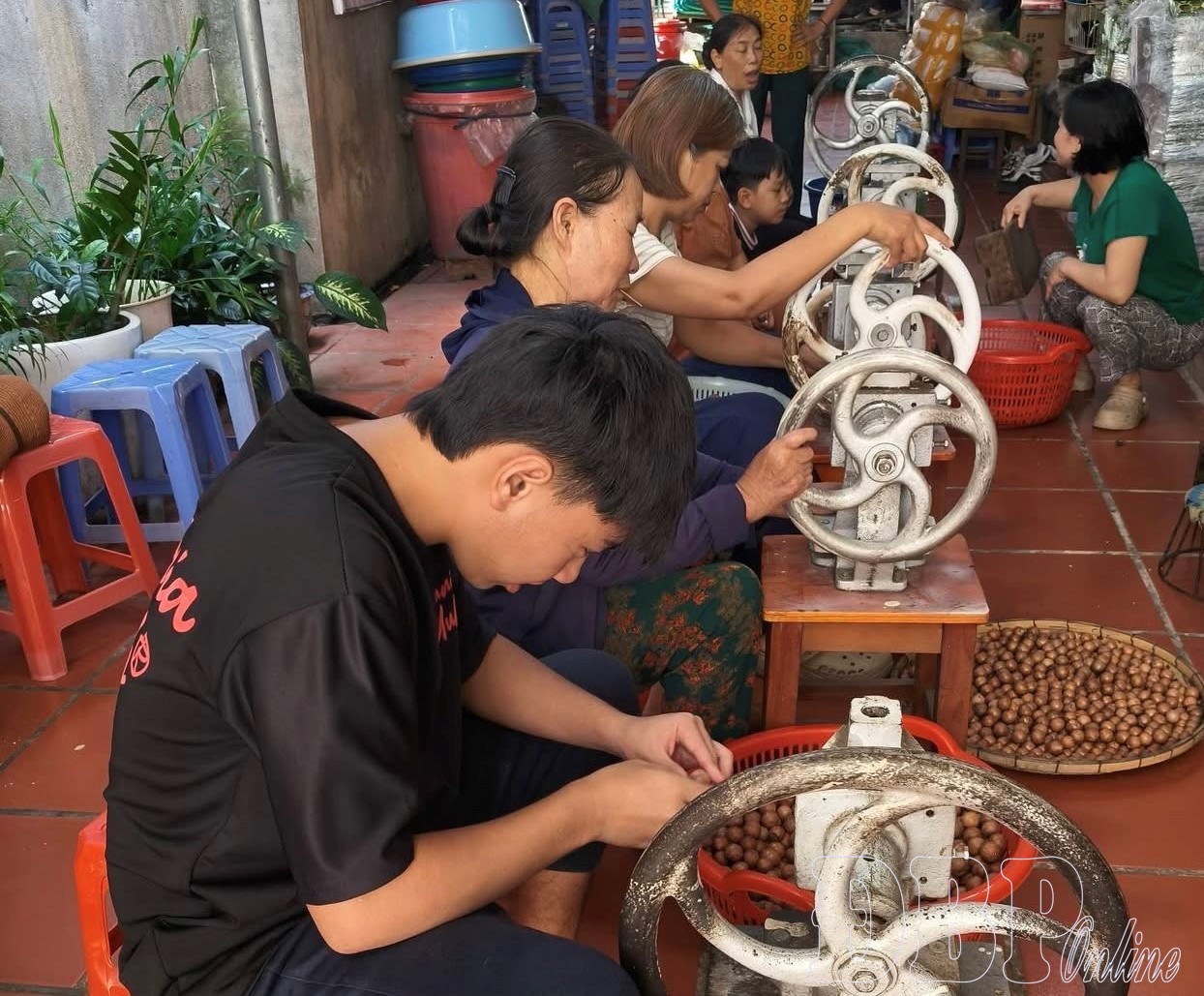
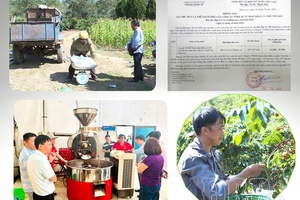
Doãn Thị Thoa, owner of the Thoa Doãn macadamia processing facility in Tuần Giáo commune, said that establishing concentrated raw-material zones and stable production linkages is crucial to processing operations. When the quality, volume and cultivation practices of raw materials are properly controlled, processing facilities can plan production more effectively, diversify their products and increase their value. This also provides a foundation for local macadamia products to gradually build a brand and expand their markets.
In recent years, macadamia production linkages have been organized in a more concentrated manner, with cooperatives taking responsibility for specific raw-material zones. In key areas such as Quài Nưa and Quài Cang, the commune has established macadamia service cooperatives and organized farmers to participate in production based on the cultivated area of each household.
The Quài Nưa Macadamia Services Cooperative currently works with 293 households across approximately 200ha, while the Quài Cang Macadamia Services Cooperative is linked with 205 households covering more than 100ha. The cooperatives provide seedlings, inputs and technical support at lower costs while also serving as focal points for signing contracts with businesses to purchase and process macadamia nuts. This helps reduce fragmented production and farmers’ dependence on small-scale traders.
For coffee, value-chain linkages are expanding toward greater business involvement from the production stage. Tuần Giáo commune has signed a memorandum of understanding with Việt Bắc Coffee Import-Export Co., Ltd. The company has committed to purchasing all coffee produced by local farmers through 2050, at market-based prices but no lower than VND 10,000 per kilogram or USD 0.40 per kilogram, whichever is higher.
The commitment provides farmers with greater confidence to invest in cultivation, care for their crops, expand production areas and improve product quality. The local authorities are also working to attract investors to build a coffee processing plant in the Quài Cang area, with a capacity of around 120 tons of fresh coffee cherries per day, sufficient to process output from 1,500ha of coffee-producing areas.
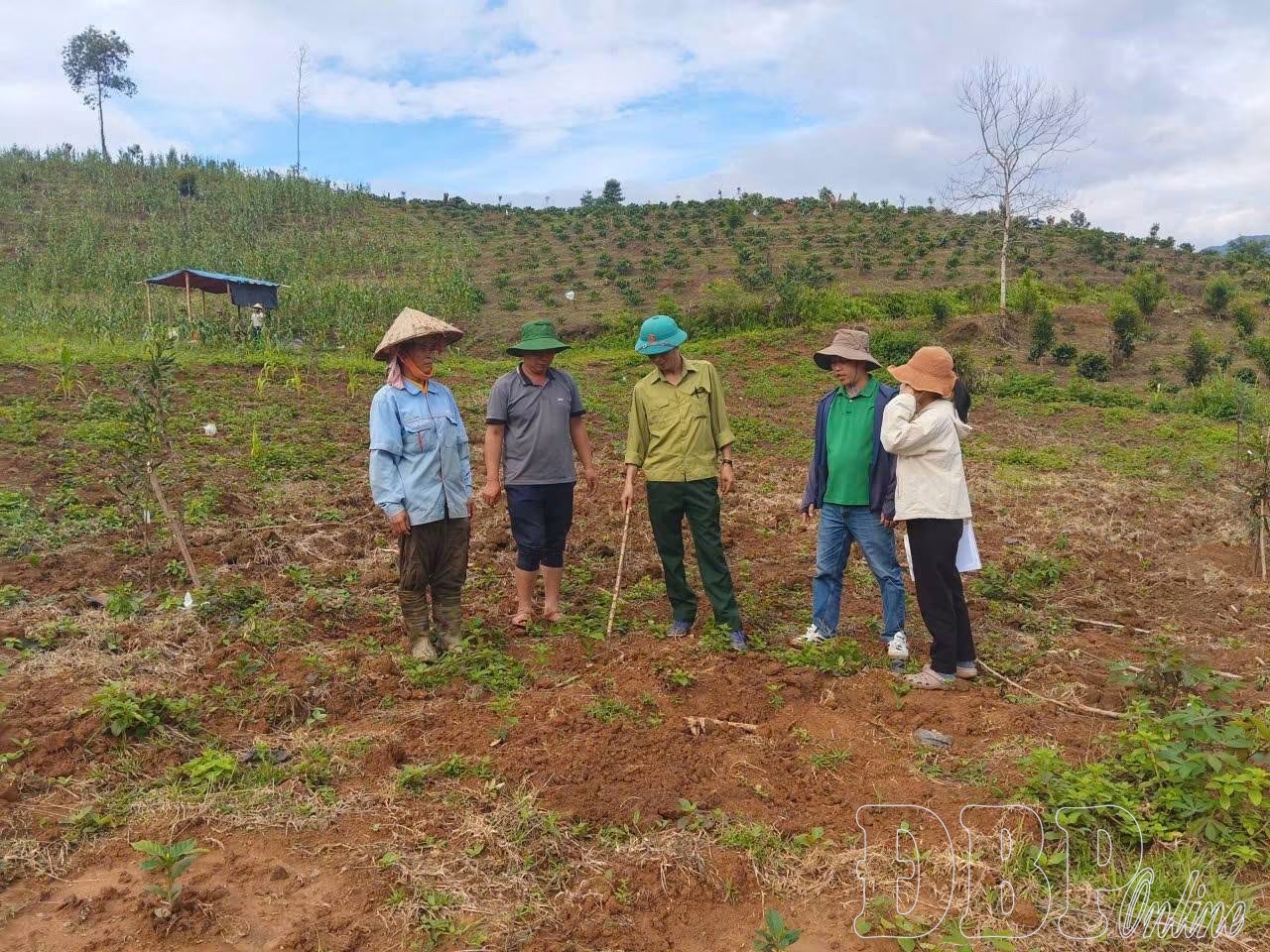
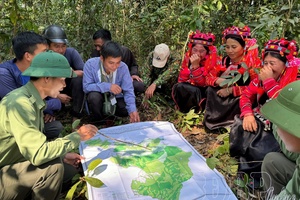
Under its development plan, Tuần Giáo commune aims to establish and expand market-oriented macadamia and coffee raw-material zones covering a total of around 4,000ha. Of this area, 3,000ha will be incorporated into databases and mapped and managed using digital technologies, while 30ha will apply high technology toward smart agricultural production.
More than 75% of the macadamia and coffee growing area or output is expected to receive quality certification and be marketed through linkage contracts among farmers, producer groups/cooperatives and businesses. The commune also aims to establish or facilitate the stable operation of at least one or two macadamia and coffee preliminary-processing or deep-processing plants in the area and neighboring localities.
In addition, Tuần Giáo plans to develop collective trademarks or geographical indications for key products and add at least 16 OCOP products rated three stars or higher, including at least 10 macadamia or coffee products.
From crop restructuring and production reorganization to cooperative development and attracting businesses to processing and marketing, Tuần Giáo is gradually moving beyond conventional agricultural production toward an agricultural economy built around value chains. This approach will help the commune better capitalize on its local strengths, increase the value of agricultural products, create stable livelihoods for local residents, attract investment and contribute to its goal of achieving new-style rural commune standards.
Đức Kiên





You have 500/500 characters left
Please enter 5 or more characters!!!