



With 18 certified products alongside rich raw material sources, the locality sets a target to add 10 products in 2026 and reach 35 OCOP products by 2030, contributing to maximizing value and driving local rural economic development.
Agricultural specialties, coffee, green-skin pomelo, macadamia, dried meats, filtered sticky rice liquor, and related goods are contributing to the diversity of the OCOP program in Mường Ảng commune. Each product possesses its own distinct characteristics and advantages, tied to local production conditions and raw material supply. This also provides the foundation for the commune to continue exploring and developing new products, progressively shaping agricultural goods characterized by quality, brand reputation, and market competitiveness.
Currently, Mường Ảng possesses 18 OCOP products. Among them, Hà Chung coffee by Hà Chung Coffee Processing Establishment achieved 4 stars, while the remaining products attained 3 stars. This outcome demonstrates the locality’s potential in developing distinctive goods, while establishing a groundwork for the commune to maintain quality, upgrade certified products, and expand its OCOP catalog in the years ahead.
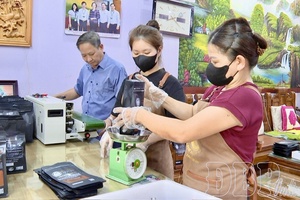
The prominent advantage of Mường Ảng lies in its relatively diverse agricultural raw material zones. Alongside coffee trees that have already established commercial commodity production zones, the locality is developing areas of macadamia, fruit trees, and several signature agricultural commodities. This raw material supply opens up possibilities for developing numerous additional products, particularly items that are processed, packaged, and conveniently preserved to satisfy consumption needs and serve as gift items. In particular, coffee remains a product with extensive headroom for in-depth development. Moving beyond green coffee beans, on-site materials can be tapped to advance roast-and-ground coffee lines, deeply processed products, and gift items bearing Mường Ảng’s distinctive imprint.
Coupled with production advantages, Mường Ảng maintains a network of cooperatives, enterprises, household businesses, and production facilities directly engaged in product development. With targeted support, these entities will serve as a vital force bringing local agricultural produce into the OCOP program, expanding distribution channels, and steadily cultivating stable markets.
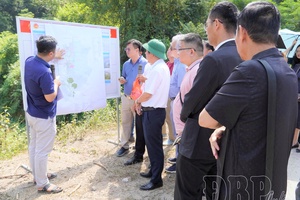
Deploying the Plan for OCOP Product Development for 2026 and the 2026-2030 period, the commune focuses on guiding and assisting in dossier completion and product upgrades for 10 items registered for OCOP evaluation and classification in 2026. Simultaneously, the locality supports 8 production and business entities - encompassing 4 cooperatives, 1 enterprise, and 3 household production and business units - participating in OCOP product development.
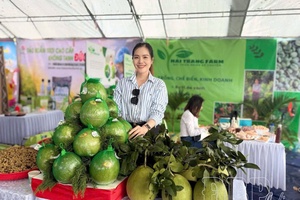
Notably, the registration list includes 6 coffee products from cooperatives. The remaining products comprise Lò Thị Tiện kitchen-hung dried pork, Hải Trang green-skin pomelo, Hùng Giang macadamia, and Hoàng Toàn vú sữa Hoàng Kim (golden star apple). This product mix shows that Mường Ảng’s OCOP development orientation both continues capitalizing on coffee strengths and broadens into livestock items, fruit trees, and high-potential agricultural produce.
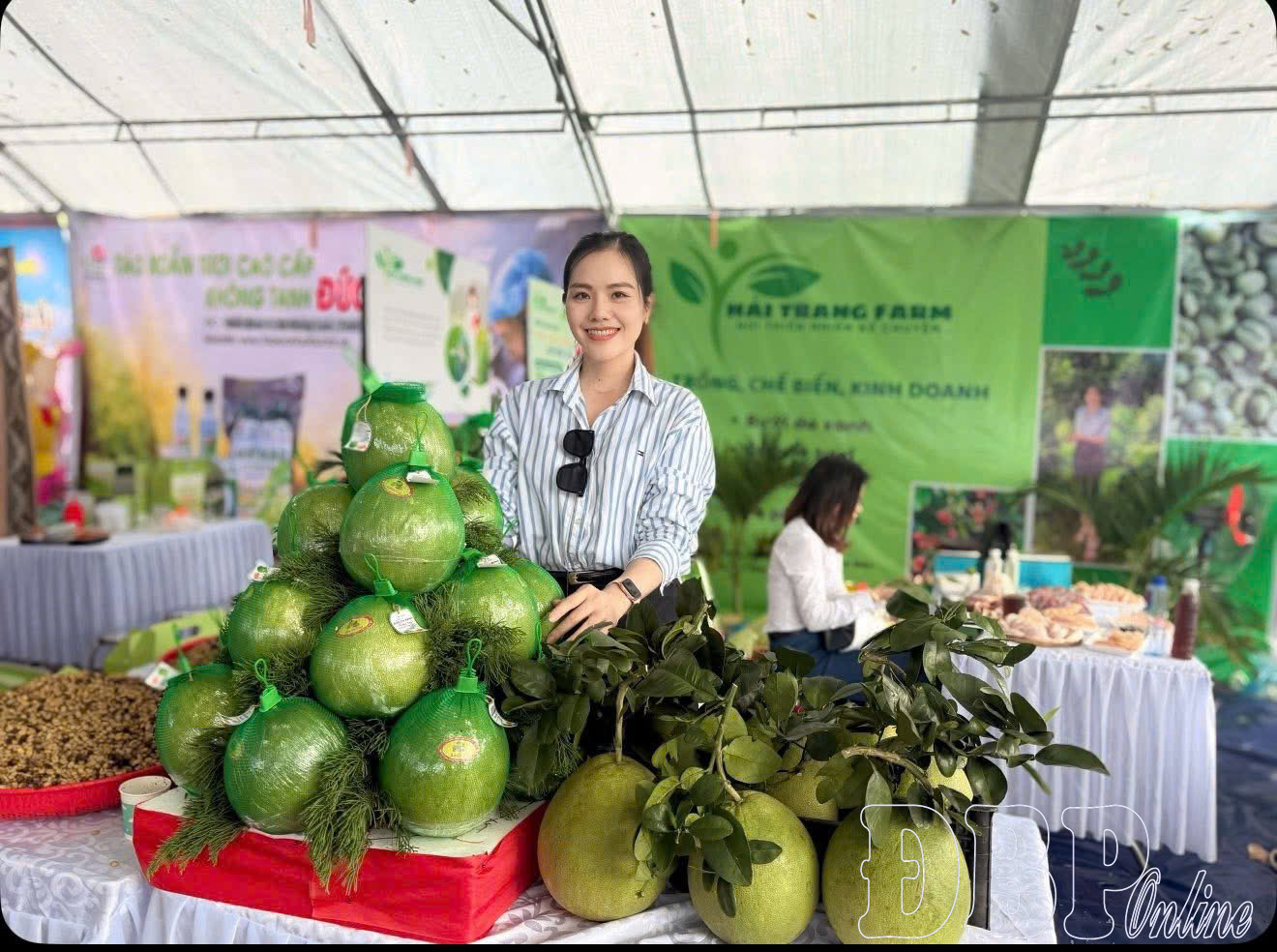
As one of the 8 entities registered to participate in OCOP product development in 2026 in Mường Ảng commune, Hải Trang Farm Agricultural Service Cooperative registered for 3-star OCOP evaluation and classification for its green-skin pomelo product. Currently, the cooperative manages 1.6ha of green-skin pomelo, yielding an annual output of approximately 32 tons. To meet program requirements, the cooperative is making efforts to finalize criteria regarding quality, packaging, labeling, and product documentation in accordance with regulations.
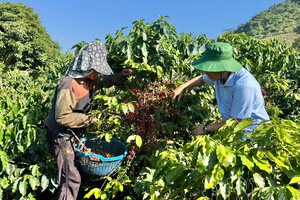
To maintain OCOP product quality, scale up operations, and retain market share, guaranteed raw material supplies, appropriate production protocols, and stage-by-stage linkages are essential. Consequently, a prioritized mission for Mường Ảng commune is consolidating raw material zones to anchor stable production. For coffee alone, the entire commune possesses over 2,100ha, with an average annual fresh coffee cherry output of 12,000 to 14,000 tons, equivalent to 3,500 to 3,900 tons of commercial green coffee beans. This represents a vital raw material source to develop OCOP products linked with processing, value addition, and local branding. Alongside coffee, reviewing and developing zones for macadamia, fruit trees, and concentrated commodity production will provide additional supply for new goods.
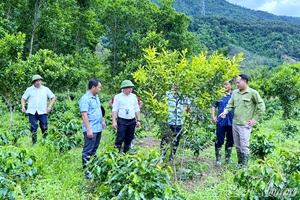
On that basis, Mường Ảng commune directs encouragement toward entities to adopt safe production workflows, VietGAP, organic, HACCP, and other standards appropriate for each product and real-world condition, combined with supporting the establishment of planting area codes when eligibility criteria are met. Trần Minh Giáp, Vice Chairman of the Mường Ảng commune People’s Committee, stated that the locality prioritizes reviewing and selecting products with distinct potential and strengths, particularly product clusters derived from coffee, macadamia, fruit trees, and processed agricultural goods. Concurrently, the commune encourages developing products tied to indigenous knowledge, local culture, and tourism experiences, progressively crafting gift items bearing Mường Ảng’s identity.
Another critical imperative is promoting linkages between enterprises, cooperatives, production households, and farmers across production, preliminary processing, deep processing, and distribution. Establishing stable, transparent linkages will help entities exercise greater autonomy over raw materials, off-take channels, and production schedules. Simultaneously, elevating governance competency, drafting business plans, and enhancing quality management, marketing, and e-commerce capabilities will enable producers to shift from capability-driven production to demand-driven product development. Currently, Mường Ảng commune is concentrating on assisting entities in addressing remaining gaps to participate in the 2026 program, including packaging design, labeling, quality inspection, and product dossiers. These are essential steps to ensure products meet evaluation and classification criteria while presenting a more professional presence upon market entry.
An Biên







You have 500/500 characters left
Please enter 5 or more characters!!!