



Through this, the company contributes to enhancing labor productivity, elevating power supply quality, saving costs, and optimizing production and business efficiency.
The medium-voltage grid currently managed and operated by Điện Biên Power Company stretches across the territory of Điện Biên province, characterized by complex terrain, primarily high mountain areas with severe fragmentation, causing frequent power grid incidents - especially during the stormy and rainy season.
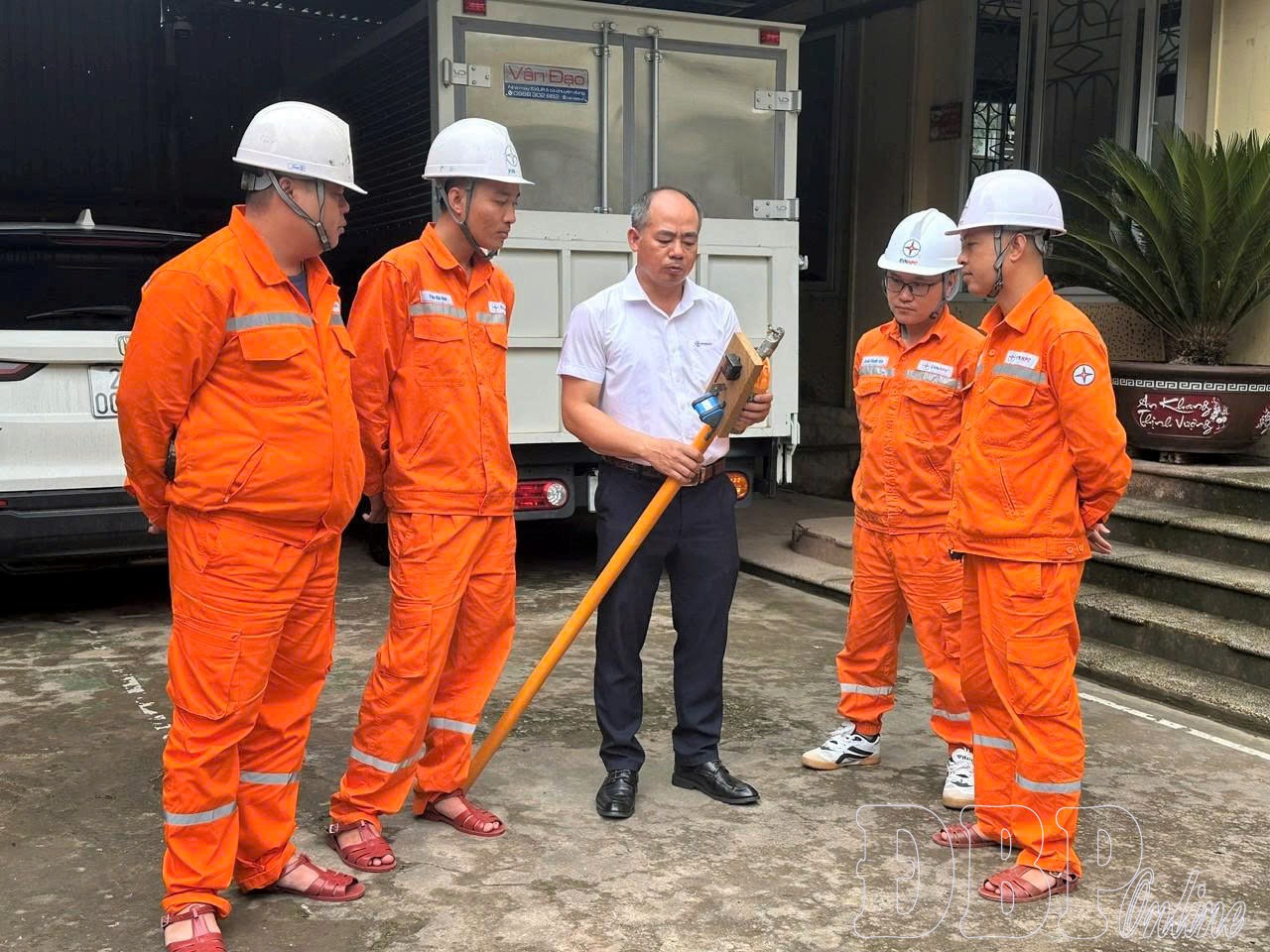
When an incident occurs on the medium-voltage grid, the troubleshooting procedure is carried out manually through four steps: The shift dispatcher receives a circuit breaker trip signal from the SCADA screen, while concurrently receiving customer power outage notifications via telephone lines or Zalo. The dispatcher calls to notify the relevant operational management units and power dispatch duty desks; notification time takes an average of 10 to 15 minutes from the moment the incident occurs. The operational management unit dispatches personnel to patrol the entire route to locate the fault; due to complex terrain, with many transmission lines spanning 40 to 80km across mountainous areas, patrol time to identify the fault location stretches from 1 to 4 hours. After locating the fault, operational personnel report back to dispatch to request an isolation and handling plan; this plan is formulated based on the personal experience of the dispatcher and fragmented archived technical documents.
From operational realities, incident response has revealed certain limitations, such as: Lacking an automated fault current analysis tool; failing to identify the fault type (single-phase, two-phase, or three-phase short circuit, ground fault, etc.) and the distance of the fault location from the head-end circuit breaker; lacking a system to suggest handling schemes: operating LBSs, Reclosers, and disconnectors to zone and isolate incidents as swiftly as possible; lacking an automated notification mechanism hierarchically routed to the exact personnel handling the issue via mobile phones, currently relying entirely on manual phone calls; and historical incident data from SCADA, PMIS, and GIS has not been aggregated and analyzed to extract incident patterns by region, weather, equipment, and season.
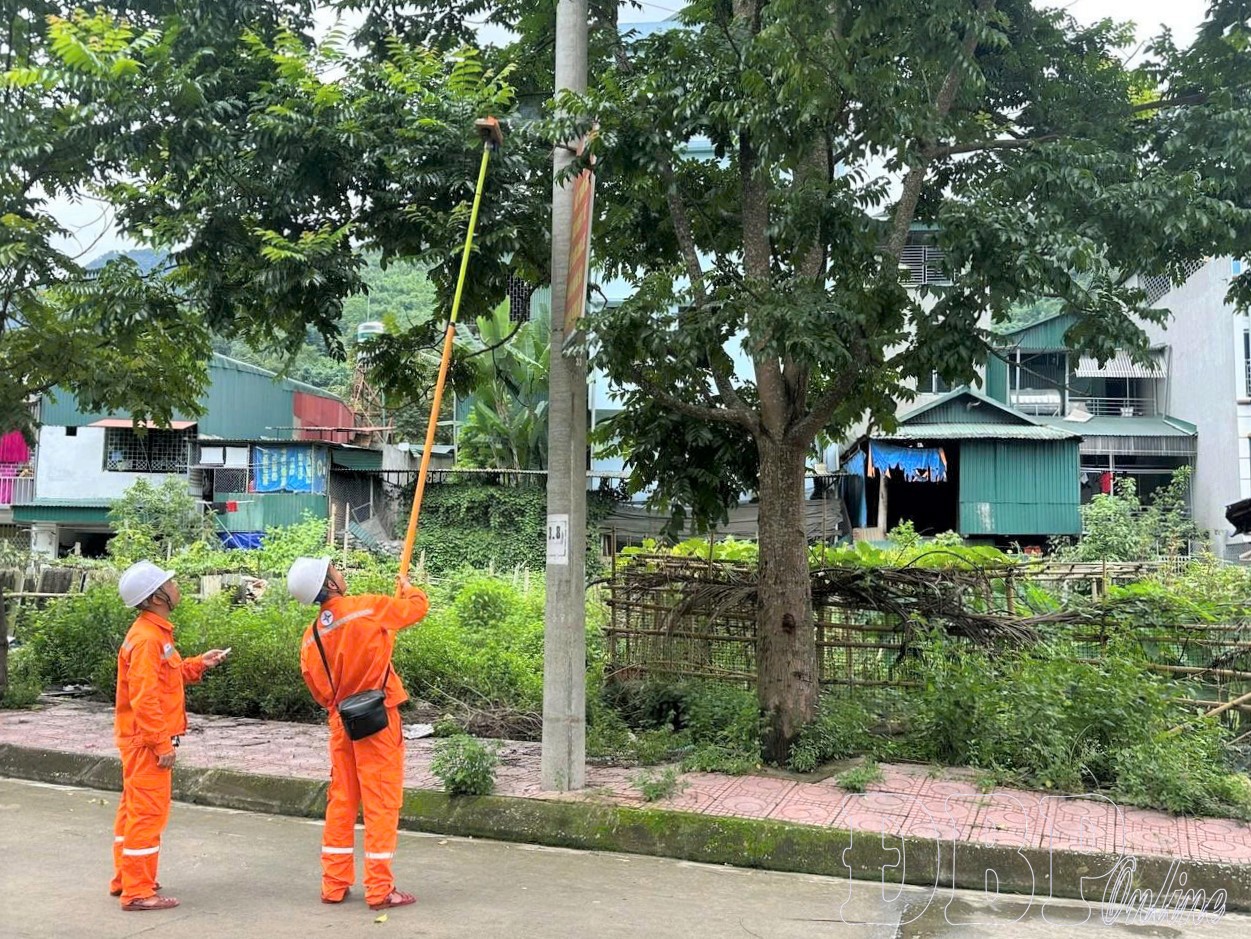
Faced with this situation, the Dispatch Office of Điện Biên Power Company proposed the initiative: “Medium-voltage grid incident analysis and handling suggestion system via AI applications.” Based on testing results across 38 incidents (April-May 2026) and referencing 2025 operational data, the technical efficiencies anticipated upon official company-wide application include: Average fault location determination time reduced by 51%; notification time to dispatchers (from the incident moment) reduced by 84%; the System Average Interruption Duration Index (SAIDI) reduced by 25%; and the rate of suitable, optimal handling plans (compared to best real-world practices) increased by 50%.
In terms of social efficiency and occupational safety, customer power interruption durations are significantly reduced, particularly for households using electricity for healthcare purposes and production or business operations in remote areas. The system provides location information and safety measures before personnel approach the fault point, mitigating risks of electrical occupational accidents. It elevates the professional competence of dispatchers and operational staff through learning from AI system recommendations, and establishes a digital data foundation serving smart grid construction in the subsequent phase.
Currently, Na Sang Power Branch manages and operates a power grid spanning nearly 2,800km², encompassing 1 ward and 9 communes with over 1,145km of medium- and low-voltage lines and 267 transformer substations, serving over 22,500 customers. The local topography is deeply dissected by mountain ranges and deep valleys, frequently harboring risks of geological faulting, cut-slope landslides, and erratic weather patterns, placing immense pressure on the electrical system. Under working and operating conditions at high elevations, many utility pole positions perch precariously on mountain slopes, and treacherous terrain renders linemen’s work even more arduous.
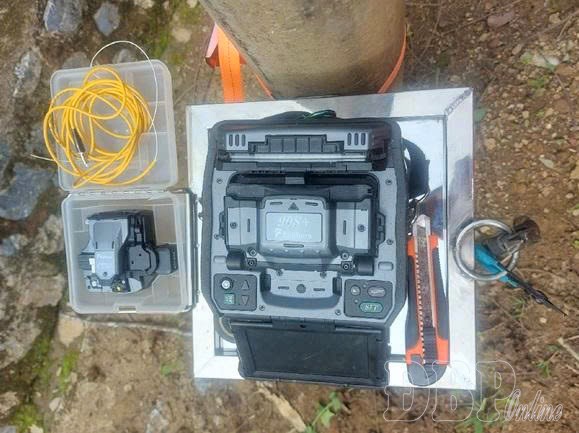
Arising from practical difficulties encountered during incident handling, engineer Hoàng Trí Hữu, Deputy Head of Na Sang Power Branch, along with his associate team, researched the solution “Support bracket for optical fiber fusion splicers.” The author group fabricated the bracket assembly from load-bearing steel featuring a self-folding hinge mechanism, secured to the pole body using fabric ratchet straps, immediately establishing a sturdy “workbench” in mid-air.
Engineer Hoàng Trí Hữu, Deputy Head of Na Sang Power Branch, stated: “Stemming from the requirement to shorten troubleshooting durations, especially under complex terrain conditions, the group researched and improved construction methods. This new approach not only enhances precision and safety during execution, but generates a distinct breakthrough in labor productivity. The initiative has helped shorten incident handling times by up to 50%, frees manual labor, and affords absolute protection to high-tech equipment.”
From job realities, the movement promoting initiatives and technical improvements has been prioritized by Điện Biên Power Company, becoming a driving force spurring cadres and employees to proactively explore, innovate work methods, and elevate work productivity and quality. In the first nine months of the year, across Điện Biên Power Company, 27 technical innovation initiatives were recognized at the company level.
Among them, many initiatives were evaluated by the company’s Science and Technology Council as highly effective when applied to technical-operational management and power business operations, such as: “Building a management system for electrical safety equipment and tool test reports serving dossier digitization at Điện Biên Power Company”; “Medium-voltage power grid incident analysis and handling solution suggestion system applying Big Data, GIS, SCADA, PMIS, and Artificial Intelligence (AI)”; and “Utilizing LibreNMS software in network infrastructure monitoring at Điện Biên Power Company.” Promoting initiatives at Điện Biên Power Company not only generates technical value, but more importantly ignites the sense of responsibility, intellect, and creative drive of employees. Each successfully applied initiative becomes an integral “link” contributing to enhancing power supply quality, ensuring safe and stable grid operation, and effectively serving socio-economic development mandates and the livelihood of the people across the province.
Sầm Phúc



You have 500/500 characters left
Please enter 5 or more characters!!!