



Attracting investment resources and forming commercial commodity production zones linked with science and technology applications are unlocking new developmental paths, contributing to elevating product value, reducing production costs, and creating sustainable livelihoods for the people.
In the border commune of Sín Thầu, sugarcane cultivation acreage is opening promising prospects for commercial agricultural economic development. Endowed with suitable climate and soil conditions, alongside trade advantages through the A Pa Chải Border Gate, the locality selected sugarcane to step by step form a concentrated raw material zone, aiming for production linkages and product off-take. Nguyễn Văn Thắng, Chairman of the Sín Thầu commune People’s Committee, stated: “The Executive Board of the commune Party Committee issued Resolution No.15-NQ/ĐU on March 20, 2026, on concentrating investment attraction resources, finalizing infrastructure frameworks, and stepping up economic development at the A Pa Chải Border Gate for the 2026-2030 period. On that basis, the locality continues to review and evaluate potentials and advantages to select appropriate, effective economic models; prioritizing commercial agricultural production, livestock husbandry, agro-processing, services, and specialty products. Within this framework, forming concentrated production zones linked with enterprises and consumer markets is identified as a vital solution to effectively exploit land potential, generate employment, and raise incomes for people in border areas.”
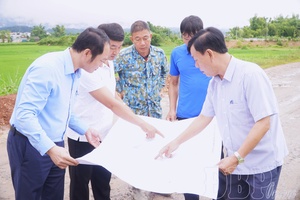
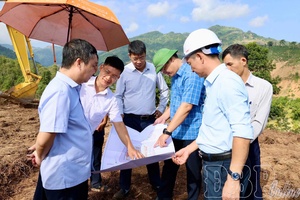
To date, Sín Thầu commune has established a sugarcane cultivation zone spanning approximately 35ha across Phứ Ma, Tá Miếu, and Suối Voi villages. Through cultivation and care, the sugarcane crop has grown and developed vigorously, initially demonstrating strong adaptability to local natural conditions. Preliminary evaluation results of the model conducted in June 2026 by functional agencies and Giang Thành Trung Vân Raw Material Import-Export Co., Ltd. (China) indicated that sugarcane yield is projected to reach approximately 80 tons/ha, with well-tended areas capable of reaching 100 tons/ha. This represents a positive signal for the locality to continue studying production expansion, progressively establishing a raw material zone serving processing and export. Grounded in initial results, Sín Thầu commune sets a target by the end of 2026 to develop an additional 150ha of sugarcane, striving by 2028 to form a cultivation zone of roughly 500ha.
Alongside establishing commodity production zones, applying science and technology is emerging as an investment avenue drawing interest from numerous enterprises and cooperatives across the province. A prime example is Hải Trang Farm Agricultural Service Cooperative, which proactively invested in and deployed unmanned aerial vehicles (UAVs) in agricultural production. Nguyễn Duy Hải, representative of Hải Trang Farm Agricultural Service Cooperative in Mường Ảng commune, stated: “In practice, traditional agricultural production methods across many localities remain heavily dependent on manual labor, particularly in tending, fertilizing, and pest control. During the rainy season, slippery terrain and challenging transport disrupt production schedules, while prolonged dry seasons demand efficient utilization of water resources and agricultural inputs. Deploying UAVs in production has contributed to resolving these difficulties. The equipment is capable of spraying foliar fertilizers and plant protection chemicals over expansive areas in short timeframes, curtailing direct manual labor demands while empowering producers to be more proactive in crop care, particularly during critical windows requiring prompt pest control.”
Through field execution, applying UAVs has initially demonstrated efficacy in boosting labor productivity, reducing expenditures, and improving working conditions. With the capability to establish flight paths and calibrate spray volumes suited to specific crops and topographical features, the equipment helps control the use of farm inputs, curbing the wastage of water and agrochemicals. In particular, laborers reduce direct exposure time to chemicals, helping protect health and elevate occupational safety in production. These serve as critical factors in the transition toward modern, environmentally friendly farming practices.
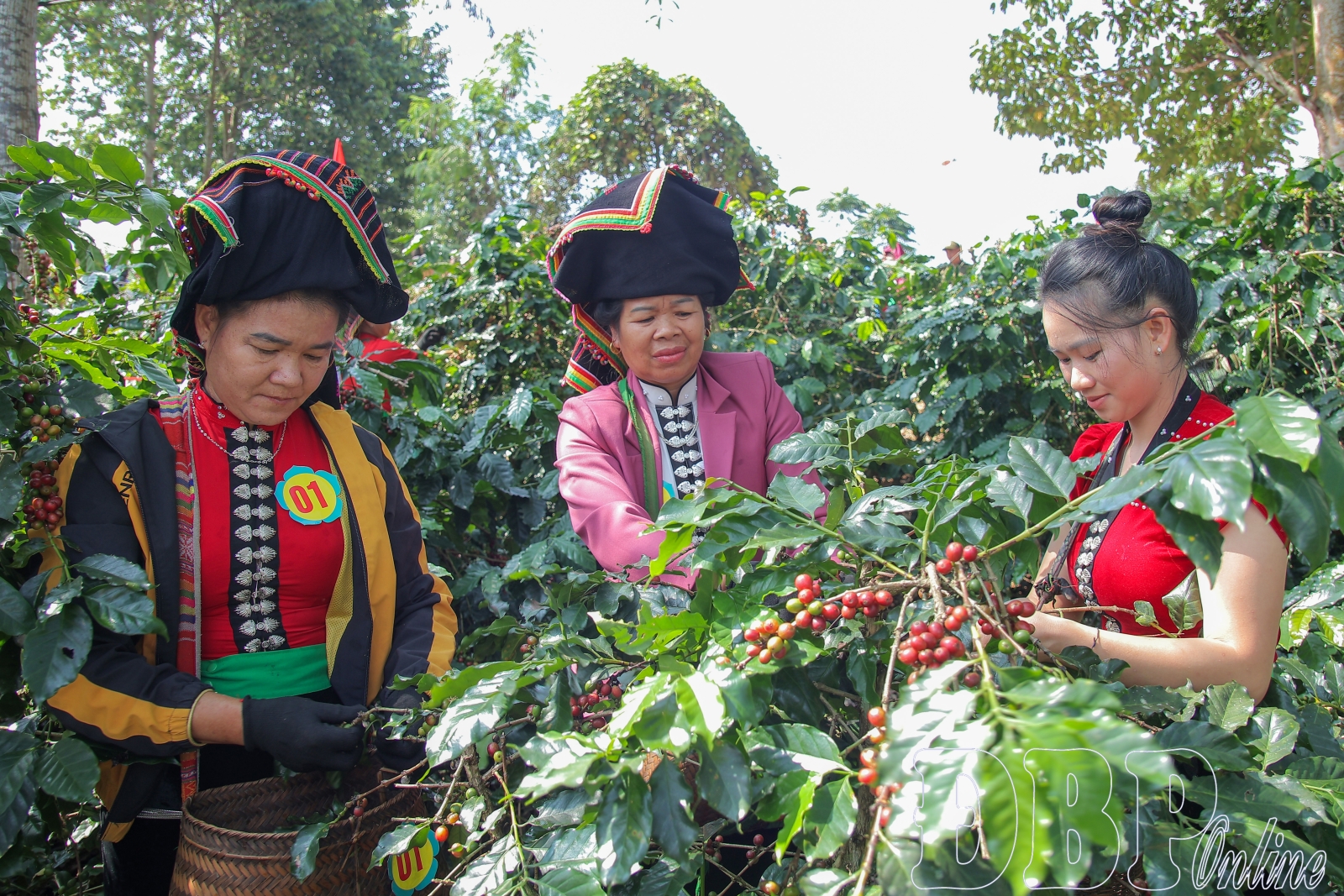
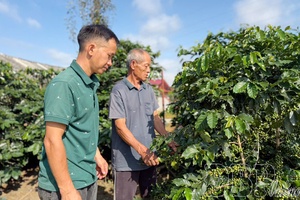
Following years of executing agricultural restructuring, the province’s agricultural production has witnessed positive transformations, progressively shaping concentrated commodity production zones linked with developing key flagship crops of high economic value. Through the end of September 2026, the entire province recorded over 10,000ha of high-quality rice, more than 20,800ha of coffee, over 19,400ha of macadamia, and nearly 5,000ha of diverse fruit trees. Notably, Điện Biên currently ranks second nationwide in macadamia acreage and third in Arabica coffee acreage. Concurrently with scaling up production, the province emphasizes building brands, improving quality, and sharpening the competitiveness of agricultural produce. To date, the province has developed 2 geographical indications alongside 9 collective and certification trademarks; possessing 19.75ha under organic production and 33.05ha of cultivation certified under valid VietGAP standards. Specialized functional agencies continue maintaining management, monitoring, and guidance for 16 planting area codes across flagship crops such as macadamia, coffee, and fruit trees, cementing the foundation for safe, sustainable production.
Achieved outcomes demonstrate a sound path in the process of restructuring the agricultural sector, while setting imperatives to continue innovating production methods, attracting investment resources, and accelerating science and technology applications. When land and climatic advantages are exploited efficiently, modern technology is adopted broadly, and agricultural produce value is elevated, Điện Biên agriculture will secure added momentum to develop along green, smart, and sustainable lines, contributing to raising people’s incomes and boosting rural economic growth.
Diệp Chi







You have 500/500 characters left
Please enter 5 or more characters!!!