



Shifts in mindsets and practices are helping farmers progressively diversify agricultural products, expand economic development opportunities, and increase incomes.
The family of Lầu Và Lâu, in Cây Sổ village, Mường Nhé commune, possesses 4ha of swidden land. In 2023, implementing the local policy on restructuring crops, his family shifted to cultivating cinnamon to replace low-efficiency crops. After three years of tending, the 4ha of cinnamon is growing well, opening up a long-term economic development path for the family.
Lầu Và Lâu shared: “In 2023, through communication and mobilization by the commune, I recognized that cinnamon had promising prospects, so I decided to plant it. The State supported a portion of the saplings, and my family added capital to plant them. Through the cultivation process, I see that cinnamon suits local land conditions, and I expect it will bring a stable income to my family.”
Numerous households in Mường Nhé commune have chosen cinnamon to transform production methods and effectively exploit swidden land acreage. Currently, total cinnamon acreage across the commune stands at approximately 605ha. The commune strives by 2030 to expand cinnamon acreage to 1,000ha, step by step forming a concentrated planting zone, generating raw material sources to serve product processing and consumption, and contributing to raising incomes and improving people’s lives.
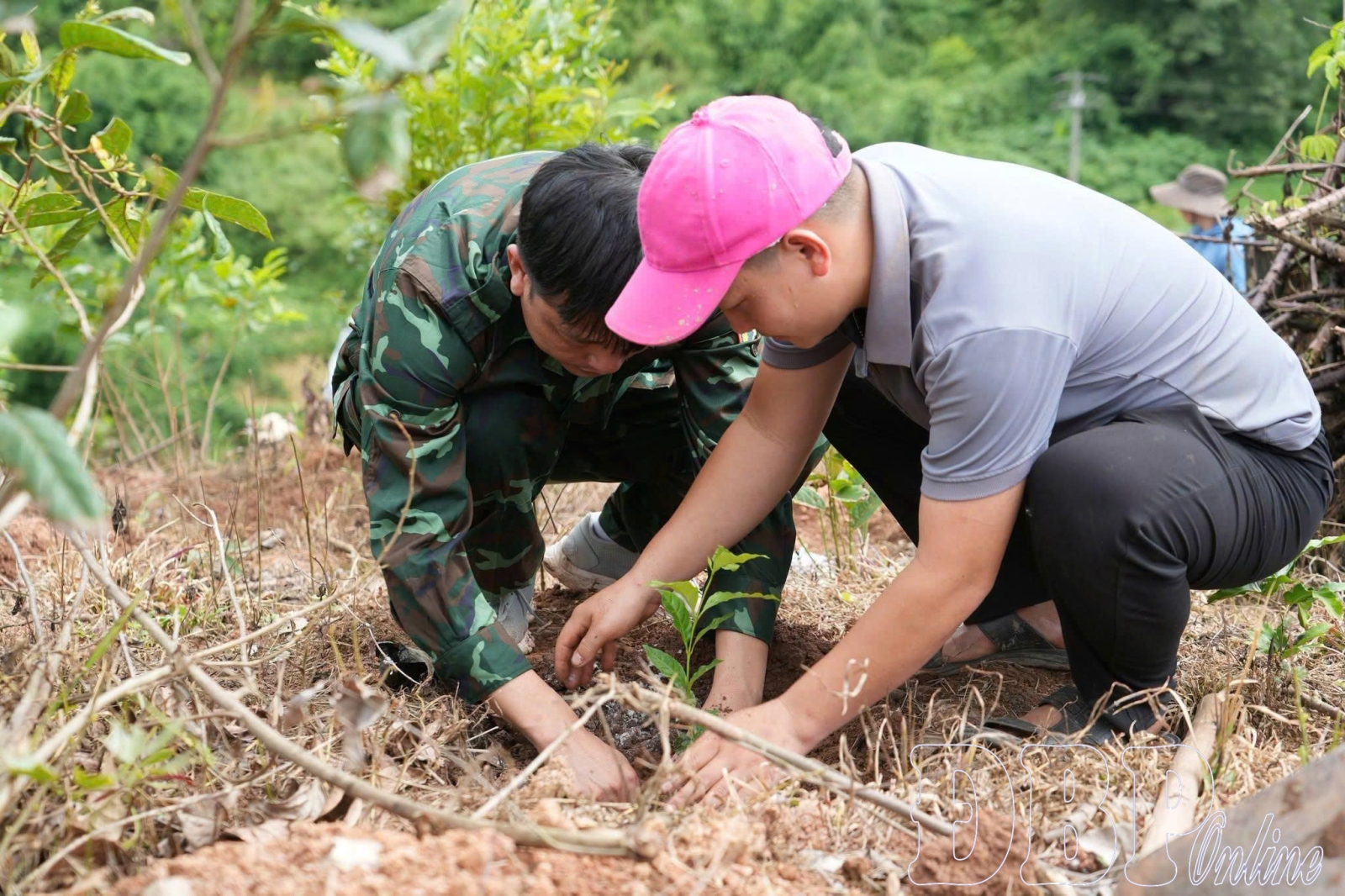
Nguyễn Đình Cương, Vice Chairman of the Mường Nhé commune People’s Committee, stated: “Alongside expanding cinnamon acreage according to plan, the commune directs specialized cadres to instruct farmers on planting and tending techniques, while continuing to mobilize the conversion of low-efficiency cultivated land to crop varieties suited to natural conditions and possessing economic value, contributing to elevating land-use efficiency and income for local residents.”
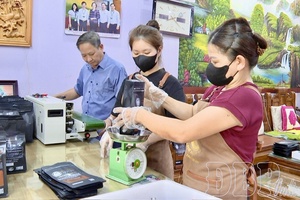
In Mường Lạn commune, tea plants are demonstrating an economic development pathway stemming from the conversion of low-efficiency crop areas. Orienting tea production toward organic standards, Phan Trọng Nhất, in Pháy Váng village, has step by step established a raw material zone linked with processing, elevating product quality and value. Currently, his tea area spans approximately 20ha, of which 17ha yield stable harvests. From the raw materials of this tea zone, he has developed 7 products, including 2 products certified with 4-star OCOP. His facility’s tea products are consumed on the domestic market and have begun exporting to South Korea.
To increase value on the same cultivated acreage, Nhất intercropped 5,000 pagoda-tree (hoa hòe - Styphnolobium japonicum) plants within his tea orchard. This is the first pagoda-tree intercropping model in Điện Biên. After nearly three years of care, the pagoda trees have begun yielding harvests. Phan Trọng Nhất shared: “The pagoda tree is well-suited to the climatic and soil conditions in Mường Lạn. Currently, my family develops pagoda-tree flower tea and immature flower bud products. I also guide and share experiences in planting and caring for pagoda trees with local farmers in the region to expand the model, effectively tapping land and creating additional income sources.”
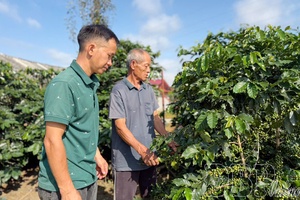
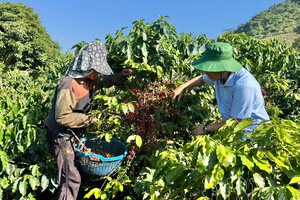
Endowed with climatic and soil advantages, in recent years, coffee and macadamia have been guided by Điện Biên to develop into flagship agricultural products. This direction was concretized in Resolution No.11-NQ/TU, dated December 31, 2025, of the Executive Board of the provincial Party Committee on restructuring the agricultural sector toward concentrated, green, smart, and sustainable commodity production for the 2026-2030 period, with an orientation to 2035. Concretizing Resolution 11, localities proactively reviewed land reserves, mobilizing citizens to transform low-efficiency cultivation areas and expand coffee and macadamia growing zones suited to the conditions of each area. In Chiềng Sinh commune, in 2026, the commune mobilized residents to convert over 860ha of low-efficiency crops to coffee cultivation (a 2.6-fold increase compared to the total area executed by the entire commune in previous years), raising total communal coffee acreage to 1,184.1ha.
The transformation of crop structures in Quài Tở commune is directed by Party committees and local authorities to align with expanding raw material zones for coffee and macadamia. From 2025 to date, the commune has newly planted nearly 2,170ha of these two crops, bringing total macadamia acreage to 1,667ha and coffee to approximately 3,000ha. Within this, nearly 1,000ha of coffee has yielded harvests, and roughly 179ha of macadamia has begun bearing fruit. Giàng A Dế, Secretary of the Quài Tở commune Party Committee, stated: “Determining that coffee and macadamia are crops with long-term developmental potential, the commune focuses on raising farmers’ awareness and responsibility throughout production alongside expanding acreage. We encourage households to proactively learn experiences, apply technical advances, and tend orchards in strict accordance with protocols. Through this, we progressively transform farming practices, elevate land-use efficiency, and strive by 2030 to bring coffee and macadamia acreage to 5,000ha.”
The transformation of crop structures is unlocking numerous economic development opportunities for Điện Biên farmers, suited to production conditions and comparative advantages of each locality. However, for models to achieve enduring efficiency, Party committees and authorities must intensify technical guidance, assist farmers in accessing credit capital, select appropriate crop varieties, and step up linkages in agricultural production, processing, and consumption. Concurrently, actively accelerating trade promotion and marketing local specialties to domestic and foreign consumers, while focusing on digital transformation applications in introducing and distributing products, is vital. This direction helps farmers access modern distribution methods, broaden markets, reduce intermediaries, and mitigate off-take risks. Thereby, it generates momentum for citizens to invest in production with peace of mind, elevates agricultural produce value, effectively exploits land potentials, and improves incomes and living standards.
Quang Long
You have 500/500 characters left
Please enter 5 or more characters!!!