



The project on building a VietGAHP-standard Lạc Thủy chicken farming model, with a scale of 2,500 birds, was deployed in Bó and Nà Tòng villages (Tủa Chùa commune) starting June 2026. Participating households received 70% support for breeding stock (healthy, Grade-I, one-day-old Lạc Thủy chicks) and essential inputs such as compound feed, vaccines, disinfectant chemicals, and biological products for coop treatment, alongside 100% funding support for VietGAHP certification costs.
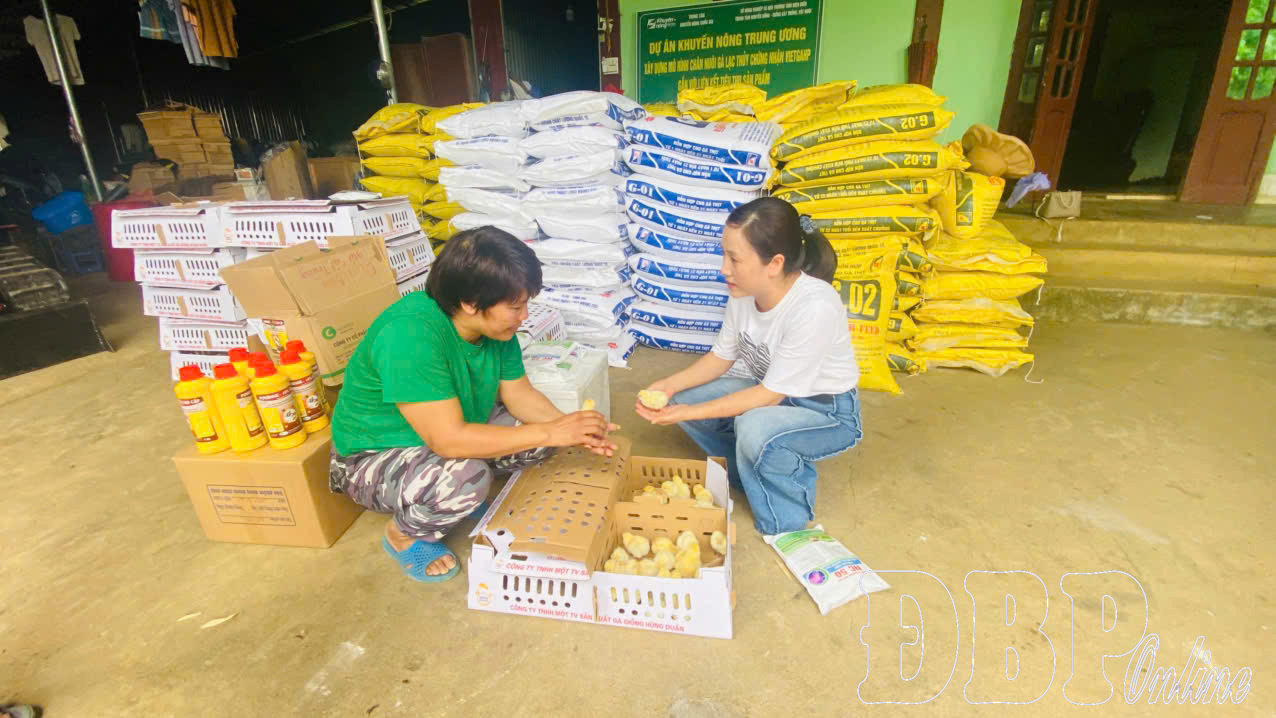
Phan Thị Xuân, director of the project, stated: “Beyond providing input materials and breeding stock, the core objective of the project is to assist farmers in fundamentally transforming traditional farming habits toward VietGAHP good husbandry practices. Through this, we aim to build biosafe poultry raw material zones, strictly control disease outbreaks, and establish sustainable linkages with consumer markets.”
Following four months of rearing and implementation, technical benchmarks under the project were all met and surpassed targets. The survival rate reached 98.08% (exceeding the target by 5.08%), with an average weight of 1.62kg per bird. 100% of participating household groups met the criteria and were granted VietGAHP certificates. Practical economic accounting indicates that under the VietGAHP protocol, profits were 18.67% higher than conventional mass-rearing methods outside the model. Concurrently, using probiotic preparations to treat animal waste right in the coops helped eliminate odors, protect the environment, and generate a nutrient-rich organic fertilizer source for cultivation.
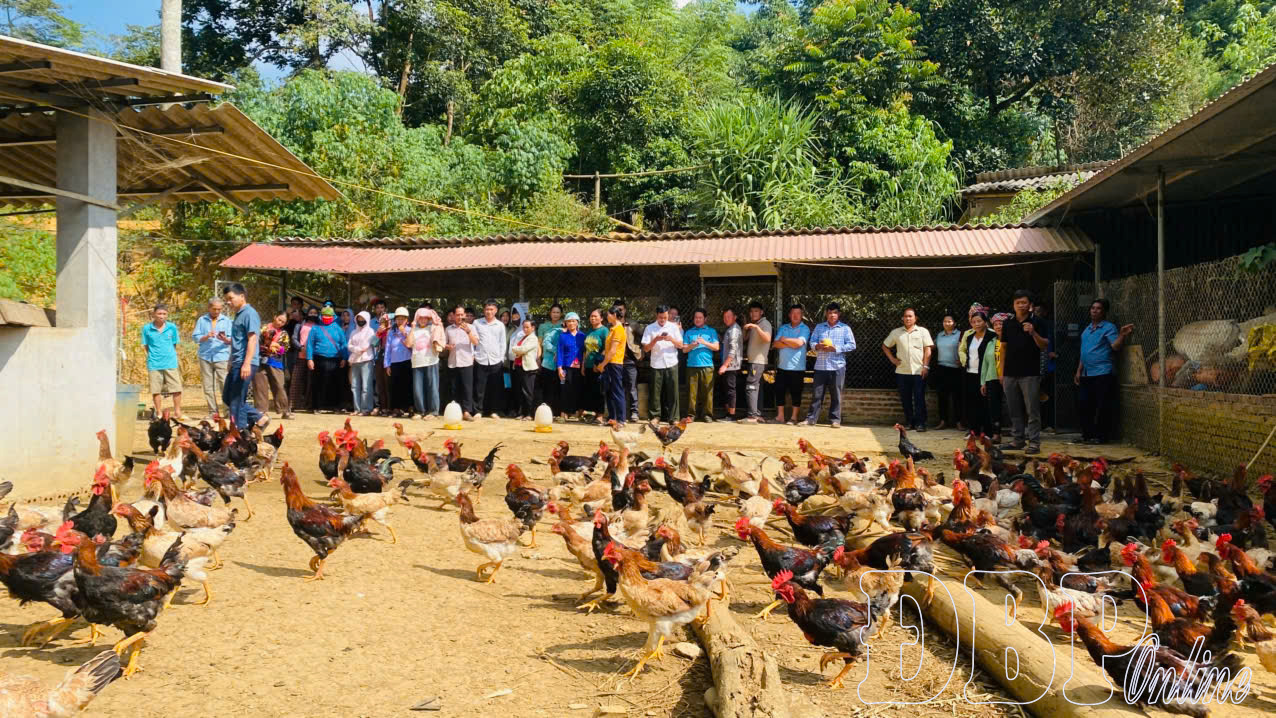
Phạm Thị Út Mai, residing in Bó village, is one of five households participating in the model, raising 1,200 Lạc Thủy chickens. “Previously, my family as well as fellow villagers often raised chickens based on traditional experience, paying little attention to strict disinfection or production log recording. Participating in the project, we received dedicated guidance from technical cadres covering everything from selecting breeding stock and administering vaccines to treating waste with probiotics; the chickens grew rapidly and experienced far fewer diseases. In particular, our products were contracted for complete off-take by Tiên Phong Agricultural Cooperative, so we feel completely assured in investing in large-scale production,” Mai, representing the participating household group, enthusiastically shared.
Earlier, in June 2025, a similar model was deployed in Mường Ảng and Búng Lao communes and has been maintained by households to date. Several households proactively expanded their rearing scale, including Cầm Văn Muôn.
Muôn shared: “After receiving technical guidance, I found chicken farming to be more methodical; I know how to care for them, prevent diseases, and clean the coops. Finding the model suitable, my family has continued to maintain and expand the flock to increase our income.”
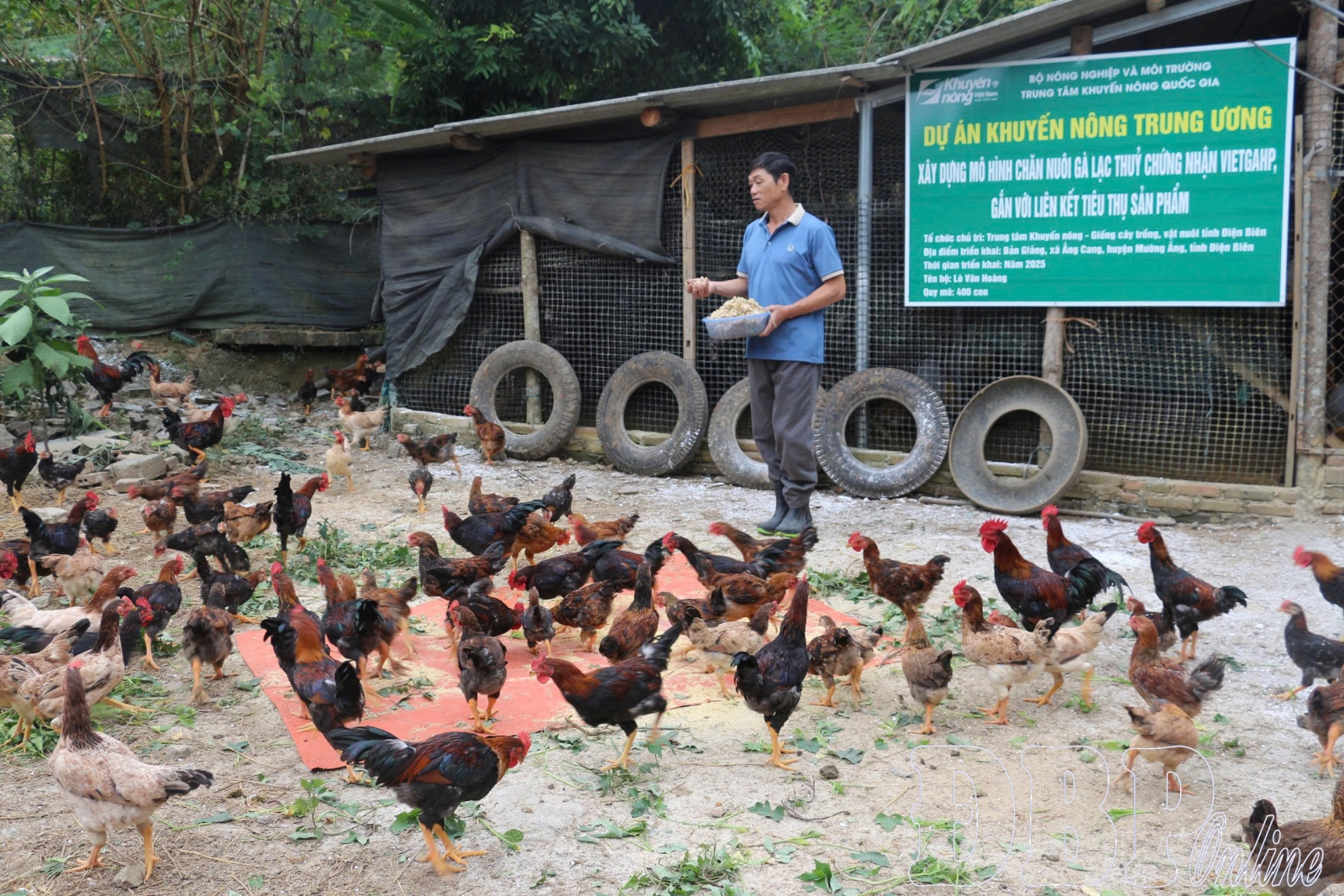
The fact that households remain committed to the model demonstrates that this husbandry approach has captured practical production interest, providing added experience for local residents to consider adopting in line with their household circumstances.
The initial success of the model has not only helped direct participants secure stable income growth, but created strong ripple effects across the community. Following technical training courses and field study tours, numerous households outside the model proactively learned techniques and purchased Lạc Thủy breeding chicks on their own to rear, helping expand the replication scale by 26% compared to the original baseline.
Trần Văn Lộc, technical director of the project, emphasized: “To sustain and spread the effectiveness of the VietGAHP model, specialized agencies and local administrations must continue stepping up training for community agricultural extension teams, while assisting in connecting more enterprises and cooperatives to participate in off-take. Building brands and linking Lạc Thủy chicken products with safe, traceable specialty market segments will be the key to helping farmers elevate added value and achieve sustainable prosperity on their home soil.”
Lan Phương


You have 500/500 characters left
Please enter 5 or more characters!!!