



To maintain access to export markets - particularly the European Union (EU) - the province is stepping up the implementation of the European Union Deforestation Regulation (EUDR), centering on planting area governance, data digitization, and origin traceability, ensuring coffee development goes hand in hand with forest protection requirements.
In recent years, surging coffee prices have motivated farmers to expand production acreage. To date, the entire province possesses 20,967.67ha of coffee, an increase of 158.2% over the same period last year. Of this, newly planted area reached 12,574.54ha; full-year output is estimated at 7,040.82 tons, up 16.9% year-on-year. Through this, concentrated production zones are progressively taking shape, establishing raw material sources to serve processing.
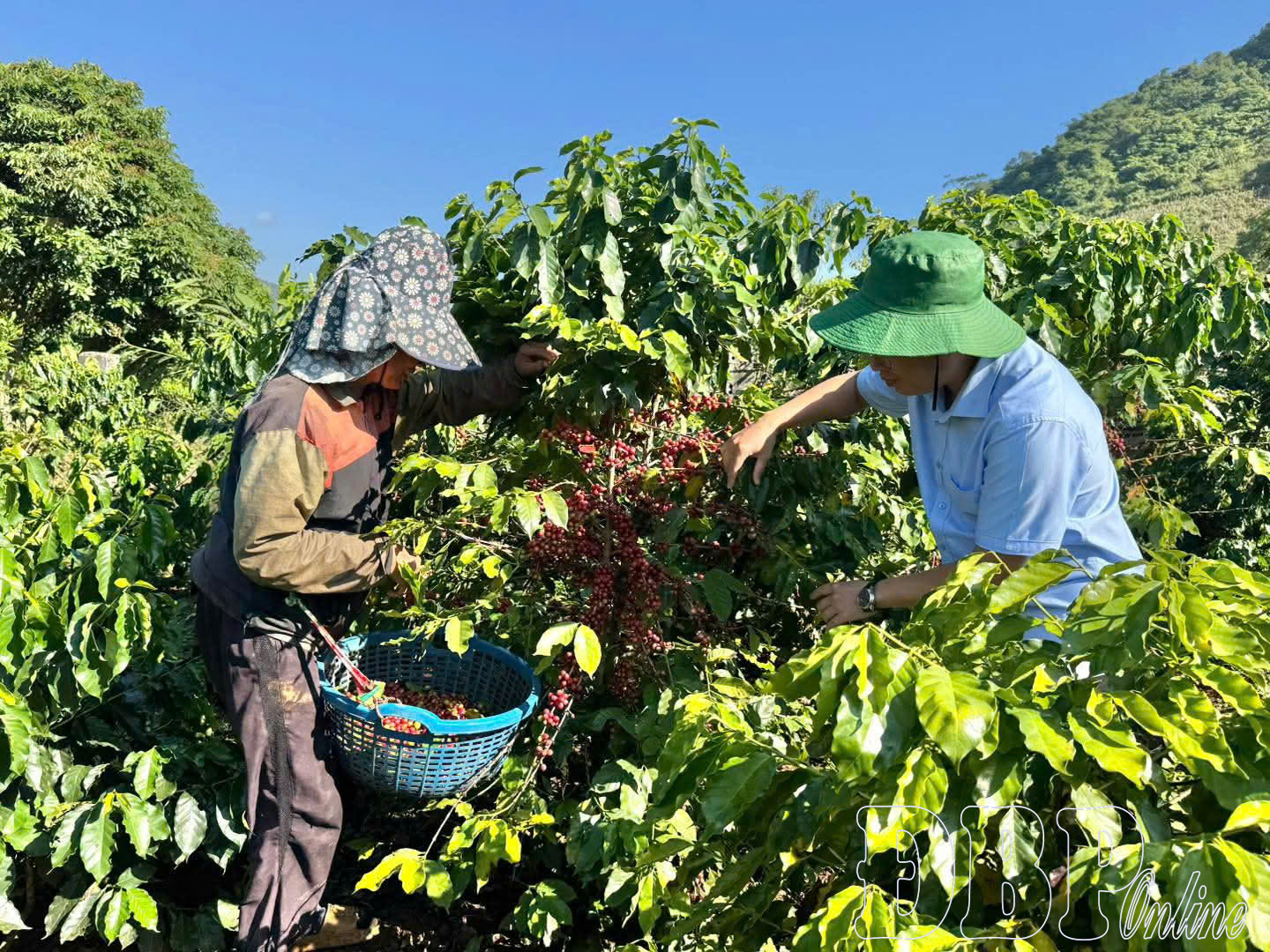
Alongside the rapid expansion of acreage, requirements for land management, planting zone origin verification, and forest conservation have become increasingly pressing. In several localities, situations have emerged where residents arbitrarily planted coffee on forestry land or cleared vegetation under forest canopies to expand cultivation acreage. This is not merely an issue of land and forestry management, but poses a challenge to the goal of building raw material zones that meet export market standards.
In September 2025, several households in Giảng village (now Noong Hang village) and Huổi Sứa village, Mường Ảng commune, arbitrarily cleared understory vegetation under forest canopies with the intention of planting coffee, affecting a total area of 1.87ha. At the time of detection, the households had only cleared brush and shrubs, and no tree felling had occurred. An interdisciplinary task force from Mường Ảng commune promptly suspended the activity, requiring the households to cease all encroachment and refrain from planting coffee on the cleared land. The incident demonstrated that without strict control right from the raw material zone formation phase, areas developed without legal grounds or carrying deforestation risks could become barriers when products enter international supply chains.
The EUDR is an EU regulation aimed at halting the entry of products tied to deforestation and forest degradation. The regulation applies to several commodities, including coffee and rubber, requiring governed products to satisfy conditions confirming they have not caused deforestation after December 31, 2020. For Điện Biên’s coffee sector, this obligates stakeholders to prove product origin, determine planting area geolocations, and guarantee data reliability for traceability purposes.
Facing these imperatives, the provincial People’s Committee issued Plan No.2025/KH-UBND on March 20, 2026, on adapting to the EU’s EUDR regulations. On that basis, provincial departments, sectors, and localities have stepped up communication and provided guidance to enterprises, cooperatives, and farmers on traceability, planting zone management, and developing raw material zones free from deforestation and forest degradation.
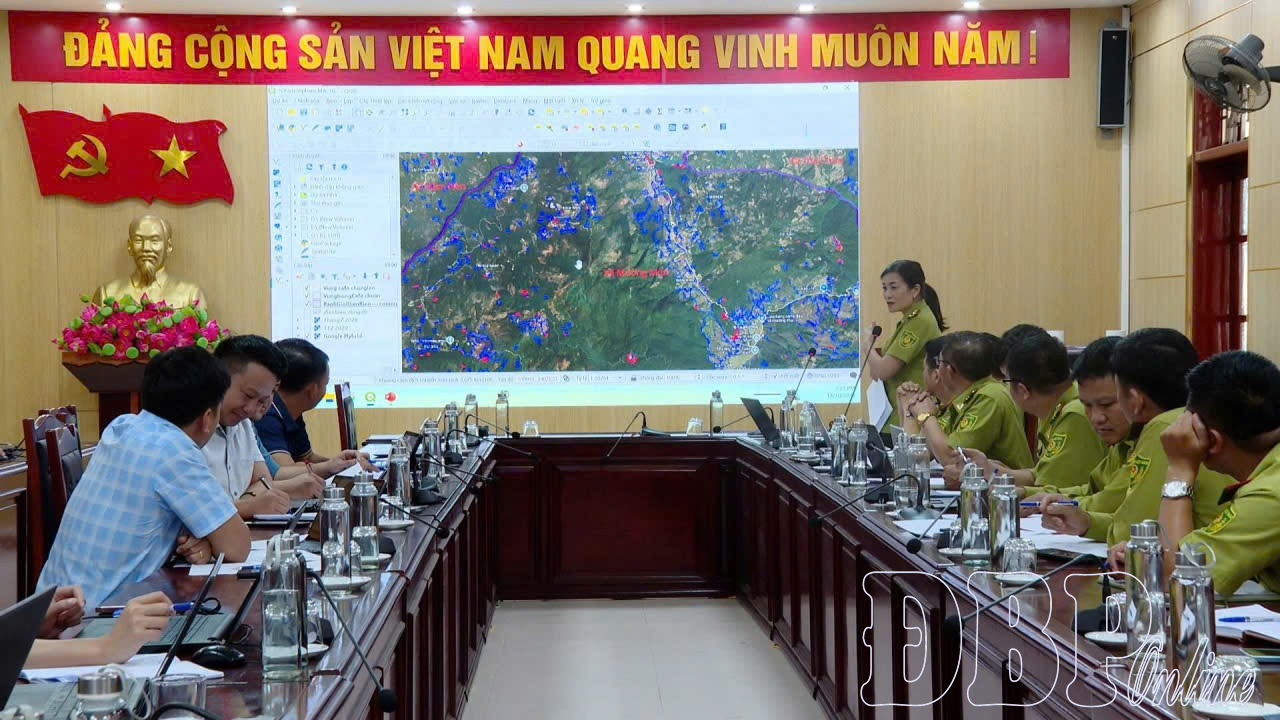
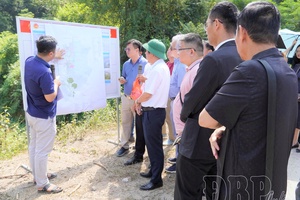
Recently, on October 14, 2026, the provincial Forest Protection Sub-department organized a working session with the People’s Committees of Chiềng Sinh, Mường Mùn, Quài Tở, Pú Nhung, and Tuần Giáo communes, alongside the Tuần Giáo Forest Protection Station, to evaluate review findings and propose handling schemes for coffee cultivation areas at risk of non-compliance with the EUDR. According to the review, across the five communes, 1,256 plots with a total area of 217.3ha were identified as having experienced deforestation from 2020 to date, and are currently planted with coffee.
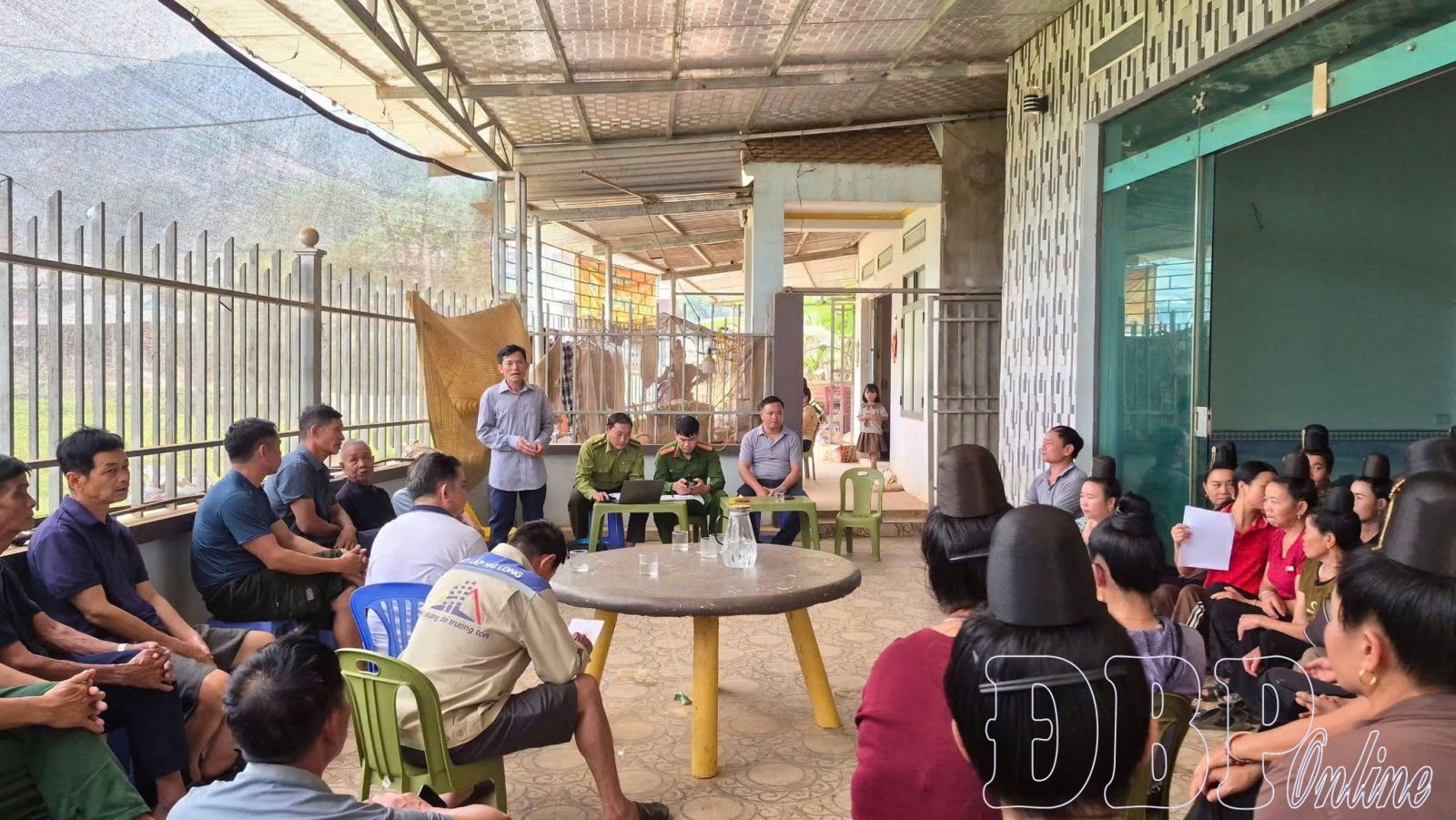
During the working session, the provincial Forest Protection Sub-department requested the People’s Committees of these communes to continue intensifying outreach and mobilization to raise public awareness, encouraging residents to voluntarily relocate coffee trees out of non-compliant areas in accordance with regulations.
From the beginning of the year to date, forest protection forces have compiled and distributed nearly 1,500 communication dossiers across all 45 communes and wards and to villages and villages.
The Department of Agriculture and Environment coordinated with the Food and Agriculture Organization of the United Nations (FAO), Forest Trends, and relevant entities to organize 9 training courses with 314 participants, focusing on updating and managing planting area data. The Department also collaborated with the Northern Center for Plant Cultivation and Protection to organize a workshop to disseminate information and raise awareness regarding the EUDR for the province’s coffee and rubber sectors.
According to Chu Thị Thanh Xuân, Deputy Director of the provincial Department of Agriculture and Environment, implementing the EUDR requires a strong focus on origin traceability, planting zone geolocation data collection, and data standardization. Localities need to coordinate to build databases and manage planting area codes; enterprises and cooperatives must strengthen linkages, support the formation of raw material zones, and organize traceability workflows. These serve as vital conditions to enhance capacity to retain the EU export market.
In implementing the EUDR, the province has to date updated 3,095 plots covering a total area of 1,940.05ha onto the planting area database system. Within this, Chiềng Sinh commune accounts for 869 plots with 209.2ha; Pu Nhi has 120 plots with 109.3ha; Tủa Thàng has 420 plots with 192.4ha; Mường Ảng has 359 plots with 496.5ha; Quài Tở has 377 plots with 163.55ha; Mường Toong has 801 plots with 697ha; and Sính Phình has 149 plots with 72.1ha. Data continues to be reviewed, updated, and standardized to serve planting zone governance and origin traceability.
Despite initial achievements, the adaptation process to the EUDR continues to face hurdles. Several areas slated for raw material expansion intersect with land originating from forestry reserves; legal land dossiers and digitized planting area data lack complete synchronization; and coffee production remains small-scale and fragmented. These limitations present obstacles to origin verification, information standardization, and proof of compliance.
Currently, Điện Biên province has requested the Ministry of Agriculture and Environment to provide support in building raw material zone databases, perfecting traceability systems, supplying satellite imagery data and GIS mapping, and training and improving capacities for cadres, enterprises, and local farmers. Điện Biên also aspires to connect with international programs and projects on sustainable coffee development, regenerative agriculture, and building deforestation-free production models.
Adapting to the EUDR is not merely a requirement to penetrate export markets, but an opportunity for Điện Biên to restructure its coffee industry along sustainable lines. To achieve this, raw material zone expansion must be tied to strict land governance, forest protection, data standardization, and reinforced production linkages. Only with transparent origin and adherence to environmental standards can Điện Biên’s coffee sector elevate its value and achieve stable development across the international marketplace.
Thu Phương





You have 500/500 characters left
Please enter 5 or more characters!!!