



Centering on coffee, macadamia, cinnamon, and fruit trees, the province is step by step exploiting land advantages, establishing commercial commodity zones, improving farming efficiency, and creating long-term livelihoods for local residents.
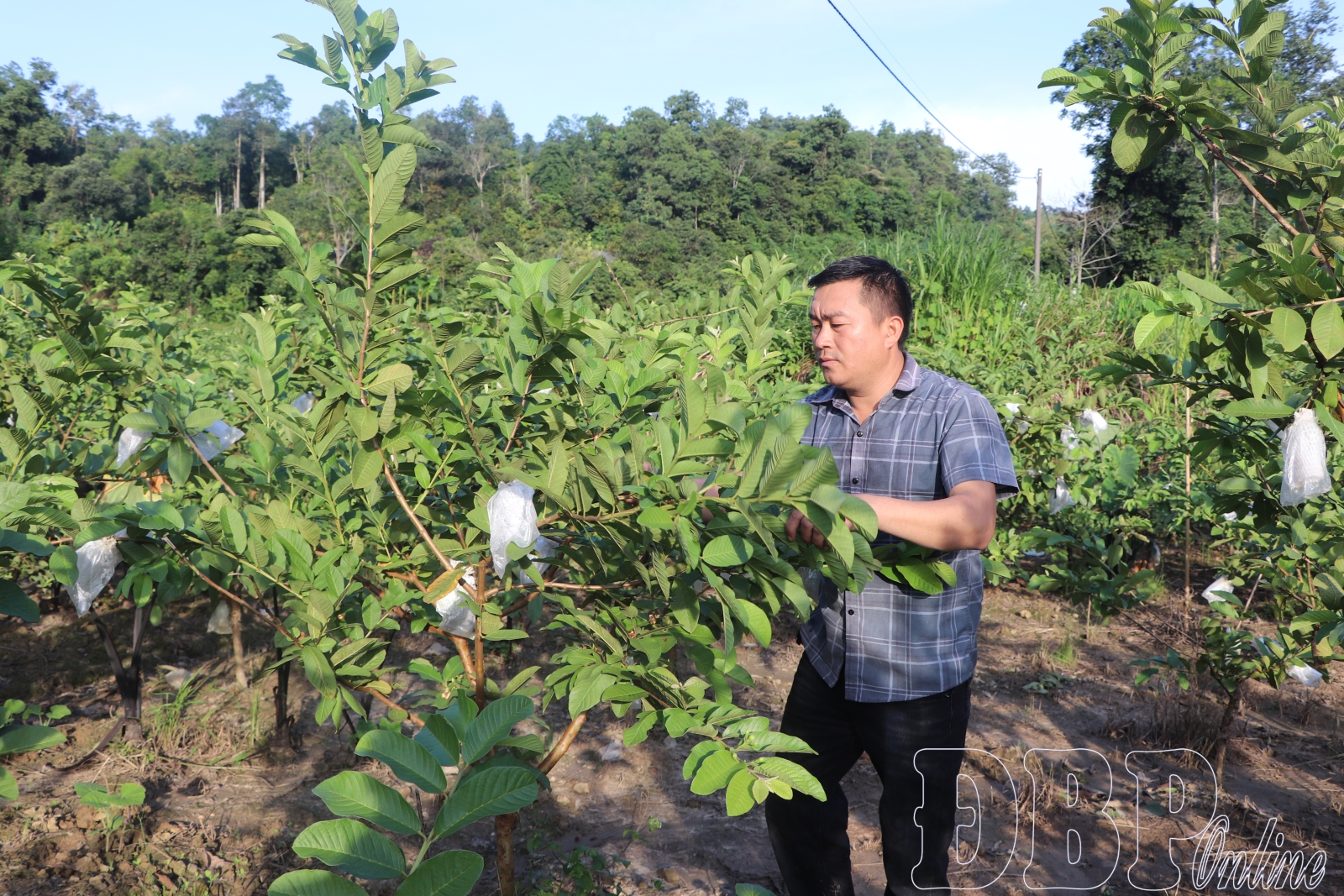
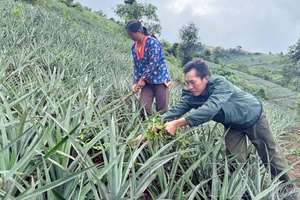
Responding to the policy of transforming crop structures, in 2025, the family of Ngô Văn Thành, Secretary of the Kê Nênh village Party Cell, Điện Biên Phủ ward, converted over 1ha of upland rice land to cultivating Taiwanese guava. Previously, his family utilized this area to sow upland rice and maize, but economic returns remained low. After researching, recognizing that the Taiwanese guava variety was well-suited to local pedological conditions, grew vigorously, and held promising prospects of higher income, Thành’s family decided to transform crops.
According to Thành, Taiwanese guava features a brief foundational establishment period, beginning to yield harvests after roughly one year of planting. Currently, guava prices fluctuate between VND 15,000 and VND 25,000 per kilogram; net income after deducting costs can reach approximately VND 200 million per hectare, depending on yield and market prices at each point in time. Compared to growing upland rice and maize in the past, the guava cultivation model helps Thành’s family elevate production value on the same cultivated land plot, while creating a more stable income stream.
In early 2026, the family of Vàng A Chí, Pa Pốm village, Điện Biên Phủ ward, converted 1ha of maize and upland rice land to passion fruit cultivation. To date, the passion fruit area has yielded harvests, with productivity reaching over 60 quintals per hectare. By calculation, economic profit is estimated at over VND 200 million per hectare.
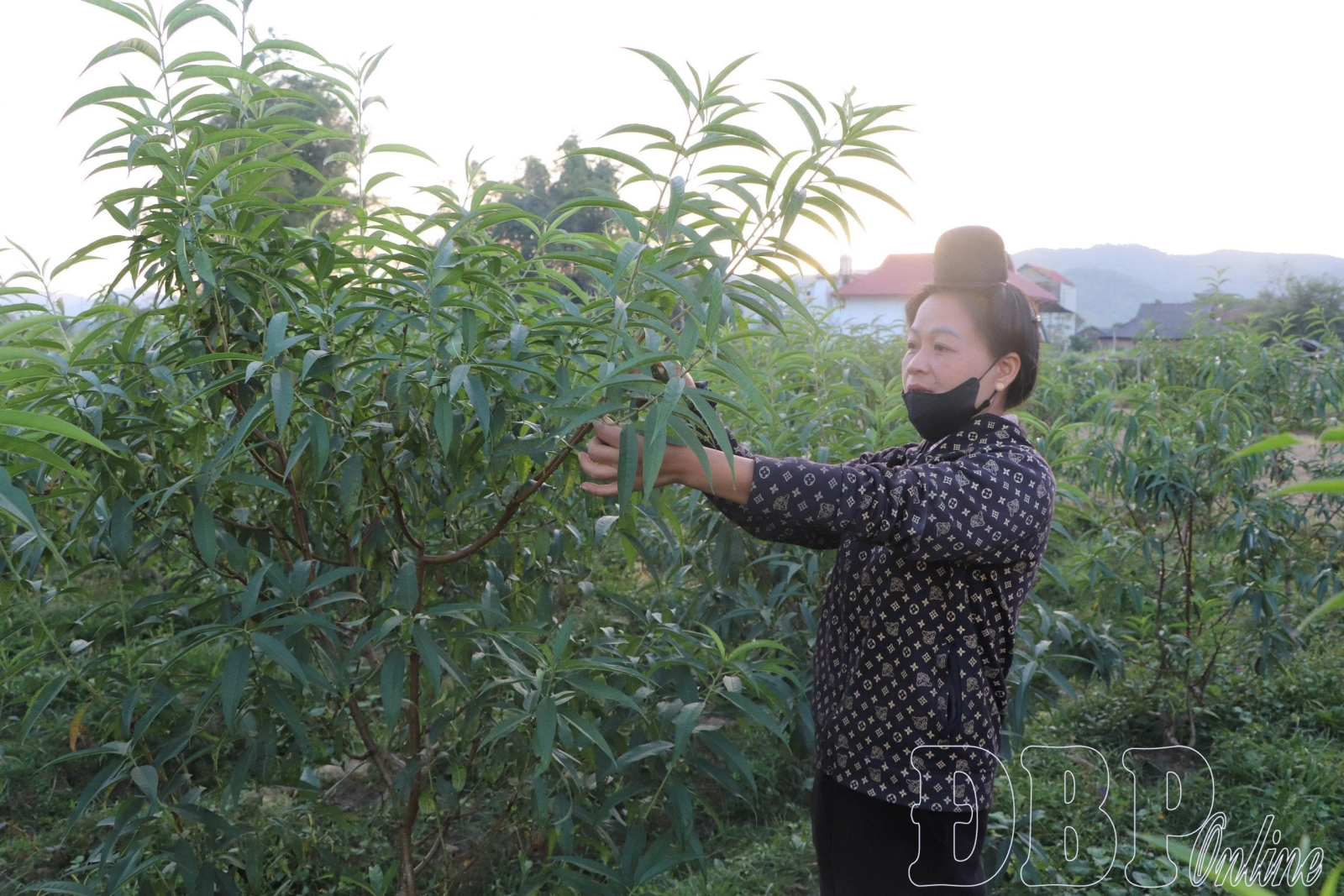
Vàng A Chí shared that previously, his family primarily cultivated maize and upland rice, yielding modest economic returns and leaving household earnings heavily dependent on weather patterns and seasonal yields. Through investigation, realizing that passion fruit trees adapt well to local conditions and enjoy relatively favorable market off-take, his family decided to convert the productive land. Although initial harvests have only just begun, the model raises high hopes for elevating income and effectively exploiting existing land reserves.
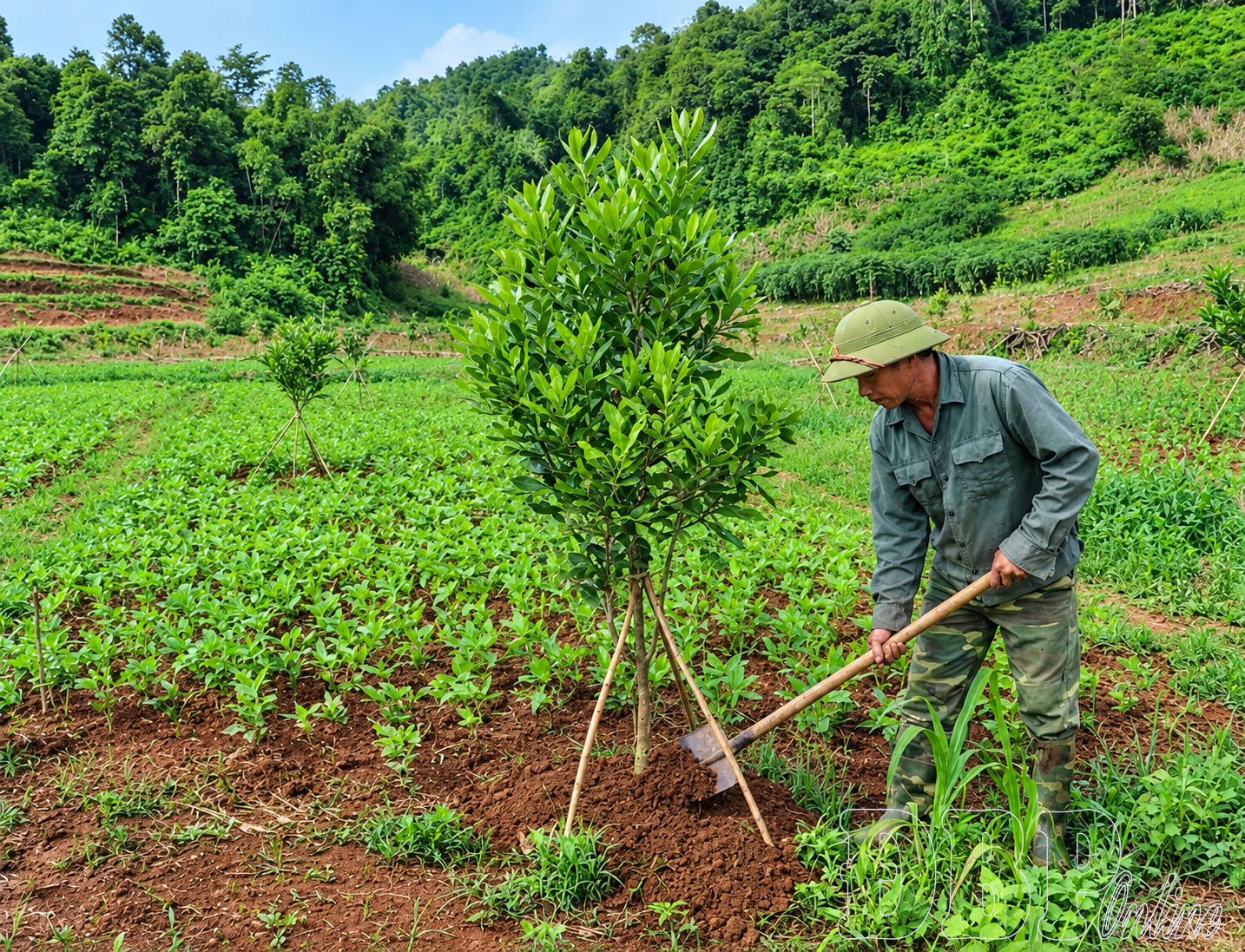
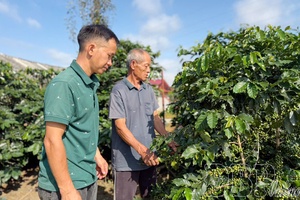
Alongside fruit trees, the province encourages residents to convert upland rice land to long-term perennial crops, anchored primarily by coffee, macadamia, and cinnamon. In Mường Mùn commune, the family of Quàng Văn Vượng, Ta Pao village, converted 2ha of low-efficiency swidden land to macadamia and coffee cultivation. The trees are growing and developing robustly, opening expectations for a stable and higher income compared to previous upland rice cultivation.
According to Trần Trung Kiên, Vice Chairman of the Mường Mùn commune People’s Committee, converting low-efficiency cultivated land to coffee and macadamia is prioritized by the locality to elevate agricultural production value. In 2026, the commune was tasked by the province with newly planting 400ha of coffee and 400ha of macadamia. With the proactive engagement of Party committees and local administrations, alongside the consensus and determination of the people, newly planted coffee acreage across the commune has reached 1,142ha - nearly triple the assigned target; while macadamia acreage concentratedly cultivated by residents reached 424.41ha. This outcome indicates that residents are progressively transforming production mindsets, boldly converting crop structures toward more effective exploitation of swidden land areas, establishing a solid premise for long-term economic development.
Over recent years, the province has stepped up communication and mobilization efforts urging citizens to convert low-efficiency cultivation land to crops of superior economic value, particularly fruit trees and industrial perennials. According to Chu Thị Thanh Xuân, Deputy Director of the Department of Agriculture and Environment, in 2026, the province’s total transformed crop acreage on rice land reached 1,190.6ha, equivalent to 76.25% of the annual plan. Of this total, conversions to perennial crops and fruit trees accounted for 994.8ha - representing roughly 83.6% of the converted area; while conversions to annual crops stood at 195.8ha. The entirety of the land converted to perennial crops in 2026 was upland rice land, comprising 841.2ha converted to coffee, 140ha to macadamia, and 13.6ha to cinnamon.
For 2027, the province targets converting 946.2ha of crop area on rice land (including 246.2ha converted to annual crops and 700ha to perennial crops), focusing on coffee and macadamia with 550ha converted to coffee and 150ha to macadamia. This will step by step shape the orientation of converting upland rice land to perennial crops, taking coffee, macadamia, and fruit trees as the core.
Citizens’ proactive transition to growing coffee and macadamia not only contributes to elevating land-use efficiency and improving incomes, but aligns with the provincial agricultural restructuring orientation. By 2030, Điện Biên strives to develop approximately 40,000ha of macadamia, becoming the locality with the largest macadamia area nationwide, alongside 20,000ha of coffee. However, to date, total provincial coffee acreage has already surpassed the set target, exceeding 20,000ha; macadamia acreage stands at over 19,000ha; and fruit tree acreage exceeds 5,000ha. These outcomes demonstrate that the crop restructuring direction is proving effective, opening headroom to expand commercial commodity agricultural zones, elevate incomes, and create sustainable livelihoods for the people.
Converting upland rice land and low-efficiency cultivated areas to perennial crops and fruit trees unlocks a path toward elevating agricultural production value in Điện Biên. To ensure this direction delivers lasting efficiency, the province must link area expansion with planting zone planning, technical guidance, support for farmers during the foundational establishment period, and the development of product consumption linkages. When crops are appropriate and off-take is secured, every swidden plot will transform into an economic development resource, contributing to raising incomes and advancing sustainable commodity agriculture.
Thu Phương
You have 500/500 characters left
Please enter 5 or more characters!!!