



This also serves as an occasion for Điện Biên to leverage its geographical position, border gates, and signature specialties to boost commerce, services, and international economic integration.
A tripartite product connection space
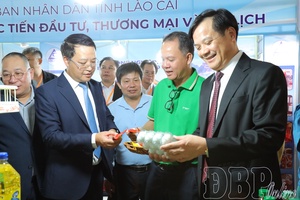
Bringing together over 120 domestic and foreign entities and enterprises across 230 exhibition booths - including 24 booths operated by Lao and Chinese enterprises - the fair showcases a rich array of agricultural produce, consumer goods, and traditional handicrafts. Beyond displaying commodities, the booths provide venues for businesses to engage consumers, discover partners, and expand market outlets.
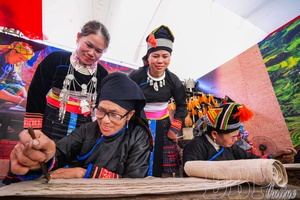
At the booth representing Luang Namtha province (Laos), handcrafted bags, scarves, skirts, and tunics attracted considerable attention due to their distinctive colors and ethnic motifs. Nang Khamkong Vilaysouk, the booth’s proprietor, shared: “For household businesses like ours, this is a prime occasion to introduce traditional handmade woven goods, find customers, broaden our market, and foster cultural exchanges with the people of Viet Nam.”
Meanwhile, the booth of Đắk Lắk province drew visitors with processed products made from cashew nuts, durian, and various distinctive agricultural produce. Phạm Thị Vân, the booth representative, noted: “We brought processed products derived from our locality’s flagship agricultural crops to the fair. This provides an opportunity to build brand recognition, reach consumers, and seek additional distribution partners.”
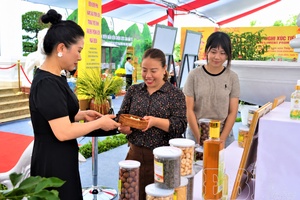
For Điện Biên enterprises, the fair also presents an occasion to introduce local specialties to a broad consumer base. At the booth of Hải An Company Limited, Mường Ảng commune, Điện Biên province, visitors can enjoy on-the-spot brewed coffee, directly savoring the product’s flavor profile.
Trần Thị Thu Hải, representative of Hải An Company Limited, shared: “We invite visitors to taste coffee directly at the booth to introduce the flavor and quality of our products. This also provides an opportunity to promote Mường Ảng coffee, reach consumers, and seek new distribution partners.”
To encourage business participation in trade promotion, the Ministry of Industry and Trade subsidizes 50% of booth rental costs for domestic entities, equivalent to nearly VND 4 million per booth, for up to two booths per unit; Lao and Chinese enterprises receive a 100% exemption from booth rental fees. This policy helps alleviate costs, creating favorable conditions for businesses to promote goods and seek cooperative ventures.
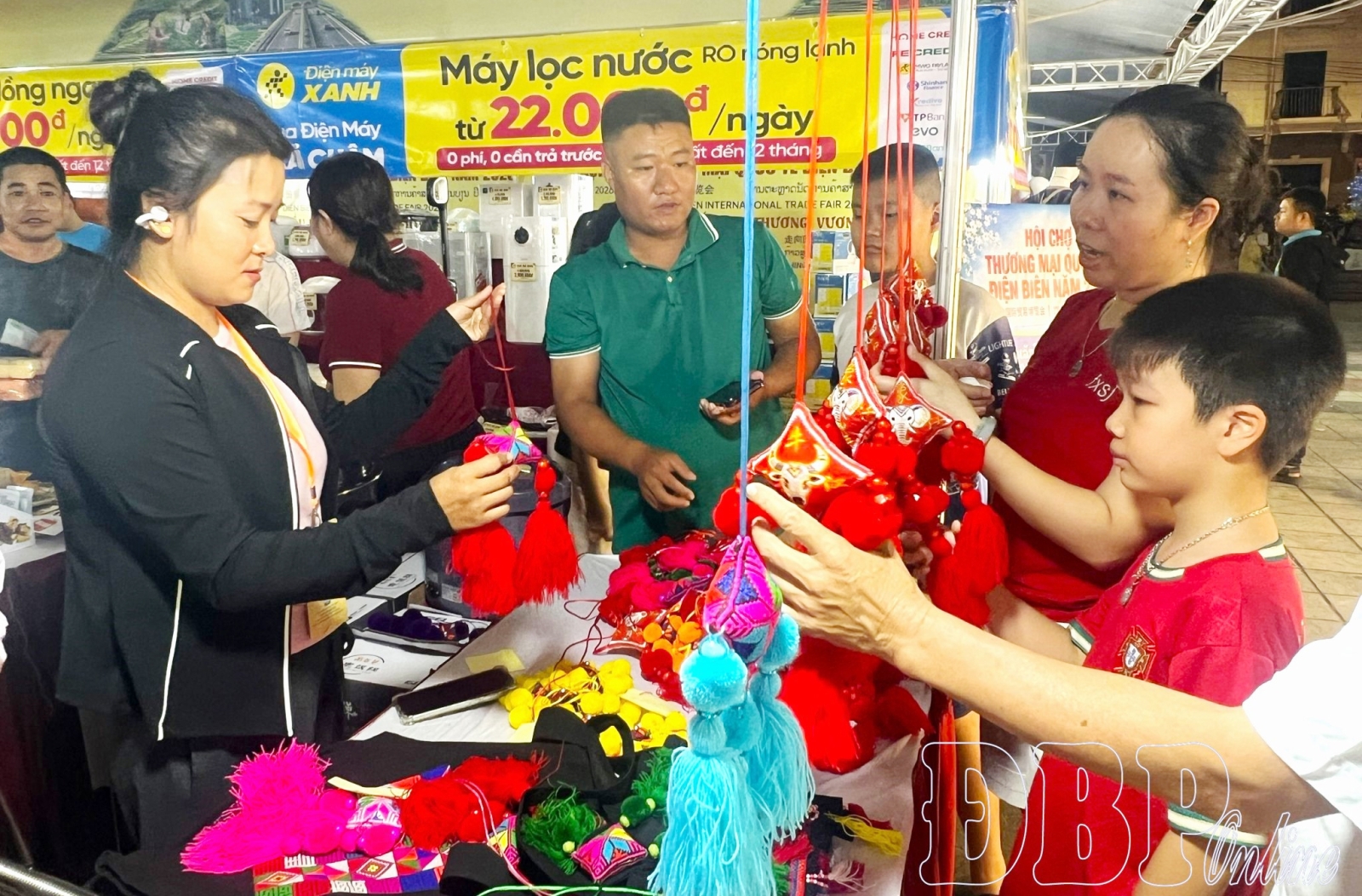
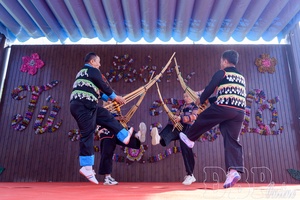
Beyond economic value, the fair serves to showcase distinctive regional cultural charms. At the booth of Jiangcheng county, Yunnan province (China), colorful handcrafted cloth balls (quả còn) attracted numerous visitors.
Lí Phi, a business proprietor hailing from Jiangcheng county, said: “These are handmade crafts made by local ethnic minorities, stuffed with tea leaves and various grains, serving as traditional tokens of affection between young men and women. Today, the còn ball has become a symbol of friendship among border populations across the three countries of China, Viet Nam, and Laos. Through the fair, we hope the product becomes more widely known, contributing to enhanced cultural exchanges and cooperation between Jiangcheng county and Điện Biên province.”
Creating developmental momentum for the border frontier
Situated in the Northwest with borderlines adjoining Laos and China, Điện Biên possesses significant advantages in developing border trade, import-export activities, and international economic interactions. The Tây Trang International Border Gate alongside Điện Biên Airport serve as critical hubs within the locality’s orientation toward expanding regional connectivity.
According to data released at the fair’s opening ceremony, during the first nine months of 2026, Điện Biên province’s GRDP grew by 9.81%; total retail sales of goods and consumer service revenues expanded by 16.87%; and tourist arrivals reached roughly 1.272 million. Import-export turnover was estimated at nearly USD 121 million, an increase of nearly 22% compared to the corresponding period last year.
These results indicate that room for developing Điện Biên’s commerce, services, and external economic relations remains vast. Within this, enhancing connectivity with localities in Laos and China not only expands consumption markets, but allows enterprises to source supplies, locate partners, and step by step participate deeper in regional supply chains.
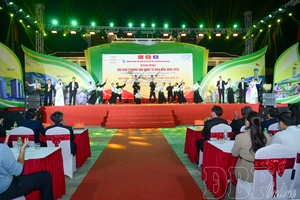
Vice Chairman of the Điện Biên provincial People’s Committee Lò Văn Cương affirmed: The fair creates avenues for products made by ethnic minorities, cooperatives, and production establishments in highland and border areas to reach domestic and foreign consumers and distributors. Through this, it accelerates production linkages, market consumption, border trade, import-export operations, and logistics services; contributing to elevating household incomes and driving growth across local commerce, services, and the provincial GRDP. The event also helps promote Điện Biên’s image, expanding avenues for investment cooperation and tourism growth.
Amid localities placing growing importance on elevating competitiveness, trade promotion extends beyond mere product display to building cooperative partnerships, advertising potentials, and attracting development resources. From exhibition booths to direct business-to-business dialogues, the fair opens up fresh collaborative opportunities. When these connections are maintained and transformed into substantive partnerships, they will provide momentum for local commodities to reach further, helping expand market access and strengthen Điện Biên’s economic ties with localities across the region.
Thu Hằng

You have 500/500 characters left
Please enter 5 or more characters!!!