



However, for technology to deliver lasting efficiency and achieve scalability, adapting to local conditions, perfecting technical protocols, and augmenting operational capacity remain critical challenges to be addressed.
At the Center for Agricultural Extension, Plant Seedlings, and Livestock Breeds in Yên Trường village, Thanh Yên commune, a high-tech smart membrane greenhouse model is being deployed across an area of approximately 1,080m², with total investment capital exceeding VND 13 billion. The project utilizes Japanese technologies, featuring automated drip irrigation systems, temperature and humidity controls, nutrient sensors, and production management software.
Under its design specifications, the system aims to save 30% to 40% of irrigation water, curb pests and diseases, and elevate crop yields 1.5- to 2-fold compared to conventional cultivation practices. In the initial phase, the model concentrates on safe vegetable and fruit production, projected to achieve an annual output of 80 to 100 tons, creating steady employment for 15 to 20 local laborers.
The project is deployed through a partnership between the Department of Agriculture and Environment of Điện Biên province and Niinuma Tomofarm Co., Ltd. (Japan), aiming to establish a smart agricultural management model and disseminate economically efficient farming practices via remote technical assistance. The Department of Science and Technology collaborates to support interactive technologies and link participating stakeholders throughout implementation.
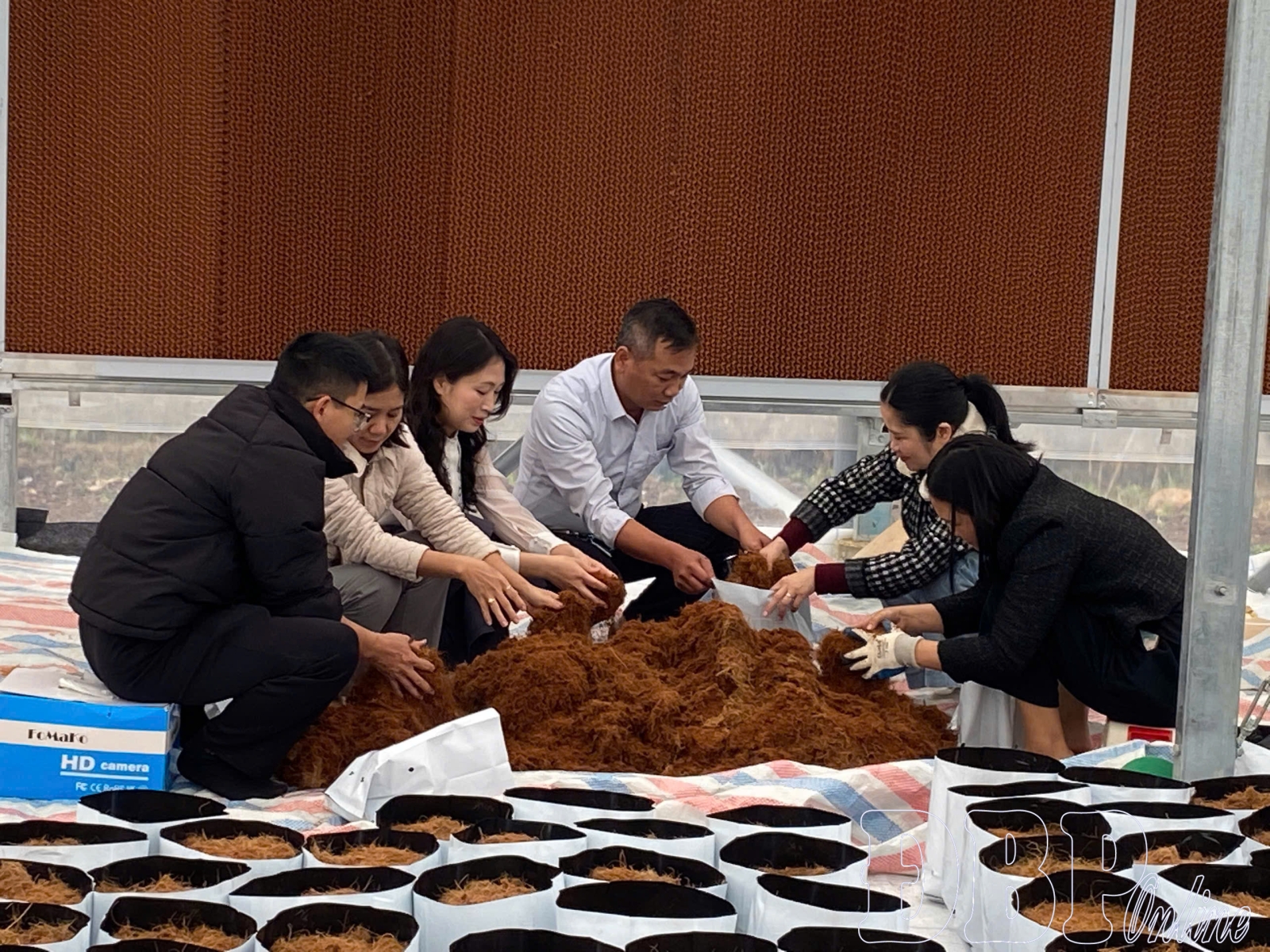
Also in Thanh Yên commune, two smart membrane greenhouse sites have been fundamentally completed, put into high-tech tomato cultivation, and begun harvesting since mid-June 2026. Sensors and automation systems enable remote production monitoring and management, providing conditions for technical cadres, enterprises, cooperatives, and farmers to access modern cultivation practices.
Nevertheless, operational rollout reveals that new technologies still require time to adapt to real-world conditions. Weather factors and control software instability have affected crop development. The Japanese partner is currently continuing to refine technical protocols toward a synchronized technology transfer suited to local climate, pedological traits, and operational competencies.
While membrane greenhouses focus on controlling the cultivation microclimate, at the Cooperative For a Developing Điện Biên, technology is directly integrated into crop care workflows. Across roughly 10ha dedicated to passion fruit, green J peppers, vegetables, and seasonal fruits in Điện Biên Phủ ward and Núa Ngam commune, the cooperative employs soil nutrition testers integrated with artificial intelligence (AI) to analyze parameters, delivering calibration recommendations suited to each crop growth stage.
Gathered data serves as the baseline for drip irrigation systems integrated with automated nutrient-mixing units to supply water and tailored nutrients for each crop variety. This methodology empowers producers to maintain tighter control over tending processes, driving the efficient utilization of water, fertilizers, and agricultural inputs.
By 2030, the province strives to establish 50,000ha of planting zones with established databases managed via digital technologies, including 300ha cultivated under high-tech agricultural models. To realize this goal, deploying on-field equipment must proceed hand in hand with establishing planting area databases, standardizing production protocols, and elevating management capacities.
Given fragmented topography and challenging transport access to many production areas, unmanned aerial vehicles (UAVs) are being researched and deployed to support agricultural produce haulage and crop care. The Department of Science and Technology acts as the focal point, coordinating with the Department of Agriculture and Environment and Việt Nam Post Corporation to survey and select 12 pilot sites within the sandbox framework for low-altitude economic development.
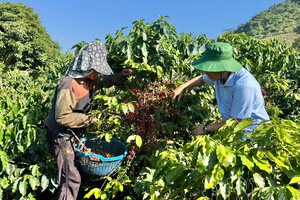
Operational tasks concentrate on transporting tea, coffee, and macadamia, alongside spraying plant protection chemicals and foliar fertilizers on coffee and paddy rice fields. To date, the model has executed cargo flight sorties transporting tea in Sính Phình commune and spraying fertilizers on coffee trees in Mường Ảng commune.
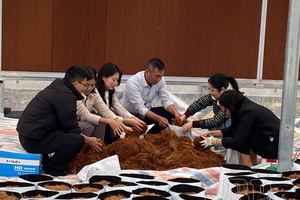
Alongside deploying modern equipment, the province encourages enterprises, cooperatives, and citizens to capitalize on available raw materials to manufacture organic fertilizers, contributing to recycling by-products and maximizing resource efficiency. Several production zones have achieved certified quality standards: 13ha of wax gourds under Nam Dương Cooperative in Mường Chà commune secured VietGAP certification; 1.29ha of vegetables, tubers, and fruits under Điện Biên Import-Export Trade Joint Stock Company earned GlobalGAP certification. Certified organic acreage reached 8.5ha, encompassing 5ha of tea under the Phan Thanh Ngọt facility in Mường Lạn commune and 3.5ha of fruit trees under Cara Farm Việt Nam Co., Ltd. in Mường Thanh ward.
Deploying models demonstrate that Điện Biên is step by step expanding the application of science and technology in agriculture, ranging from controlling cultivation environments and crop tending to farm produce transport and raw material zone governance. However, for models to achieve enduring efficiency, it remains necessary to continuously refine technical protocols, ensure equipment suitability with local climatic and topographical conditions, and elevate the technology absorption and operational capacity of enterprises, cooperatives, and local farmers.
Đức Kiên
You have 500/500 characters left
Please enter 5 or more characters!!!