



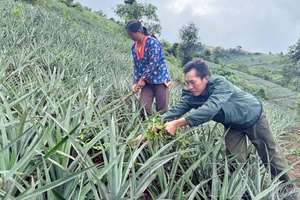
Across a 7,000m² cultivation plot in Bó Hóng village, Mường Thanh ward, Đào Văn Mạnh and his wife are pruning old dragon fruit branches showing signs of fungal infection. This routine is maintained by the family after every harvest season to eliminate poorly developed branches, curb the spread of pathogens, and facilitate vegetative growth and fruit-bearing for the subsequent cycle.
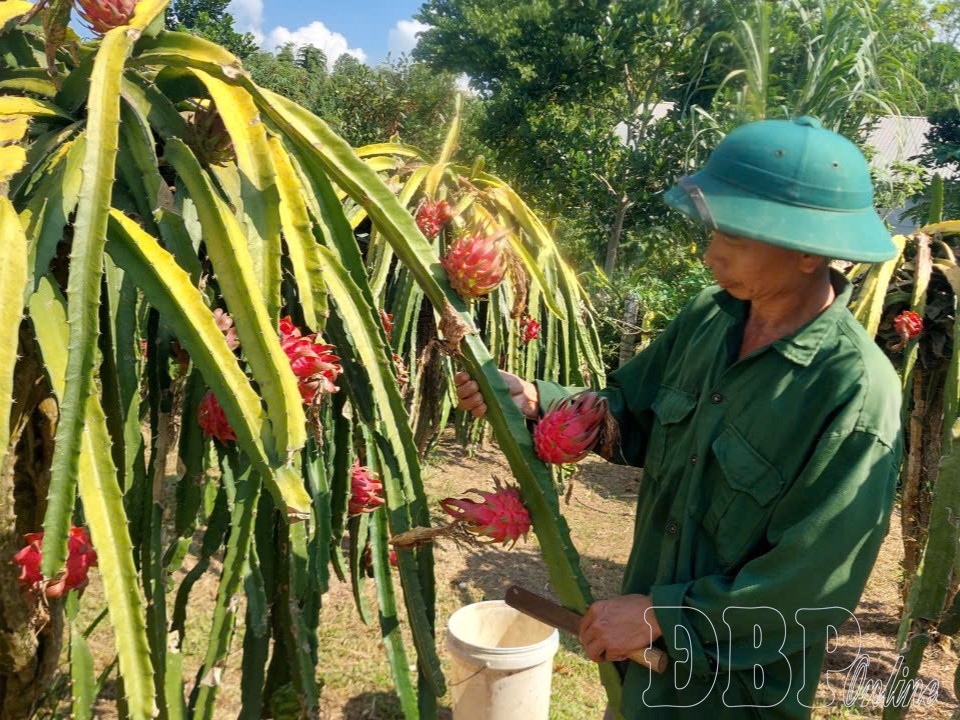
Mạnh’s family owns 700 red-flesh and 100 white-flesh dragon fruit plants, with the remaining area dedicated to assorted vegetables such as brassicas and cauliflower. Dragon fruit has served as the family’s primary income generator for over a decade. A distinct characteristic of this crop is its rapid vegetative growth and dense canopy, demanding regular pruning to preserve aeration, channel nutrients into healthy stems, and elevate fruit-setting capacity.
Previously, following each harvest, Mạnh had to hire 3 to 5 local laborers at daily wages of VND 300,000 to VND 350,000 per person, working continuously for nearly 10 days. The volume of discarded dragon fruit branches was substantial, incurring additional collection and haulage expenses. Over the past three years, however, pruned branches have been fed into a shredder and applied as mulch around plant bases. Rather than seeking disposal sites as before, the pruned vegetative mass is returned to the soil, replenishing organic matter and retaining moisture across the orchard.
Mạnh shared that utilizing dragon fruit branches as fertilizer has enabled his family to substantially cut costs associated with by-product gathering, transport, and commercial fertilizer procurement. By calculation, chemical fertilizer usage dropped by approximately 25% compared to prior practices. The layer of shredded organic material also helps retain soil moisture, curbs surface compaction, and improves soil tilth. “I have observed stable vegetative growth, enhanced fruit quality, and a richer sweetness,” he noted.
Practical experience from Mạnh’s dragon fruit orchard demonstrates that circular agriculture originates from tangible adjustments across individual production stages, yielding concrete economic and environmental dividends.
While post-harvest residues were once regarded as waste requiring removal, many farming households now view them as valuable resources. This paradigm shift progressively supersedes the linear “extract-use-discard” model with reuse, recycling, and value maximization per unit of resource input.
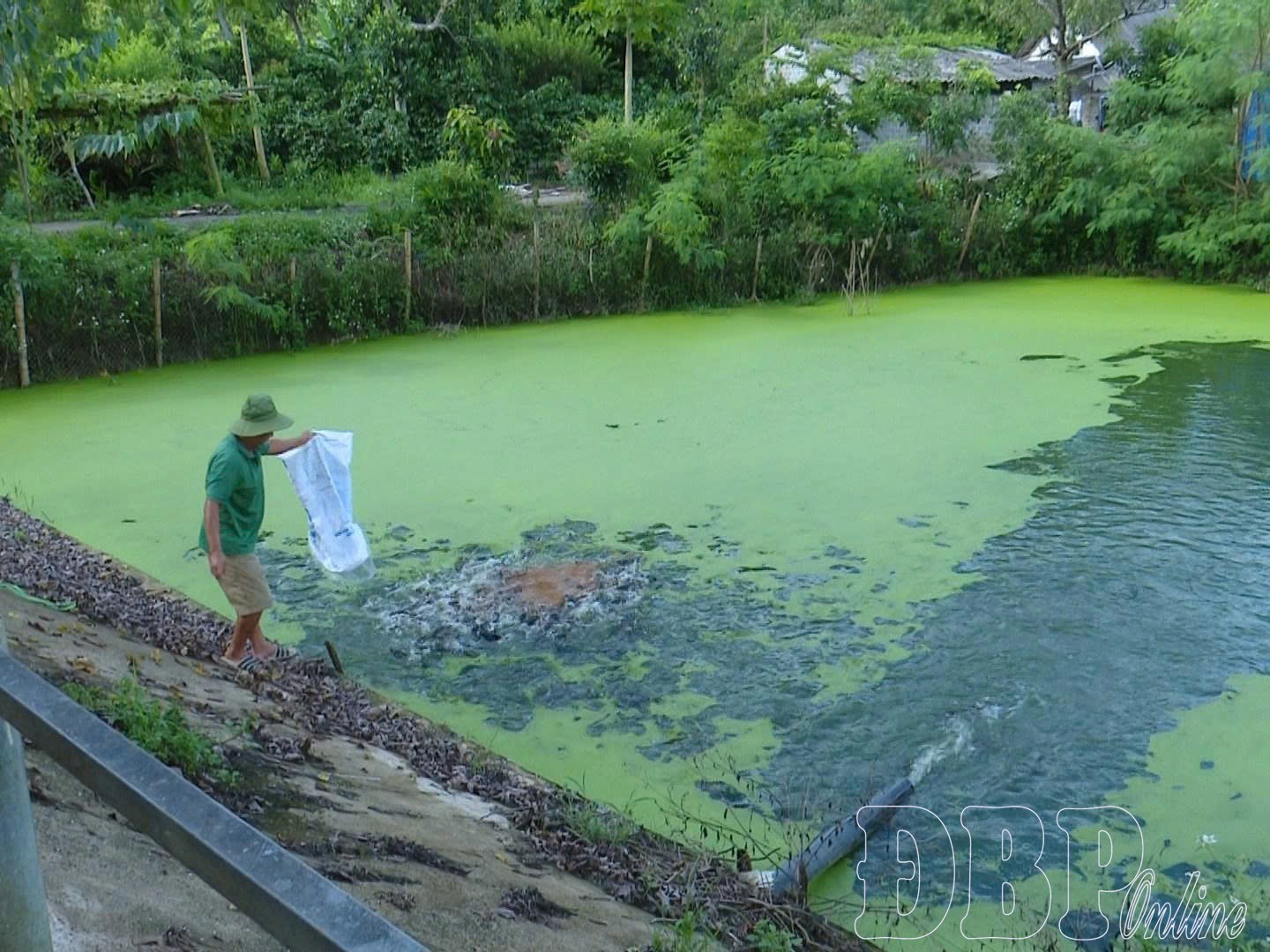
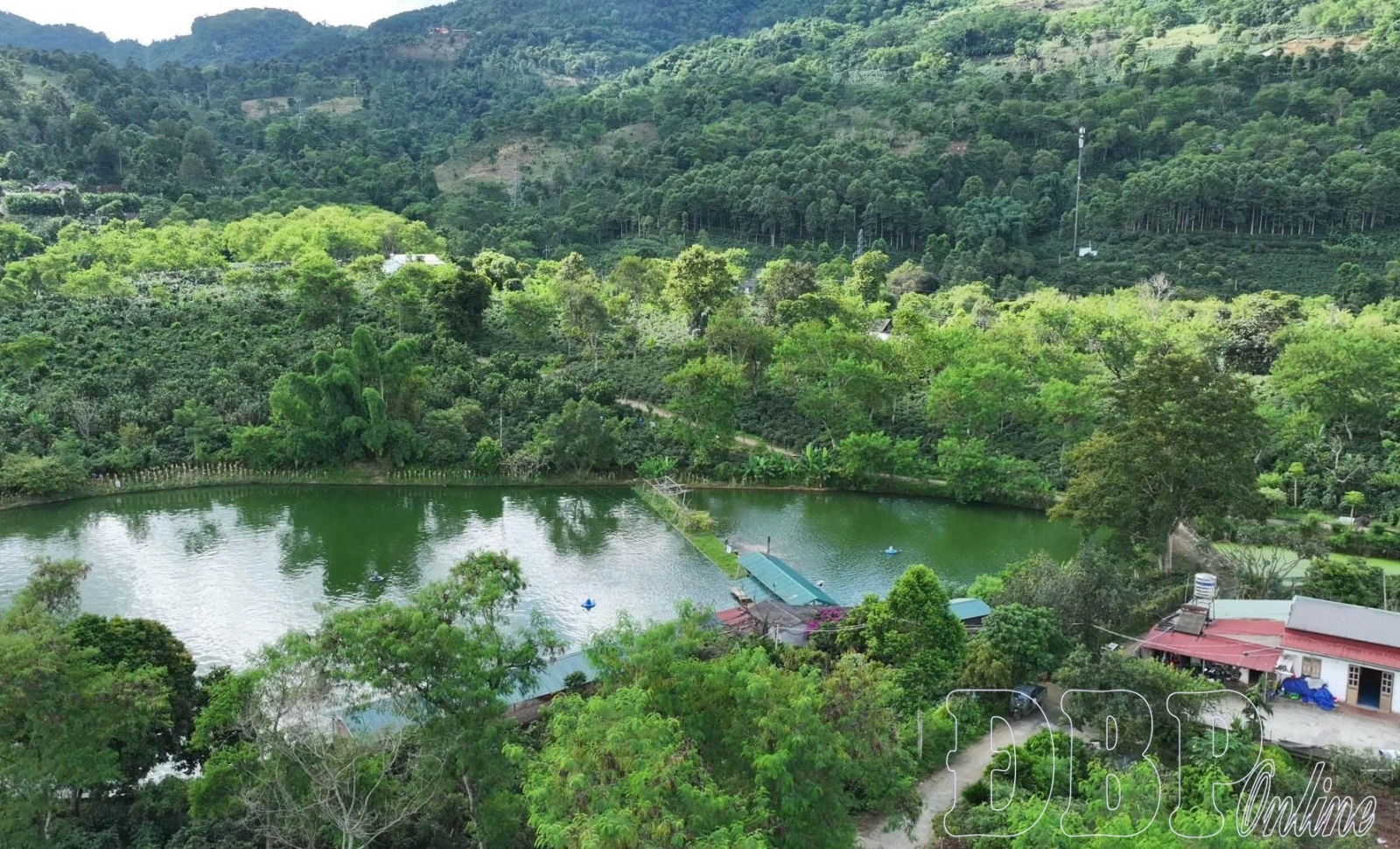
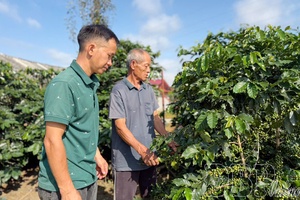
The integrated farming model of Lại Đức Thành’s household, in Hòa Bình residential quarter, Mường Ảng commune, illustrates this efficacy even more vividly as cultivation, animal husbandry, and aquaculture are orchestrated within a single cohesive system. Across more than 3.2ha, his family allocates 1.7ha to fruit trees and coffee, 1.5ha to fish ponds, alongside a livestock and poultry barn area spanning over 1,000m².
Given the considerable production scale, a substantial volume of by-products and waste is generated. To manage this, Thành prioritizes on-site waste processing, deploying microbial probiotics to treat fish pond environments and livestock excreta, while utilizing treated organic waste for crop cultivation. For fruit trees, the family adheres to VietGAP protocols oriented toward eliminating synthetic fertilizers, reducing reliance on commercial inputs.
The model was established with the partnership of the Mường Ảng commune Farmers’ Union through technical assistance and scientific transfers, assisting the family in adopting suitable farming and husbandry measures. On average each year, Thành’s family harvests roughly 6 tons of fruit, 20 tons of fresh coffee cherries, 50 tons of commercial fish, and over 10 tons of live pork, generating a gross revenue of approximately VND 4 billion.
Điện Biên boasts diverse natural conditions, numerous ecological sub-zones, and a rich array of signature crops, livestock, and farm specialties. This represents a prime advantage for developing integrated agricultural models that exploit by-products across production stages. Nonetheless, conventional cultivation practices remain widespread; production in many areas remains small-scale and fragmented, posing hurdles to collecting, sorting, processing, and recycling agricultural residues. Without proper management, waste from crops and livestock risks contaminating soil, water, and air, undermining the living environment and farmers’ own productive pursuits.
Against that backdrop, circular agriculture - characterized by closed-loop production cycles where by-products and waste generation are minimized, properly processed, and recycled into new value - warrants close attention and promotion. Decision No.540/QĐ-TTg, approving the Scheme on Science Development and Technology Application and Transfer to Promote Circular Economy in Agriculture through 2030, highlights the role of research, application, and technology transfers in driving circular practices, laying the ground for localities to accelerate production innovation, use resources efficiently, and reduce environmental footprints.
For Điện Biên, developing circular agriculture must align with the practical conditions of each production zone, crop and livestock cluster, and local investment capacity. For crop-growing households, utilizing post-harvest residues as organic fertilizer or mulching material represents a viable starting point. For livestock establishments, emphasis must be placed on waste collection and treatment, barn sanitation, biosafety compliance, and the application of suitable microbial preparations.
Parallel to this, the province is stepping up emission-reduction measures in crop production, working toward establishing and developing a “Low Emission” trademark. The goal of building at least 1 to 2 replicable low-emission crop models, targeting a minimum 15% reduction in total greenhouse gas emissions in cultivation by 2035, will provide added impetus to innovate production workflows, optimize input efficiency, and raise environmental stewardship.
As consumer markets increasingly scrutinize the quality, safety, and sustainability of agricultural commodities, circular practices also open avenues to sharpen the competitiveness of Điện Biên farm produce. The benefits of circular agriculture are being substantiated by Điện Biên farmers through tangible operational milestones. Trimming expenditures, mastering production workflows, and mitigating pollution not only generate immediate economic returns for farmers, but address rising market standards, establishing the image of an agriculture responsible toward both the environment and the community.
Bình Nguyên
You have 500/500 characters left
Please enter 5 or more characters!!!