



From physical noticeboards at communal headquarters and village cultural houses to scanning QR codes on smartphones, local residents can easily access details on forest areas providing PFES, payment unit prices, and entitled payment amounts. QR codes are contributing to ensuring open and transparent information on PFES funds.
From noticeboards to a single scan
Across numerous residential areas in Điện Biên, QR codes are emerging as a new channel for citizens to access information on PFES funds. With just a smartphone, forest owners can scan the code to look up the forest area providing PFES, the unit price, and the specific entitlement amount. This approach is progressively overcoming the limitations of conventional public disclosure via bulletin boards. Previously, the entire province maintained 128 local PFES payment bulletin boards, but currently only 16 boards remain in active use, while 112 boards have deteriorated or require replacement. Paper boards demand physical updates and repairs whenever information changes, whereas QR codes can update entire datasets on digital platforms seamlessly.
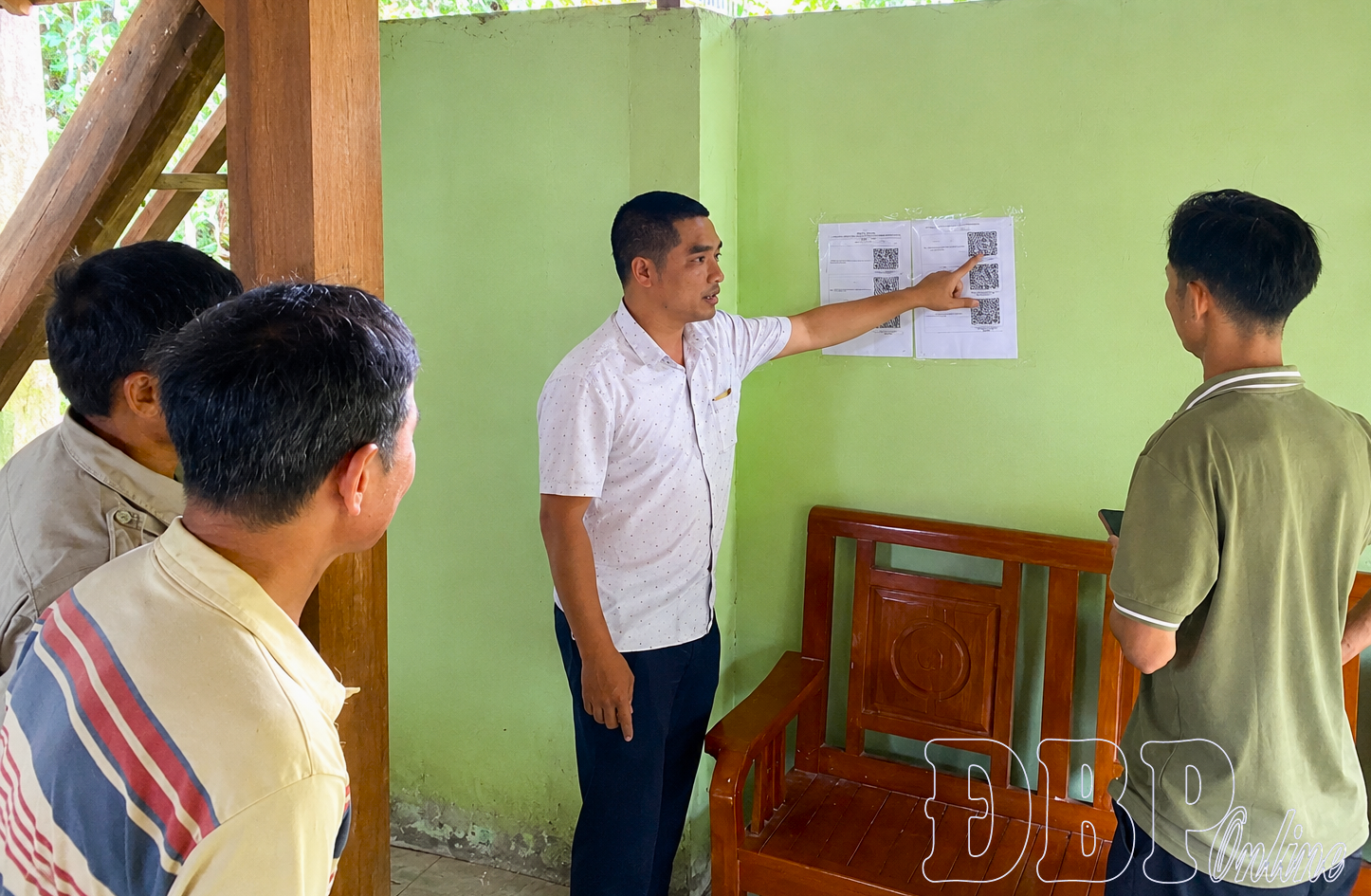
Applying technology in management, the provincial Forest Protection and Development Fund designed and issued 6 QR codes, integrating data on disbursements, unit rates, and PFES-providing forest acreage, while linking directly with the Fund’s web portal, Zalo Official Account, and communication products. Citizens no longer rely entirely on posting schedules or designated physical locations, but can proactively look up information on their personal phones.
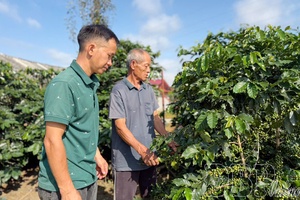
In Nậm Chim village, Na Sang commune, Lý A Tàng is one of the forest owners guided by cadres of the provincial Forest Protection and Development Fund in using QR codes. From initial awkward maneuvers, he has now mastered the process and can scan the code independently to look up information regarding his family’s PFES payment. “Previously, wanting to know about PFES payments meant traveling all the way to view the noticeboard. Guided to scan the QR code using a phone, I can proactively check forest acreage, unit prices, and our entitled amount. This way is much faster and more convenient,” Tàng noted.
Moving from traveling to physical boards, citizens have gained a method to cross-check information directly on their handheld devices. A simple action directly underpins the openness and transparency of grassroots PFES policies, ensuring information reaches beneficiaries comprehensively and clearly.
Cadres reach the villages, technology reaches the people
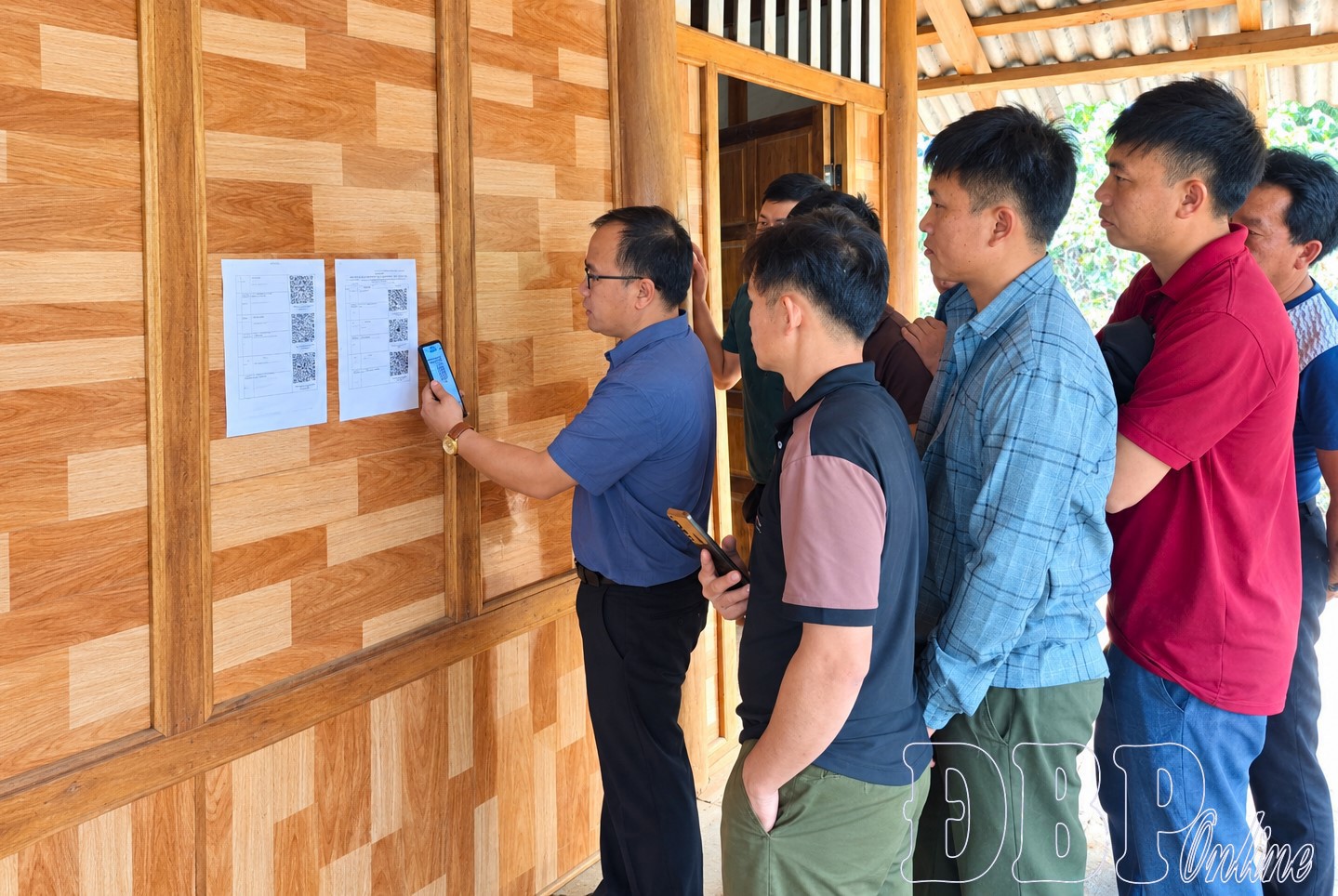
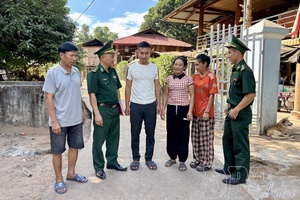
To ensure QR codes do not remain merely a theoretical tool on paper, the provincial Forest Protection and Development Fund identified hands-on guidance for local residents as an essential component of the digital transformation journey. Fund cadres coordinate with grassroots administrations, proactively coaching smartphone-owning forest owners on how to scan codes, access embedded links, and search for necessary details. Recently, the Fund has integrated QR code user instructions into capacity-building training sessions for forest owners, skillful mass mobilization campaigns, fund management and utilization inspections, and support drives opening bank accounts for unbanked forest owners receiving PFES disbursements. Through face-to-face instruction, residents progressively develop the skills to access and exploit PFES information across digital platforms.
Digital transformation therefore does not end with introducing technology into administrative workflows, but focuses on shifting information-reception habits. Citizens are taught how to check records independently, gradually curbing their reliance on cadres or physical bulletin boards. The essence of grassroots digital transformation lies in coupling technology with operational guidance, enabling residents to proactively retrieve data and carry out cross-checks rather than depending entirely on local cadres, Fund personnel, or old paper boards. Sùng A Súa, Deputy Head of the Inspection, Supervision, and Communication Division under the Điện Biên provincial Forest Protection and Development Fund, stated: “For digital transformation to prove effective, it must match the accessibility level of local residents. Hence, the Fund simultaneously steps up digital channels while directly coaching forest owners on usage. Only when people know how to scan and search can QR codes truly deliver efficacy.”
From a QR code posted publicly at the local level, citizens can access authoritative information sources without navigating complicated bureaucratic procedures. This serves as the foundation for shifting PFES information disclosure from one-way passive notifications to an active mechanism where citizens proactively inspect and reconcile figures.
Transparency from raw data to disbursed funds
While QR codes serve as the direct touchpoint with citizens, digital transformation across PFES policy implementation spans multiple stages - from delineating PFES-providing forest acreage, identifying eligible beneficiaries, and disclosing information to executing disbursements. Concurrently, the unit concentrates on deploying remote sensing technologies, GIS, satellite imagery, and unmanned aerial vehicles (UAVs) to review and identify PFES-providing forest acreage. Applying technology equips the unit with additional tools to determine and update forest cover dynamics, enhancing the accuracy of datasets serving disbursement calculations.
If raw data serves as the foundation of computational processes, QR codes provide an accessible pathway for citizens to review results, and bank accounts ensure funds are remitted directly to forest owners with maximum convenience. These three links are progressively interconnected within a digitized PFES management and payment workflow. According to statistical data, through September 30, 2026, Điện Biên recorded 8,469 out of 8,961 forest owners with opened bank accounts, reaching 94.5%. From the beginning of the year through that milestone, the Fund disbursed over VND 190.8 billion in PFES funds. Remitting via bank accounts bypasses intermediary tiers, curbs cash-handling risks, and enables forest owners to proactively receive their entitled financial resources.
Nevertheless, at this juncture, the province still records 492 forest owners who have not opened bank accounts. The Fund is actively coordinating with communal and ward-level administrations to review and update forest owner records, resolving dossier bottlenecks and account-opening criteria, striving to ensure all forest owners maintain bank accounts to receive PFES payments.
This represents a critical imperative as PFES fund volumes expand alongside vast managed forest acreages and high numbers of forest owners. Data must remain precise, information must be readily accessible, and cash flows must reach the right recipients at the right time. The value of a QR code therefore does not lie solely in replacing a paper board. More importantly, it opens a new avenue for citizens to actively access and verify details; alongside digitized forest databases and electronic bank payments, this guarantees transparency across forest acreage, payment rates, entitled amounts, and fund receipt workflows. That forms the bedrock ensuring PFES policies become increasingly public, transparent, and closer to the people.
Mai Hương, Director of the Điện Biên provincial Forest Protection and Development Fund, emphasized: “Digital transformation in executing PFES payment policies must be deployed synchronously across all stages. In the coming time, the Fund will continue refining databases and diversifying public disclosure channels to elevate the number and proportion of banked forest owners, broadening access to digital services. The Fund’s objective is to implement policies faster, more accurately, openly, and transparently.”
From a QR code posted at a village cultural house to forest data updated via advanced technology, PFES policy implementation in Điện Biên is step by step transitioning from manual routines to digital environments. Citizens gain additional means to verify their entitlements; regulatory authorities secure sharper tools to update and reconcile datasets; and cash flows reach forest owners with greater speed, transparency, and convenience.
Bùi Quang








You have 500/500 characters left
Please enter 5 or more characters!!!