



Part 3: No waiting, no standing in line
In this demanding operational tempo, waiting to be trained, guided, or sticking solely to familiar tasks can hardly satisfy practical demands. Consequently, refusing to wait and declining to stand in line for their “turn” to mature, grassroots-level cadres have proactively filled gaps in knowledge and skills directly through their daily work.
Advancing together in mutual progress
In the border commune of Sín Thầu, following the reorganization, the commune has over 230 civil servants and public employees. Each individual comes from a different working background, possessing varied experience and strengths. As numerous new responsibilities are devolved to the commune level, handling only one’s own assigned tasks makes it difficult to bridge gaps in knowledge and skills.
From this practical reality, Sín Thầu deployed the movement “Cadres and civil servants partner with and support each other.” According to Secretary of the Sín Thầu commune Party Committee Đặng Thành Huy, the objective of the movement is to foster an environment where cadres share experience and support one another, particularly with newly assigned tasks, thereby mutually elevating capacity to satisfy practical demands. Experienced personnel assist those new to their roles; tech-savvy workers guide colleagues facing limitations; and staff with firm professional expertise engage in exchanges to devise solutions for tasks never before undertaken.
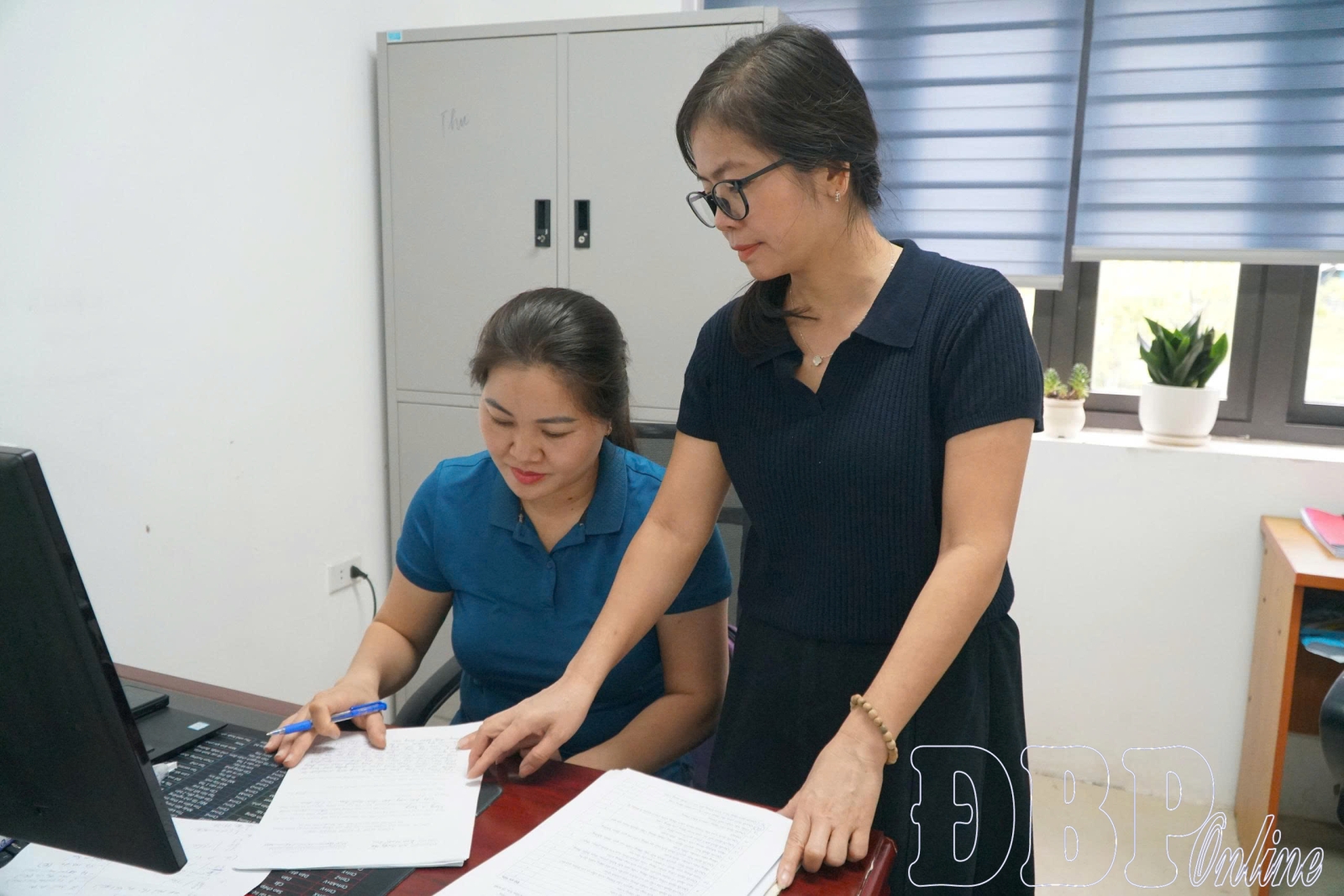
As a public employee at the commune General Services Center responding to the movement over the past three months, Quàng Văn Việt was mobilized to the Culture and Social Affairs Division, overseeing science, technology, and digital transformation. The new assignment opened opportunities for him to apply his knowledge and experience to assist colleagues. Việt noted: those who know share with those who do not; once they grasp the workflow, assisted colleagues continue guiding other peers. This method ensures learning is never detached from practical work. Shared knowledge and passed-on experience help ensure that no cadre is constrained by mere titles or previously familiar tasks.
Significantly, the movement does not stop at “those who know guide those who do not,” but has steadily become an established routine across the agency. From professional exchange sessions and hands-on operational coaching to collaborative problem-solving on new assignments, a spirit of active learning has spread throughout the team. This is also how Sín Thầu cultivates cadre resources directly from practical experience, empowering each staff member to confidently assume additional tasks, mature step by step, and better serve local development requirements.
While cadres in Sín Thầu seek to bridge knowledge and skill gaps collectively, in Thanh An commune, the journey began with the question of how each individual could maximize their capacity amid heavier workloads.
During the initial months of operating under the two-tier local governance model, Thanh An’s ranking in administrative procedure control once sat at the bottom among all 45 communes and wards. A high dossier volume coupled with accelerating digital processing created immense pressure on frontline executing cadres.
Faced with this reality, rather than simply demanding cadres to “work faster,” Thanh An commune restructured its operations around six core criteria: clear personnel, clear tasks, clear timelines, clear responsibilities, clear deliverables, and clear authority.
Lê Văn Ba, formerly Vice Chairman of the former Noong Hẹt commune People’s Committee, was assigned as Deputy Director in charge of the Thanh An commune Public Administrative Service Center. With prior experience in administrative affairs and digital transformation, upon assuming his new position, he maximized his competence while independently studying to supplement his knowledge, particularly regarding new legal regulations and statutory texts. Drawing from his own knowledge, he went on to guide the center’s civil servants.
Đặng Hương Giang, a civil servant at the commune Public Administrative Service Center, shared: “Previously a cadastral civil servant, I now handle numerous dossiers relating to construction, the environment, and other sectors in addition to land affairs. Guided by Lê Văn Ba, I gained added experience handling dossiers I had never worked on before, while knowing what further regulations to research so work does not pile up.”
Those who know first guide those who do not, while those unfamiliar with tasks diligently study more. Without waiting for training courses or exhaustive guidelines, cadres in Thanh An independently found ways to prevent work interruptions. From the bottom of the table, by September 2025, Thanh An commune’s administrative procedure control rose into the leading group among all 45 communes and wards, and has firmly maintained this standing to date.
Taking on new roles, learning new methods
Serving as President of the Women’s Union of former Nậm Vì commune since 2009, Lò Thị Thuận had grown thoroughly proficient in union affairs over nearly 15 years. Following the reorganization, she was reassigned to the Party Building Commission of Mường Nhé commune, in charge of Party member development.
Embarking on an entirely new mission, with competencies and situational handling skills yet to catch up with practical requirements, Thuận encountered no shortage of difficulties. She began with specific tasks: asking predecessors when unsure, and researching on her own when procedures were unclear. For each mass dossier, she carefully studied every step, directly guided necessary supplements, and tracked the preparation process of prospective candidates. “Taking it one task at a time, I independently studied and filled knowledge gaps right through the work process under the motto: ‘do not wait until you are fully proficient to accept an assignment, but accept the assignment and learn how to accomplish it,’” Thuận shared.
In 2026, the Mường Nhé commune Party Committee was assigned a quota to admit 45 new Party members; by September, it had admitted 51 Party members, exceeding the annual target by more than 113%. Currently, the locality has 10 prospective candidates with approved admission notices and 12 candidates finalizing their dossiers.
Sharing a similar mindset in a different field, Phạm Thị Nhài, a civil servant at the Mường Ảng commune Public Administrative Service Center, started by examining the very specific difficulties citizens face when completing administrative procedures.
Nhài shared: “In my daily work, I noticed that not every citizen easily finds the necessary information. Some procedures involve extensive details, and many individuals are unclear about dossier components, processing steps, or statutory fees and charges. From that, I proactively advised on developing the commune’s electronic portal, categorizing administrative procedures by sector, and compiling implementation steps, dossier compositions, fees, charges, and templates to make them accessible and comprehensible for the public.”
Stemming from that practical need, Phạm Thị Nhài continued advising on generating QR codes. Each administrative procedure was assigned a code and publicly displayed on the bulletin board of the Public Administrative Service Center. Citizens need only scan the code with their mobile phones to view essential information, rather than having to ask staff repeatedly or waste time searching.
Translating workplace initiatives into concrete efficiency, the proactiveness of grassroots-level cadres like Nhài has contributed to elevating administrative settlement quality at the grassroots-level. Over the first nine months of 2026, Mường Ảng received 985 dossiers, with administrative settlement outcomes achieving a 100% digitization rate; 100% of online dossiers were processed ahead of deadline. The satisfaction rating from citizens and enterprises using online public services reached a perfect 18/18 points.
Under the new governance model, not every cadre possesses sufficient knowledge and skills from the start to handle new tasks completely. Therefore, “no waiting, no standing in line” is not merely how each cadre perfects knowledge and skills, but also contributes to shaping a grassroots-level cadre contingent that is steadfast, agile, and ready to adapt to new demands. When every cadre steps up on their own, the collective capacity of the entire team expands, enabling the government apparatus to operate with greater dynamism, efficiency, and closer alignment with the people and practical realities.
Sầm Phúc - Thu Hằng



You have 500/500 characters left
Please enter 5 or more characters!!!