



Part 2: A “fresh breath of air” reinforces the grassroots-level
Certain localities had sufficient headcount yet lacked in-depth specialized expertise; others faced both manpower shortages and a deficit of practical experience in newly devolved domains. Confronting these realities, the province rolled out multi-faceted solutions to consolidate the contingent, among which mobilizing, seconding, and reinforcing cadres down to the grassroots-level has both supplemented personnel and infused technical knowledge, experience, and innovative methodologies, generating renewed momentum for grassroots-level governmental machinery.
The hallmark of seconded cadres
During the initial phase of transitioning to the new model, cadres across many communes and wards had to adapt to heavier, more varied, and fundamentally different workloads than before. Alongside familiar responsibilities emerged tasks demanding specialized expertise that on-site staff lacked extensive experience in - most notably information technology, digital transformation, construction, transport, land administration, finance, and justice. Rather than leaving the grassroots-level to navigate these technical voids unaided, the province arranged and assigned 124 civil servants and public employees from provincial agencies and units on secondment and reinforcement missions down to communes and wards.
Each individual reported to a different locality and assumed distinct responsibilities. Their common denominator was an active refusal to stand on the sidelines of local affairs, rolling up their sleeves to tackle tasks in urgent need of competent hands.
Phạm Mộng Điệp, Deputy Head of the Planning - Technical and Project Preparation Division at the Điện Biên provincial Management Board for Civil and Industrial Construction Projects, was seconded to work at the Xa Dung commune People’s Committee.
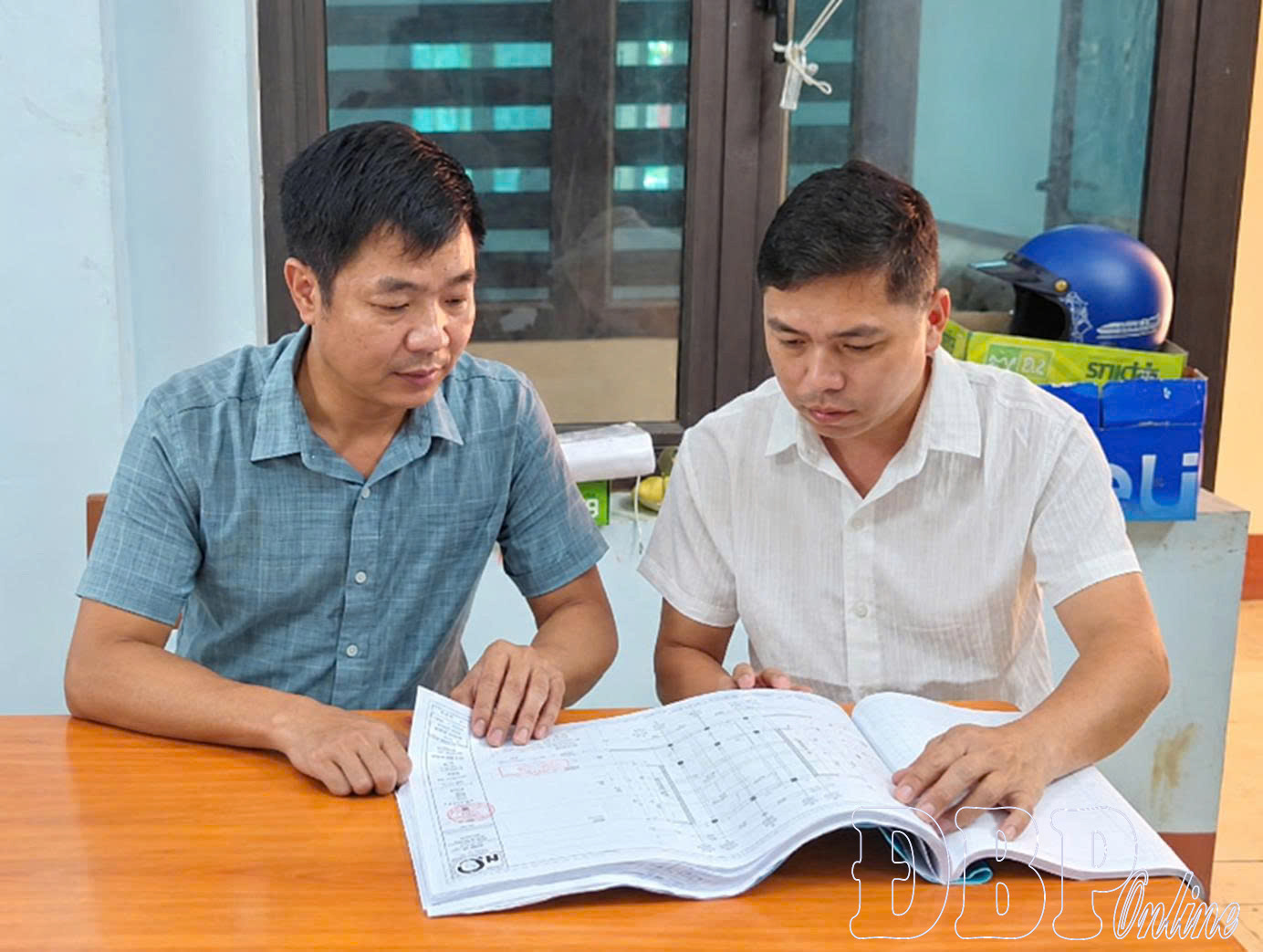
Wasting no time getting acclimatized, Điệp engaged in handling tasks concerning construction investment, planning, technical infrastructure management, and investment preparation. He directly advised on and monitored 11 projects and works from pre-investment preparation through final balance-sheet settlement. Through these specific contributions, the majority of projects completed final acceptance inspection, capital disbursement, and final settlement strictly on schedule. Following review and audit, his work contributed to saving approximately 5% in state budget expenditures compared to initial cost estimates.
In Tủa Thàng, Nông Huy Thiêm, an employee of the Employment Service Center (now the Employment and Meritorious Persons Center) under the Department of Home Affairs, was seconded to the commune Culture and Social Affairs Division. His portfolio centered on poverty reduction programs, employment, vocational training, and outreach initiatives aimed at ethnic minority communities.
Arriving at the commune, he advised on formulating action plans and collaborated with local cadres to bring these initiatives closer to the people. From socio-economic development programs targeting ethnic minority and mountainous areas to mobile job fairs, policies were materialized into concrete actions right across the locality.
Phạm Quang Long, Chairman of the Tủa Thàng commune People’s Committee, noted: with the assistance of reinforced cadres at the grassroots-level, the commune successfully organized nine mobile job fairs and coordinated four employment transaction sessions in 2025, connecting with 360 local workers. Added support was extended to local elections and study-tour excursions for core personnel and prestigious elders.
Every completed task translates into practical experience for grassroots-level staff. Formulating plans, organizing conferences, coordinating across units, and conveying information to citizens all become hands-on lessons embedded in daily operations. Thus, cadre secondment in Điện Biên is not merely about assigning extra staff to communes. It constitutes a two-way exchange: cadres bring expertise and experience to the grassroots-level, while the grassroots-level offers cadres exposure to practical realities and an understanding of governance from a vantage point closer to the people.
Equipped with knowledge and experience
Given the demonstrable efficiency of reinforcing and seconding cadres to the grassroots-level, a review revealed that among 34 communes and wards hosting seconded civil servants and public employees, 30 requested the province to extend their terms, while one commune submitted a new secondment request. This underscores that where reinforced cadres have been posted, local demand extends beyond merely “having more people”; it reflects an eager desire for specialized professionals to work alongside and mentor on-site personnel.
Addressing this demand, in early August 2026, the province mobilized and reinforced an additional 30 civil servants and public employees to assist communes for a 36-month tenure. Cadres with managerial and division-level leadership experience were prioritized, focusing on areas urgently required by the grassroots-level such as finance, construction, information technology, and digital transformation.
In Chiềng Sinh commune, Trần Văn Thuân, formerly with the Land Administration and Cartography Division under the Department of Agriculture and Environment, was mobilized to the commune Economic Division.
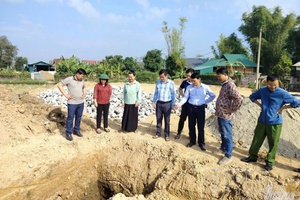
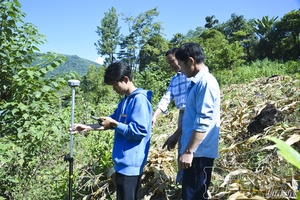
Immediately upon assuming his duties, Thuân partnered with local authorities to review, delineate boundaries, and plant landmark boundary stones across land plots belonging to households and individuals throughout all 19 out of 19 local villages. This represents a pivotal step toward accurately verifying current land use status and boundaries, preventing omitted households or misallocated plots, and generating reliable input data for surveying, cadastral mapping, finalizing cadastral dossiers, and establishing the local land database.
These days, Thuân works directly alongside commune cadres and village development boards, traversing every area and land parcel to verify boundaries and guide residents in placing boundary markers. Trần Văn Thuân shared: “A meticulous review from the grassroots-level directly determines the quality of the entire land surveying process. The more comprehensively and clearly boundaries and land use statuses are established, the more reliable the data for surveying, mapping, and cadastral documentation becomes, ensuring accuracy and consistency while curbing errors, boundary overlaps, or the need for resurveying in subsequent phases.”
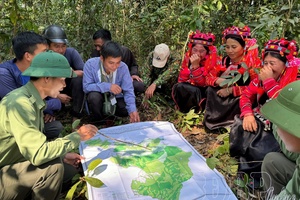
Looking at the red boundary stakes planted across land parcels, what appears to be a modest task proves essential for establishing accurate local land data. For commune cadres, this also serves as a hands-on learning process, working side-by-side with a seasoned specialist.
In Nậm Nèn, reinforced cadres started with roads, construction works, and infrastructure challenges. Trần Văn Hiệp was mobilized from the provincial Management Board for Civil and Industrial Construction Projects to the commune, assigned to oversee construction and transport affairs.
This represents an area where, according to Lò Văn Quỳnh, Vice Chairman of the Nậm Nèn commune People’s Committee, the locality faces immense demand. “The volume of tasks related to infrastructure, transport, and site clearance is growing steadily. Meanwhile, these assignments demand technical knowledge, procedural mastery, and practical experience. In particular, with the upcoming implementation of the Lê Bâu 3 Hydropower Project locally, infrastructure and site clearance workloads will multiply. For our locality, having a cadre versed in construction right at the grassroots-level helps us prepare far more proactively,” affirmed Lò Văn Quỳnh.
Reinforcing and seconding cadres to the grassroots-level is not simply plugging a person into a vacant post. The crux lies in assigning the right people with the right expertise to the right places in need. The “fresh breath of air” delivered by seconded cadres at the grassroots-level is measured not by the sheer number of personnel supplemented, but by transformations in working methods, operational experience, and task execution capacity. Thereby, it steadily cultivates a grassroots-level cadre contingent that is robust, steadfast, and capable of shouldering greater responsibilities right within their operational domains.
Sầm Phúc - Thu Hằng




You have 500/500 characters left
Please enter 5 or more characters!!!