



Part 1: Grassroots-level realities, yardstick of cadre capacity
In Điện Biên, rather than waiting for knowledge to be handed down, many cadres have proactively pursued self-study, self-cultivation, and skill enhancement through their daily tasks. Learning from comrades and colleagues, from literature and technology, and above all from practical reality and the trust entrusted by the people, each cadre has grown increasingly proficient in their work. Self-study to master job duties, staying close to the people to understand assignments, and innovating to deliver superior results have become driving forces for the grassroots-level cadre contingent to satisfy new demands and serve the public with greater efficiency.
Assigning cadres to the right people and the right tasks
In alignment with nationwide efforts, since July 1, 2025, Điện Biên province officially operationalized the two-tier local governance model, marking a significant transition in the organization and operation of the administrative machinery. Under Resolution No.1661/NQ-UBTVQH15 dated June 16, 2025, of the National Assembly Standing Committee, starting July 1, 2025, 45 commune-level administrative units of the province - comprising 42 communes and 3 wards - officially commenced operations, opening up fresh requirements for organizational structuring, governance methods, and the caliber of the cadre contingent, particularly at the grassroots-level.
To ensure the stable and efficient operation of the two-tier local government apparatus, Điện Biên province proactively organized and positioned cadres, civil servants, and public employees to match task requirements across commune-level administrative units. The provincial Party Committee’s Organizing Commission decided on the mobilization of 1,428 cadres, civil servants, and public employees; the Department of Home Affairs mobilized 2,038 cadres and civil servants, and transferred 14,273 public employees and laborers to the reorganized commune-level administrative units.
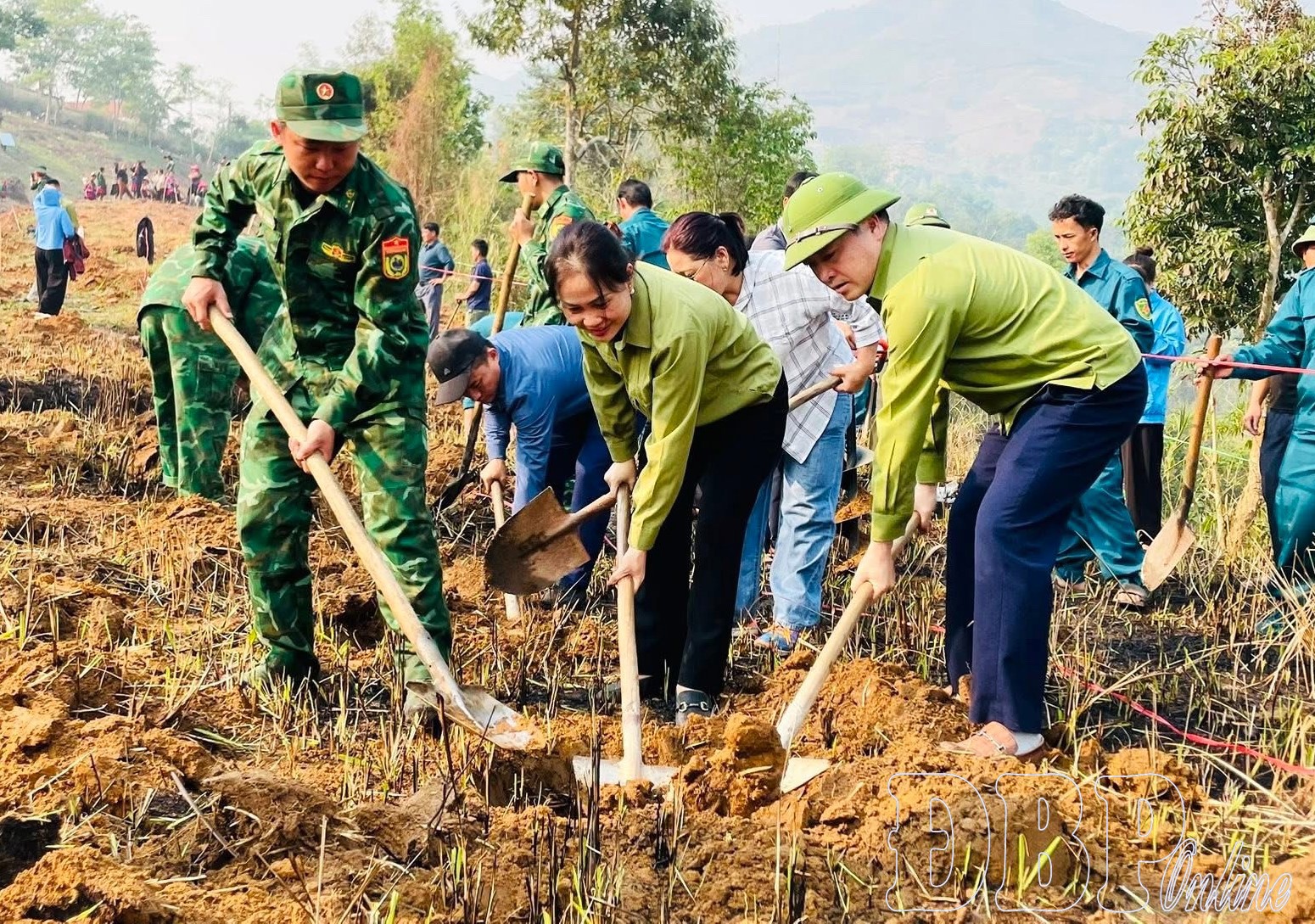
Si Pa Phìn commune was established through the merger of Si Pa Phìn and Phìn Hồ communes. Identifying the stabilization of the organizational apparatus as a “key” prerequisite to ensure smooth direction and administration, the commune prioritized apparatus stabilization and sector-specific cadre assignments; particularly positioning cadres according to the principle of “the right person for the right job” to guarantee smooth and synchronized operations.
Bùi Thu Hằng, Secretary of the commune Party Committee, shared: “During the initial days of establishment, workloads were substantial alongside extensive difficulties. However, every work group was specifically and clearly delegated by the commune, with each cadre assigned tasks closely aligned with practical reality and their professional competence. We required every cadre and civil servant to uphold a high sense of responsibility to prevent workflow disruptions, while accurately assessing the competence of each cadre to place the right person in the right job.”
Nguyễn Mạnh Hùng, Deputy Director of the Department of Home Affairs, stated: “Under the viewpoint that building a grassroots-level cadre contingent requires not only adequate headcount but elevated quality; not merely satisfying immediate demands but possessing the capacity to adapt to future development requirements. On that basis, Điện Biên province has led and directed the synchronized deployment of tasks, focusing on reviewing and evaluating commune-level cadres and civil servants; arranging and assigning personnel in alignment with competence, experience, and job positions; and prioritizing the development of young cadres, female cadres, and ethnic minority cadres. To date, the commune-level cadre and civil servant contingent basically meets quantitative targets, improves in quality, and features an increasingly rational structure satisfying job position requirements.”
Evidently, the appropriate arrangement and assignment of cadres have helped the grassroots-level apparatus steadily stabilize and operate with efficiency and effectiveness. Nevertheless, real-world operations continue to reveal considerable difficulties and bottlenecks facing the grassroots-level machinery.
Identifying “bottlenecks”
Following the official launch of the two-tier local governance model, Điện Biên province secured commendable initial achievements. The cadre contingent has been progressively consolidated, with professional competencies and qualifications continuously enhanced; senses of responsibility and service dedication toward the people have witnessed positive shifts, turning strongly toward the grassroots-level, staying close to the citizenry, and promptly grasping and resolving practical issues.
Frankly speaking, however, many “bottlenecks” persist. A segment of grassroots-level cadres, civil servants, and public employees possess professional qualifications yet lack practical experience; information technology application skills remain uneven, failing to meet digital transformation demands in administrative reform. A portion of personnel fails to satisfy task requirements; functional overlaps linger, alongside a scenario of “a surplus of personnel familiar with outdated procedures but a shortage of workers equipped for new tasks,” which constrains administrative processing efficiency.
Tạ Văn Sơn, Secretary of the Mường Nhé commune Party Committee, shared: “Following the restructuring, the commune’s apparatus was basically consolidated, and the cadre and civil servant team steadily stabilized to satisfy task demands. However, practical realities during the initial post-merger period showed that the commune still lacked personnel formally trained in matching specialties, particularly for positions requiring deep expertise.”
Post-merger, the territorial management scope of commune-level administrations expanded significantly, while workloads multiplied as numerous responsibilities formerly handled by district-level authorities were devolved to the grassroots-level. This imposed heavy pressure on frontline executing teams. Several cadres failed to adapt swiftly to rigorous specialized demands and modern working methodologies, leading to overload and impacting the progress and quality of administrative resolution.
Nguyễn Mạnh Hùng, Deputy Director of the Department of Home Affairs, shared: Communes not only resolve matters relating directly to citizens and enterprises, but are also granted enhanced decentralization and delegation, receiving and executing numerous tasks previously administered at the district tier. This places increasingly demanding expectations on grassroots-level cadres. In addition to mastering professional proficiencies, cadres must possess governance, execution, and inter-sectoral coordination capabilities; proactively adopt technology and digital transformation; and resolve issues arising right at the grassroots-level in a timely manner.
To serve the people better, the priority remains building a contingent of cadres possessing sufficient capacity, responsibility, and dedication. Grounded in requirements arising from practical realities, Điện Biên province has synchronously rolled out solutions, prioritizing the secondment and reinforcement of experienced, specialized cadres down to the grassroots-level. This represents not merely human resource supplementation, but is expected to bring a “fresh breath of air,” helping share experience, disseminate effective practices, and elevate mission execution capacity at the grassroots-level. Thereby, the province step-by-step builds a cadre contingent satisfying demands in the new situation, establishing a solid foundation for development from the grassroots-level up.
Sầm Phúc - Thu Hằng









You have 500/500 characters left
Please enter 5 or more characters!!!