



Part 4: Settling in border areas, solidifying the people’s heart
Arranging and resettling nearly 11,900 households with approximately 65,900 people across villages stands as a vivid imprint of a policy linking population stabilization with socio-economic development and national defense and security. When residents enjoy stable housing, secured livelihoods, and lasting peace of mind, each village gains an added anchor, contributing to firmly defending the fatherland’s frontier.
New livelihoods forge a refreshed landscape
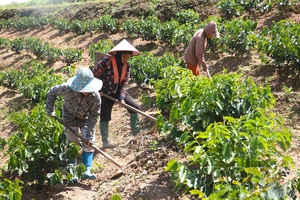
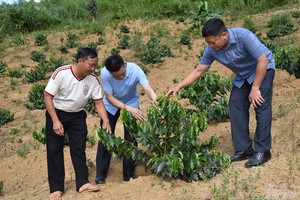
Across the ripening rice fields in Huổi Thanh 1 village, Nậm Kè commune today, villagers still recount stories of crop seeds provided under Project 79 to support agricultural production. Beyond infrastructure investments, nearly 80 village households received support in rice seeds and crop varieties, step-by-step contributing to advancing local production.
Đặng Văn Néng, Secretary of the Huổi Thanh 1 village Party Cell, shared: “For generations, villagers have relied primarily on agriculture, so seed support holds immense significance. With seed assistance, villagers enjoy greater conditions to sustain production, alleviate hardships, and approach harvests with greater peace of mind.” During implementation, Project 79 provided upland rice varieties to nearly 1,100 households, while 198 households received support for wet-rice cultivation. Project 79 also supplied maize seeds to 404 households, fruit tree varieties to over 750 households, and distributed breeding goats to 100 households (one breeding female goat per household).
The practical assistance under Project 79 has provided residents with enhanced production conditions, building the foundation for stable livelihoods. Each crop variety and livestock breed selected is closely matched to the specific conditions of each locality, opening suitable development paths for each community.
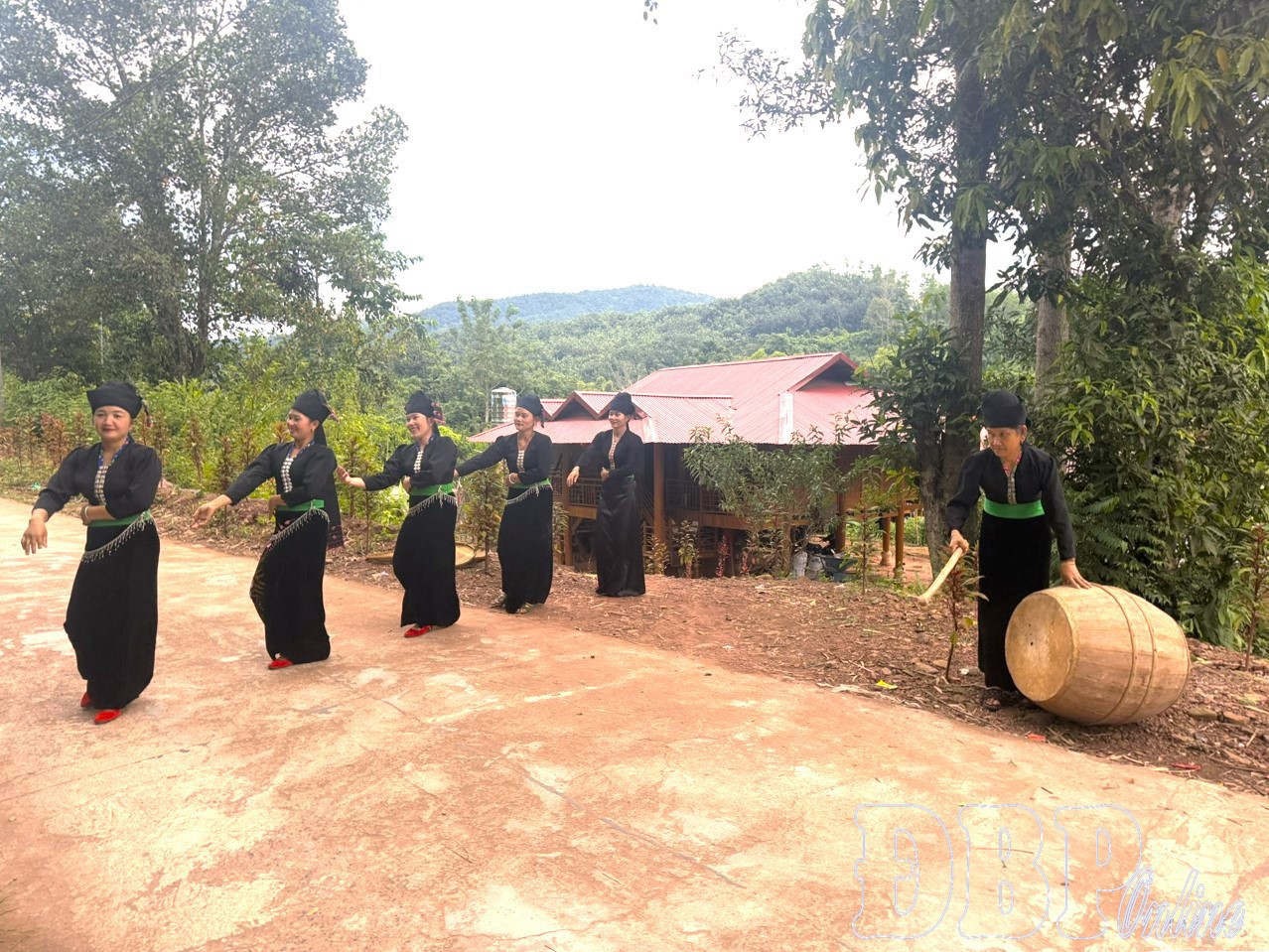
Secretary of the Nậm Kè commune Party Committee Giàng A Dế noted: “Project 79 did not apply a single rigid model across all villages. Each locality possesses distinct land resources, customs, and comparative advantages. Some villages suit livestock breeding, while others favor crop cultivation. Through this tailored approach, support resources were directed precisely where needed. Residents secured seeds for farming, breeding stock for livestock development, and conditions to access new livelihood models. Grassroots-level cadres stayed closer to the people to guide, mobilize, and adjust methods in alignment with practical realities.”
Project 79 establishes the foundation for residents to settle down, while new livelihoods provide the impetus for them to build enduring careers. With stable incomes, families are positioned to care for their children. As living conditions stabilize, residents gain added time and readiness to participate in community activities, preserve cultural identities, and jointly build their villages.
A noteworthy accomplishment is that following initial assistance, residents have gradually transformed how they perceive the land they inhabit. Moving away from the mindset of migrating to new territories in search of livelihoods, having residential plots, productive land, and supportive resources has fostered conditions for villagers to plan long-term production. Therefore, the refreshed appearance of villages under Project 79 is measured not merely by the tally of houses, roadways, or invested works, but is manifested in planted fields, tended orchards, multiplying herds, and - critically - a shift in public mindset toward socio-economic advancement and maintaining national defense and security along the border.
Stabilizing populations, defending villages, safeguarding borders
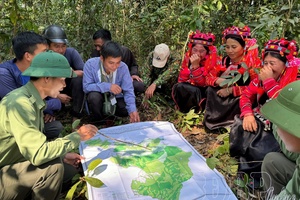
For Điện Biên, Project 79 bears profound significance; most implementation areas are located along the border, where every village serves as a vital anchor in building the all-people national defense posture, the people’s security posture, and the posture of the people’s heart and minds. Thus, arranging and stabilizing populations does not solely resolve housing, productive land, or livelihood issues; it contributes to forging stable communities committed long-term to their homeland, joining hands in maintaining security, order, and border sovereignty.
After more than a decade of implementation, Project 79 has arranged stable settlement for nearly 11,900 households with approximately 65,900 residents, reaching over 97% of its set target. Households were arranged across 219 villages throughout the Project 79 area, thereby ending spontaneous migration, stabilizing populations in close connection with socio-economic development, and consolidating national defense and security in border areas.
For a household to relocate from an old dwelling to a new settlement, what is required extends far beyond a roof. Residents must have residential land, production land, transport roads, domestic water, electricity, schools, and - crucially - livelihoods to sustain life long term. Consequently, Project 79 has been deployed by integrating population arrangement with infrastructure investment, production assistance, and grassroots-level political system building.
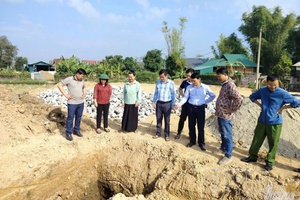
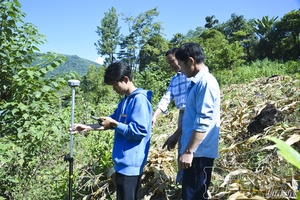
In Mường Toong commune, the provincial Military Command was assigned as developer for population arrangement and stabilization plans across several local villages. In former Mường Toong 4 village, the unit has completed site clearance across roughly 85 out of 87ha under the approved plan, with residential land allocated at an average of 400m² per household and productive land at 2ha per household. Twenty-nine households with 127 residents have been stably settled in the new location, achieving 97% of the plan, with 27 out of 29 households completing homes meeting “3-solid” standards (solid foundation, solid frame/walls, solid roof). Residents have progressively attained peace of mind to stabilize long-term lives.
Former Mường Toong 5 village cleared 118ha of land, allocating an average of 400m² of residential land and 2ha of production land per household. Thirty-one households with 158 residents were stably arranged, reaching 100% of the plan after splitting one additional household. Thirty out of 31 households completed “3-solid” houses. The village’s political organizational system was also steadily consolidated, laying the groundwork for the new community to stabilize and develop. Across former Mường Toong 4 and 5 villages - now Huổi Lanh village - over 25 households received relocation assistance, home and latrine construction support, and household utensils; nearly 60 households received support for upland rice, fruit trees, and maize, alongside essential infrastructure investments including domestic water, roadways, classrooms, and low-voltage electricity.
Senior Colonel Nguyễn Tiến Long, Deputy Commander of the provincial Military Command, emphasized: helping residents stabilize their housing progressively creates conditions for them to engage in production and build new lives with peace of mind. For the armed forces, participating in Project 79 is also a journey of partnering with local authorities and the people to establish stable residential anchors across strategic border territories.
To date, Project 79 has stably arranged over 11,890 households with 65,900 residents; of which on-site stabilization was arranged for over 10,770 households and interspersed resettlement for over 510 households. The poverty rate across Project 79 communes dropped to 33.66%, significantly lower than the initial target of 55.9%. Alongside population stabilization, production support policies have created conditions for residents to progressively shape livelihoods, generate income, and attain greater self-reliance in daily life.
After a long journey, Project 79’s targets - arranging populations, residential plots, productive land, infrastructure, and livelihoods - have progressively materialized. From villages once facing risks of spontaneous migration, residents are now deeply attached to building their homeland. As homes rise, land plots are allocated, and transport networks and civil facilities are invested, border villages are stabilizing day by day, serving as steadfast anchors along the fatherland’s frontier.
Phạm Quang

You have 500/500 characters left
Please enter 5 or more characters!!!