



Part 3: When the people become masters of development
Party members take the lead
From makeshift shelters erected amid the forests, Mường Nhé 1 village (Mường Nhé commune) has developed into a stable residential community today, bearing the distinct imprint of Project 79 and the pioneering vanguard of grassroots-level Party members. In the early years, the Mường Nhé 1 village Party Cell had only four Party members. Each cadre and Party member simultaneously conducted outreach and mobilization, while directly working and providing hands-on instruction to help residents transform their mindsets and practices.
Along the pathway leading into the village, Phó Đức Quang, former Secretary of the Mường Nhé 1 village Party Cell (now a specialist at the Việt Nam Fatherland Front Committee of Mường Nhé commune), recalled: “More than a decade ago, people first began arriving in the Mường Nhé 1 area to settle. Initially, there were only over 20 households, each pitching a makeshift tent, facing extreme hardship. Back then, the Party cell had four members. As people arrived sparsely, we had to visit every single household to propagate, mobilize, and guide them in stabilizing their lives, stopping deforestation, and gradually planning long-term production. Later, Project 79 provided villagers with housing, productive land, and livelihood support policies.”
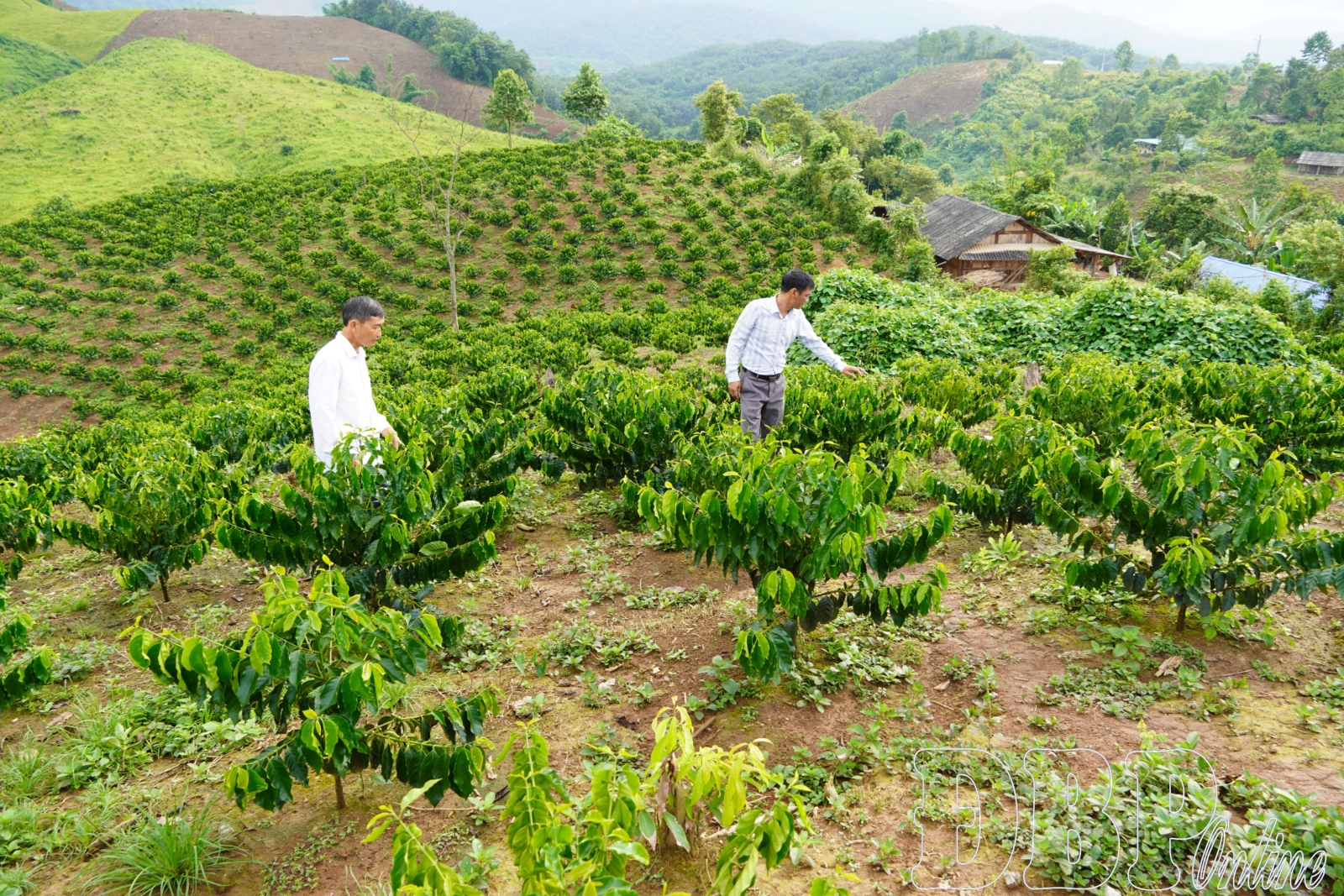
To date, life in Mường Nhé 1 village has stabilized, ensuring essential conditions for daily living. Throughout that process, the exemplary role of Party members has continued to be fostered; the Party cell has been consolidated and expanded to eight Party members. In economic development, Party members always serve as pioneers.
According to Trương Thế Anh, Secretary of the Mường Nhé 1 village Party Cell: “Currently, many households in the village cultivate coffee; among them, 100% of Party members in the cell participate, directly executing the model so that villagers can observe its efficacy and follow suit. Party members in the village always pioneer by doing it first; only then is outreach persuasive and easy for the people to follow.”
From the original 20-plus households living temporarily amid the forest, Mường Nhé 1 has progressively transformed into an organized community, anchored by the Party cell as its core, with residents pursuing clear economic directions. On that journey, Party members never stand on the sidelines of village life. From communication and mobilization to directly planting coffee and engaging in agricultural production, they are shaping tangible models for the people to see, trust, and replicate.
In Huổi Lanh village (Mường Toong commune), the exemplary role of Party members is demonstrated through concrete actions: always going ahead to clear the path, directly joining hands with the people in implementation, and subsequently inspecting and assessing results to mobilize villagers to change their mindsets and practices. “Alongside the people, the grassroots-level Party contingent is positioned in the vanguard. To translate resolutions into practical reality, Party members must be the ones who go first, do first, and guide the people directly,” affirmed Vừ A Của, Secretary of the Huổi Lanh village Party Cell.
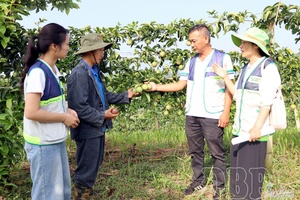
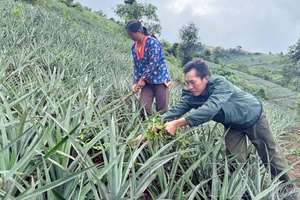
That conviction is clearly reflected right across the village’s agricultural plots. Across the village, over 40 households participate in coffee cultivation, and all 10 Party members in the Huổi Lanh village Party Cell grow coffee. When Party members directly sow seeds, tend crops, and track vegetative development, villagers gain solid practical benchmarks to learn from and emulate. The people’s voluntary participation in socio-economic development and stabilizing life demonstrates the effectiveness of outreach, mobilization, and leading by example by every cadre and Party member.
Residents optimize investment resources
As of May 2026, Project 79 supported relocation of people and assets for 632 households, assisted house construction for 1,359 households, with socialized funding mobilizing support for an additional 966 households. Concurrently, 1,280 households received support to build hygienic latrines; 1,185 households received subsidies for procuring production and living tools; and over 506 households were supported with rice during the initial period when food self-sufficiency was not yet achieved, as well as households whose productive land was acquired. By the close of its execution period, the Project deployed 214 infrastructure works (65 transport projects, 21 irrigation works, 64 domestic water supply projects, 62 school classroom buildings, among others).
Notably, 197 projects have been completed, handed over, and commissioned, achieving 92% of deployed works. During the 2021-2025 phase alone, all 79 out of 79 projects under the investment portfolio were completed, handed over, and put into operation. While receiving focused attention and extensive support, the value of investment resources under Project 79 is only genuinely affirmed when residents know how to utilize them to forge livelihoods, elevate income, and proactively transform their own lives.
This approach is progressively materializing in Huổi Lanh village (Mường Toong commune), where the State creates the anchor, Party committees and authorities provide orientation, and the people become the primary masters directly translating supportive resources into tangible changes across their own homeland.
Assistance resources from Project 79 and national target programs have created added conditions for Huổi Lanh villagers to select crops well-suited to local climate and soil conditions. Villagers have steadily expanded acreage dedicated to high-economic-value crops. Currently, the village cultivates over 11ha of cinnamon, 0.2ha of sa nhân (Amomum), and 21ha of coffee.
“The State supports seeds, capital, and technical guidance, but villagers must take the initiative to plant and tend them so the trees flourish. Now, many households recognize that they must rely on their own land to make a living, rather than waiting indefinitely for subsidies...” shared Vừ Bả Dế, Head of Huổi Lanh village.
Practical realities have proven that while the State prioritizes investment capital, ultimate efficiency depends on whether the people proactively receive, utilize, and maximize those resources. The approach in Huổi Lanh village, as well as many other project-area villages, demonstrates a pivotal shift: support is no longer the final destination, but the starting point for autonomous development.
When residents receive assistance, learn how to manage resources, and participate directly in deciding their own livelihoods, policy effectiveness extends from an initial aid tranche into a production model, from a model into a sustainable livelihood, and from a livelihood into the driving force transforming villages. On that path, the State provides resources and prerequisites; Party committees, authorities, the Fatherland Front, and mass organizations serve as the bridge; Party members lead by example and guide; while the people directly determine outcomes through their own labor. When residents shift from passive beneficiaries to active masters of production, transforming their lives and building their communities, investment capital is truly converted into the power of development.
Phạm Quang
You have 500/500 characters left
Please enter 5 or more characters!!!