



When the tea roasting season arrives, visiting Thèn Pả, Chiêu Ly, or Can Hồ village in Na Sang commune gives travelers an opportunity to weave through ancient tea trunks and listen to stories about a trade tied to Xạ Phang life for generations. Dropping by a home in the village, beside a cup of hand-roasted tea still warm to the touch, with a gentle astringency, a deep aroma mingled with hints of kitchen smoke, one can sense a distinct cultural facet preserved by local residents through the passing years.
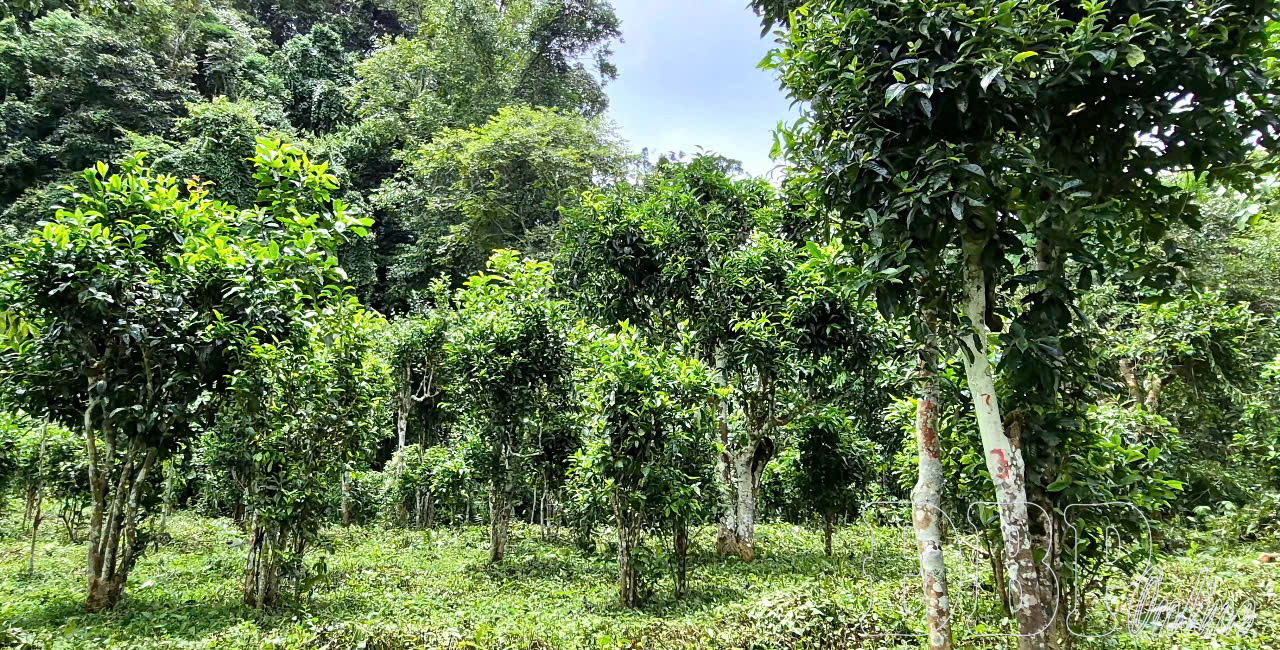
The fragrance of tea from the ancient tea forest
Early morning in Can Hồ village, the sky clears following a night rain. Si Chấn Siến and her family head up the mountain to harvest tea. The familiar path leads them to Shan tuyết tea trees growing naturally among rocky mountains. Across Thèn Pả, Chiêu Ly, and Can Hồ village, there are currently about 3,200 such tea trees. Mature trees feature gnarled bark with diameters of 20 to 30cm, encircled by younger trees of varying heights.
Xạ Phang people across these villages do not know exactly when these trees first emerged. They only know that since their grandparents’ generation, whenever the tea buds sprout, they climb the mountain to gather, roast, and brew them. Si Chấn Siến explains that growing up, she already saw Xạ Phang people in Thèn Pả and Can Hồ drinking this tea. She learned how to pick, roast, and brew a pot of tea since childhood through her parents’ instruction, and she is now passing those lessons down to her own children.
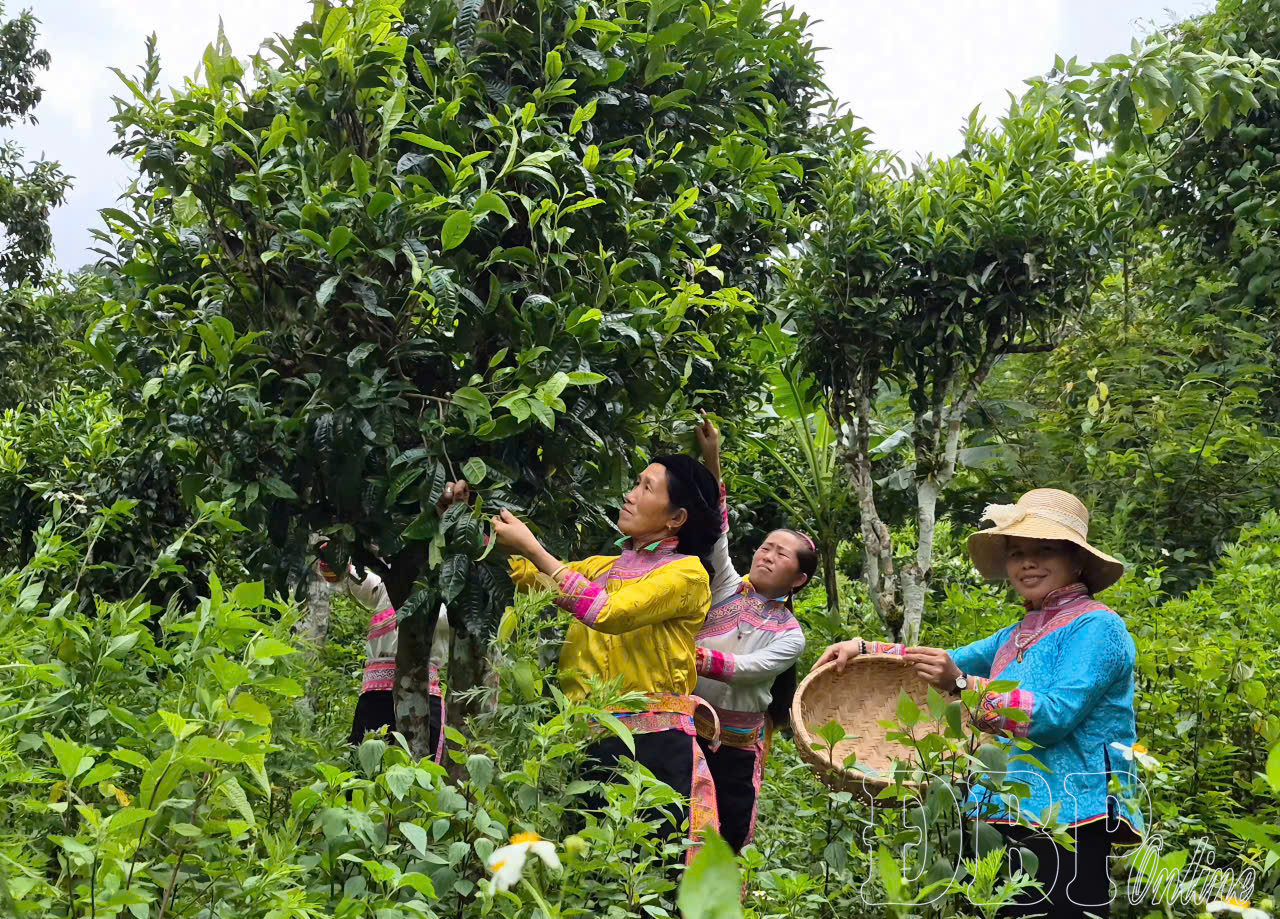
Around March each year, Shan tuyết tea across the mountains of Thèn Pả, Chiêu Ly, and Can Hồ begins sprouting heavily. Following the cold winter, the first young buds emerge from old tea branches, coated in a fine layer of silvery-white down. Harvesters are in no rush to pick them. They wait for late spring rains to water the mountain forest, allowing the shoots to unfurl a pair of tender green leaves. This early spring crop is most cherished by Xạ Phang households. When harvesting, they typically pick shoots with one bud and two leaves.
When the rainy season arrives and tea bushes bud vigorously, local villagers can also harvest in April, June, and August. Shan tuyết tea trees grow naturally, sprouting strongly during the rainy season. To secure tea year-round, during budding season, the Xạ Phang community gathers tender buds to roast dry for gradual consumption. Tea roasting has long been handled by the skillful hands of women. Fresh buds picked from the hills are brought home for manual roasting, following artisanal techniques passed down from generation to generation.
Hand-roasted tea of Xạ Phang people
Among Xạ Phang households in Thèn Pả village, a pot of tea is usually brewed after each meal. Early spring Shan tuyết tea carries a gentle fragrance, a sweet aftertaste, and is typically reserved for honored guests visiting the home. Serving a fragrant cup to guests requires good tea leaves and water at the proper temperature. Drawing on years of roasting experience, Sần Thoàn Hủi shares that freshly harvested tea must be roasted immediately. Roasting buds while they remain fresh ensures the resulting tea is richly aromatic and flavorful. Roasting is done in cast-iron pans over wood fires, choosing large firewood logs that yield glowing coals, moderate flames, and little smoke. Roasting generally requires two people assisting each other to maintain continuous stages, allowing the tea to attain its desired aroma and taste.
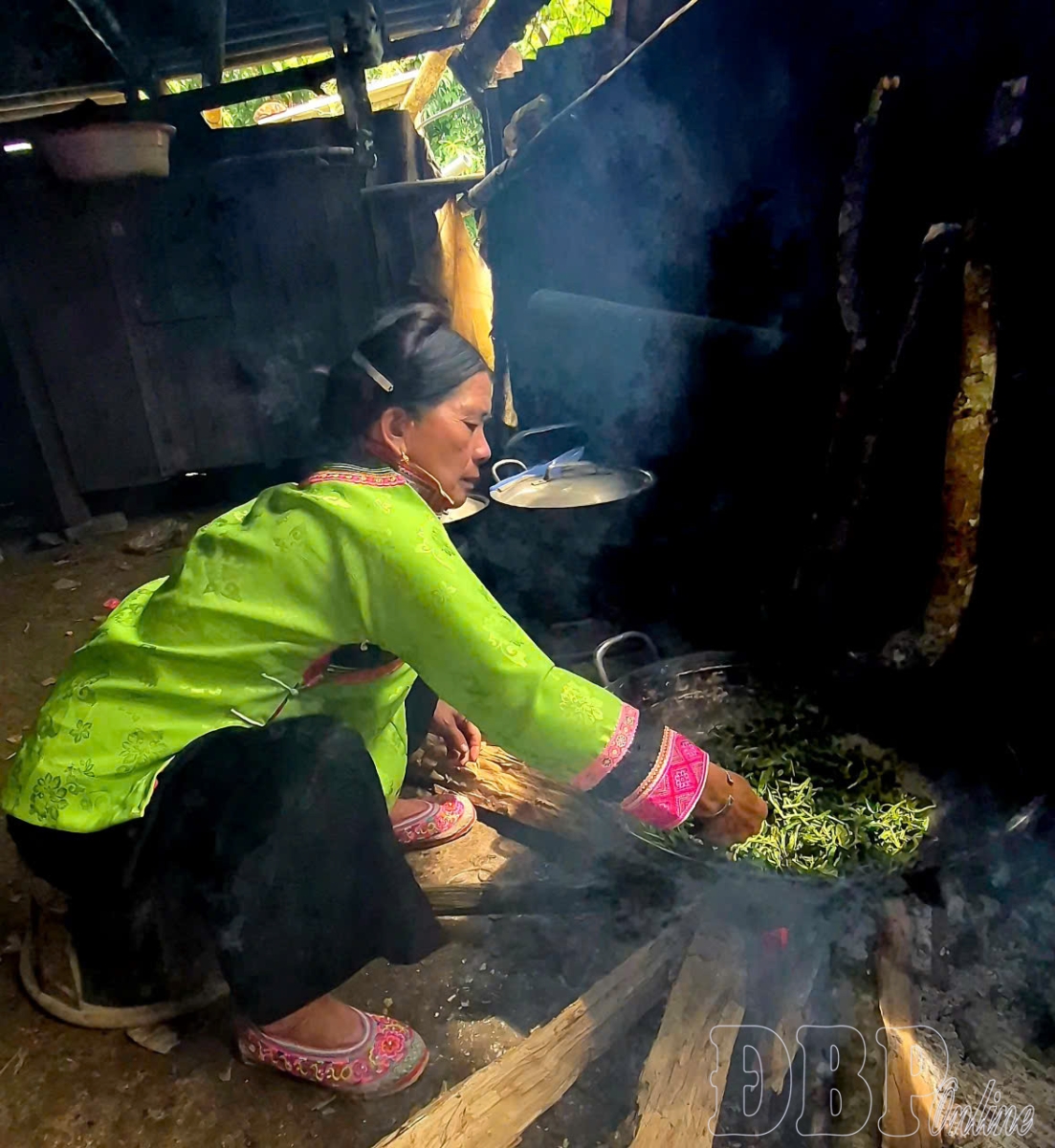
Once the cast-iron pan heats evenly, fresh leaves are introduced and turned continuously. As the buds reach initial doneness while still maintaining a pale green hue, the roaster swiftly turns them out onto a flat bamboo tray for rolling. The tea must be rolled while still hot, using practiced rolling, pressing, and rubbing movements to soften the buds and release tea sap evenly. Experienced hands apply moderate pressure to avoid crushing the buds, which would yield a bitter, harsh taste. This is the enzyme-kill stage, which curbs leaf oxidation.
After the initial softening roll, the tea goes back into the heated pan for continuous, even roasting. The buds shift gradually from light green to a darker hue. Sitting by the roasting hearth, a sweet aroma fills the surrounding air. As the tea begins releasing its fragrance and the buds darken, the leaves are emptied onto the bamboo tray for a second roll. This second rolling shapes the dried buds and enhances the aroma. Experienced rollers adjust their manual pressure and motions, rolling back and forth to ensure the buds curl attractively while holding their fragrance. The tea is then returned to the pan for final drying.
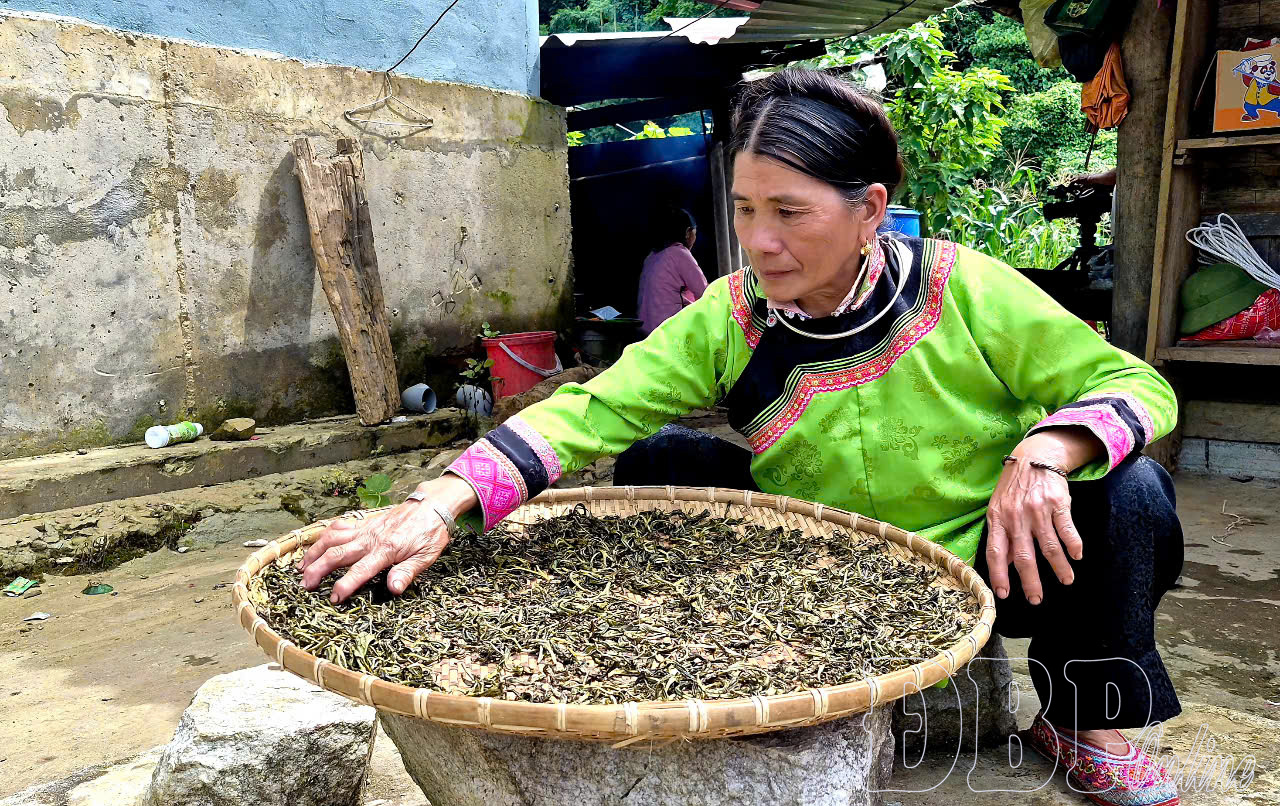
In the final step, the heat is reduced and the tea is stirred steadily until moisture drops to approximately 5%. Compliant tea exhibits a grayish-green tone with lightly curled buds. For hand-roasted Shan tuyết tea in particular, the silvery down on the tips is preserved, glistening with a characteristic white sheen. Some practitioners also choose to roast to initial doneness, develop the aroma, and sun-dry the batch to produce a distinct flavor profile.
Hand-roasted tea of the Xạ Phang people features a characteristic aroma reminiscent of sweet vernal grass. When brewed, the liquor takes on a deep amber hue, a robust body, and a warm aroma blended with an undertone of hearth smoke. The Xạ Phang people are accustomed to drinking hand-roasted Shan tuyết tea, with its taste etched permanently into memory as the familiar essence of home and native soil.
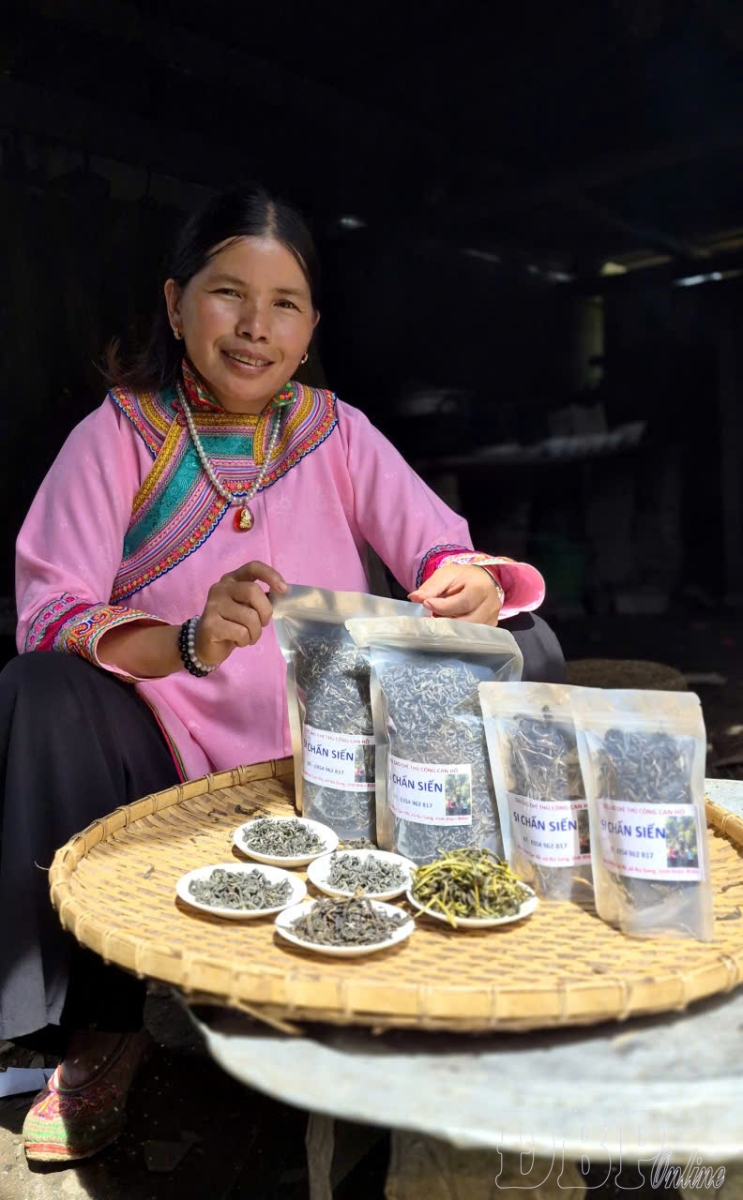
Traditional roasting knowledge was passed down from Sần Thoàn Hủi to her daughter Si Chấn Siến. Closely tied to the Shan tuyết tea forest, Si Chấn Siến cherishes every bud, safeguarding the manual roasting methods preserved across Xạ Phang generations. From aromatic batches beside the fireplace, she joins Can Hồ village residents in cultivating raw material areas and elevating processing standards, aiming to develop hand-roasted Shan tuyết tea into a signature local OCOP product.
This initiative represents an opportunity for ancient Shan tuyết tea to be nurtured, elevated in value, and introduced beyond local villages. She hopes every finished tea batch retains the original taste of the mountain wilderness, allowing anyone lifting a cup to experience the living narrative of the tea forest, the trade, and the Xạ Phang people across the mountains of Na Sang commune.
Minh Giang












You have 500/500 characters left
Please enter 5 or more characters!!!