



Part 1: Opportunity to upgrade social infrastructure
Old headquarters, new vitality for schools
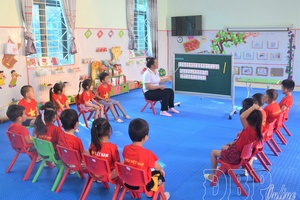
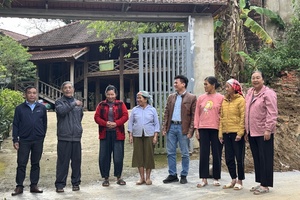
Mường Pồn commune was established based on the merger of Mường Pồn commune (old) and Mường Mươn commune, with the headquarters located in the Mường Mươn area. With favorable area, population, and traffic, the administrative center of the commune was “consolidated into one,” so immediately after operating the 2-tier local government, the old Mường Pồn commune headquarters was temporarily left empty. To preserve, manage, and not waste assets, the People’s Committee of Mường Pồn commune handed over the old headquarters to Mường Pồn Kindergarten No.1. Now, the headquarters has become the Mường Pồn School Site (belonging to Mường Pồn Kindergarten No.1).
Chu Thị Hải Yến, Principal of the school, stated: “After receiving the old commune headquarters, officials and teachers quickly cleaned, arranged, and decorated to convert the 3 largest workrooms into classrooms for 3 class groups. Some other rooms became offices, storage rooms, and warehouses. Teachers and students welcomed the new school year in a spacious, clean, and beautiful headquarters. Meanwhile, the old school site became official housing for teachers living far away.”
It is known that the Mường Pồn School Site is one of the most crowded groups of Mường Pồn Kindergarten No.1 with 63 children. Previously, the facilities at the old school site had 5 rooms, arranging 4 classrooms (4 classes in the previous school year) and 1 office. Not only was the school site cramped, but the central school’s area was also limited (over 1,200m2), located in a small alley with no land fund for expansion. Therefore, for a long time, the school has had the desire to request planning for a new location, ensuring the area and conditions to build a national standard school. Chu Thị Hải Yến shared: “The old commune headquarters handed over to the school has an area of over 2,600m2, with 4 blocks of workrooms, less than 2km from the central school. Therefore, we plan to move the entire central school here (the central school has 3 classrooms and some functional rooms and offices) when there are funds for renovation and repair. This will help concentrate students, officials, and teachers, creating favorable conditions for organizing diverse and quality child-rearing and care activities, while also being convenient for parents to take their children to school.”
.jpg)
Not only the old Mường Pồn commune headquarters, but many headquarters have been handed over or partially handed over to educational institutions, meeting the teaching and learning needs in the area. Nậm Khăn Ethnic Boarding Primary and Secondary School, Chà Tở commune, is using the commune cultural house and 2 rooms in the building block of the old Nậm Khăn commune police (within the old commune headquarters campus) as the council room, medical room, and school counseling room. Previously, when there was a policy to merge and establish a new commune, the school petitioned to receive the facilities of the old Nậm Khăn commune headquarters and received consensus. However, after the arrangement, the main headquarters of the new commune did not ensure sufficient facilities, so a part of the commune still worked here. It is expected that next year, after completing the upgrade of the new commune headquarters and moving departments and personnel to one location, the locality will hand over the old Nậm Khăn commune headquarters to the school.
In recent years, although the facilities of agencies, units, and the system of cultural institutions in the area have received attention for investment and relatively synchronous upgrading, many headquarters built long ago have degraded or have cramped areas, not meeting task requirements. After operating the 2-tier local government model, a large amount of surplus headquarters became an important resource, opening up opportunities for agencies and units to propose receiving, using, expanding areas, and perfecting facilities to better meet work needs and perform political tasks.
Nguyễn Văn Bốn, Principal of the school, said: “Before the new school year, the arrangement of classrooms was still a difficult problem for the school. Because this school year has 17 classes, but the school only has 12 solid classrooms and 2 temporary rooms, lacking many subject rooms and functional rooms. Thanks to the handover of the cultural house and 2 workrooms, we have arranged enough classrooms for classes, basically ensuring teaching and learning needs. Hopefully, in the near future, the school will receive the entire headquarters as proposed to meet educational work and expand the area and space for organizing collective and extracurricular activities for students.”
Optimizing functionality
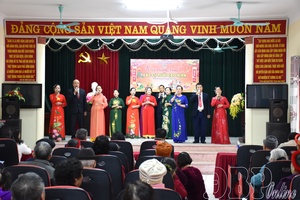
Prioritizing the conversion of functionality of surplus headquarters and works for schools, the province has arranged many headquarters for agencies and units with usage needs in a reasonable and scientific manner. For instance, the old Thanh Bình ward headquarters (currently belonging to Điện Biên Phủ ward) was handed over to the Department of Ethnic Affairs and Religion. The Department of Ethnic Affairs and Religion was established on March 1, based on the provincial Committee for Ethnic Affairs receiving functions, tasks, and state management organization on beliefs and religion from the Department of Home Affairs. The number of staff increased, the workload was large, but the old headquarters had been built for many years, with small rooms where many people worked together in very cramped conditions. Meanwhile, the Thanh Bình ward headquarters was newly repaired and upgraded, with spacious facilities ensuring standard area and infrastructure to serve the Department’s work.
Nguyễn Thanh Sơn, Director of the Department of Ethnic Affairs and Religion, said: “The new headquarters campus is spacious, convenient for traffic, and has enough infrastructure to arrange workrooms, halls, warehouses... meeting the unit’s work requirements, contributing to improving the work efficiency of officials and civil servants.”
According to statistics, the total number of headquarters rearranged when dissolving the district level and operating the machinery and new commune-level administrative units throughout the province is 2,607 facilities. As a result, by November 18, 2,587 facilities were transferred internally, and 11 facilities were transferred to ministries, central agencies, and other localities. Of these, 1,893 are education and training facilities; 195 facilities are arranged as workplaces; 58 facilities are arranged as career activity facilities (excluding education, training, health, culture, sports); 1 headquarters is arranged as a medical facility; 4 facilities are arranged as official housing and official accommodation; 422 are cultural and sports institutions...
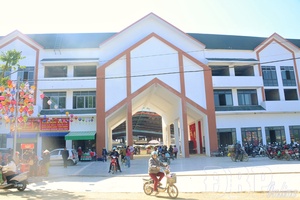
The land and housing facilities in the area after the arrangement have had transfer decisions signed by the provincial People’s Committee, handing them over to 45 communes and wards (completed in mid-November). The communes are responsible for protecting, managing, exploiting, and using them to avoid wasting public assets. However, for many communes, especially those inheriting old district centers and receiving the handover of many land and housing facilities, this responsibility is not an easy problem.
(to be continued)
Nguyễn Hiền
.jpg)
.jpg)

.jpg)
.jpg)
.jpg)
.jpg)

.jpg)
.jpg)
You have 500/500 characters left
Please enter 5 or more characters!!!